











CCl4 dissociation on the ice Ih surface: an excess electron mediated process
Literature Information
Publication Date
2010-08-31
DOI
10.1039/C0CP00439A
Impact Factor
3.676
Authors
Somesh Kr. Bhattacharya, James M. Finn, Vinh P. Diep, Francesca Baletto, Sandro Scandolo
View Original
Abstract
Dissociation of chlorofluorocarbons in the atmosphere is a heterogeneous process that takes place mainly on the surface of ice particles. Recently an enhancement of the dissociation rate due to excess electrons has been shown theoretically and correspondingly measured experimentally. Our density functional theory calculations show that CCl4 dissociates due to an excess electron with an energy gain of 0.8 eV on the ice surface as opposed to in the gas phase. Through the use of ab initio molecular dynamics, an atomistic pathway for this dissociation has been elucidated, this pathway shows the capture of Cl− by the ice surface through a partial solvation mechanism, in agreement with recent experimental findings.
Related Literature
A random tunneling algorithm for the structural optimization problem
Haiyan Jiang, Wensheng Cai, Xueguang Shao
2002-08-28
Paper
DOI: 10.1039/B206251H
Chiral aggregates of indan-1-ol with secondary alcohols and water: Laser spectroscopy in supersonic beams
A. Paladini, M. Satta, D. Catone, S. Piccirillo, M. Speranza
2002-08-05
Paper
DOI: 10.1039/B204909K
A quasiclassical trajectory and quantum mechanical study of the O(1D) + D2 reaction dynamics. Comparison with high resolution molecular beam experiments
V. J. Herrero, B. Martínez-Haya
2002-08-02
Paper
DOI: 10.1039/B203755F
The prediction of energies and geometries of hydrogen bonded DNA base-pairs via a topological electrostatic potential
Laurent Joubert, Paul L. A. Popelier
2002-08-05
Paper
DOI: 10.1039/B204485D
Photophysical study of 5-substituted benzofurazan compounds as fluorogenic probes
Seiichi Uchiyama, Kazuyuki Takehira, Shigeru Kohtani, Tomofumi Santa, Ryoichi Nakagaki, Seiji Tobita, Kazuhiro Imai
2002-08-14
Paper
DOI: 10.1039/B202367A
A physical mechanism for large-ion selectivity of ion channels
Douglas Henderson, Robert S. Eisenberg
2002-08-30
Paper
DOI: 10.1039/B203184A
Ultrafast energy relaxation in bacteriorhodopsin studied by time-integrated fluorescence
S. Schenkl, E. Portuondo, G. Zgrablić, M. Chergui, S. Haacke, N. Friedman, M. Sheves
2002-09-19
Paper
DOI: 10.1039/B205453A
High-temperature transformations of organised mesoporous alumina
Jiří Čejka, Patricia J. Kooyman, Lenka Veselá, Jiří Rathouský, Arnošt Zukal
2002-09-02
Paper
DOI: 10.1039/B205100A
Behaviour of the water-soluble meso-tetra(4-methylpyridyl)porphine in mixed monolayers and in Langmuir–Blodgett films
Amélia M. Gonçalves da Silva, Maria Isabel Viseu, Rute I. S. Romão, Sílvia M. B. Costa
2002-09-02
Paper
DOI: 10.1039/B202743G
Passivated clusters: a theoretical investigation of the effect of surface ligation on cluster geometry
Nicholas T. Wilson, Roy L. Johnston
2002-07-25
Paper
DOI: 10.1039/B204460A
You might also like
Compound Q&A
How should waste containing 2-Ethyl-4-Methyl-1H-Imidazole-5-Carbaldehyde (CAS: 88634-80-4) be handled?
Waste containing 2-Ethyl-4-Methyl-1H-Imidazole-5-Carbaldehyde (CAS: 88634-80-4) ...
88634-80-42-Ethyl-4-Methyl-1H-...
Compound Q&A
What industries use Triethoxy(octyl)silane (CAS: 1385031-14-0)?
Triethoxy(octyl)silane (CAS: 1385031-14-0) is widely used in the pharmaceuticals...
1385031-14-0Triethoxy(octyl)sila...
Compound Q&A
Are there alternatives to 3-iodo-7-nitro-1H-indazole (CAS: 864724-64-1) in synthesis?
Several alternatives to 3-iodo-7-nitro-1H-indazole (CAS: 864724-64-1) exist in t...
864724-64-13-iodo-7-nitro-1H-in...
Compound Q&A
Are there alternatives to Benzene, bis[(trimethoxysilyl)ethyl] (CAS: 266317-71-9) in synthesis?
Yes, there are alternatives to Benzene, bis[(trimethoxysilyl)ethyl] (CAS: 266317...
266317-71-9Benzene, bis[(trimet...
Compound Q&A
Is Isothiazole-3-carbonitrile (CAS: 1452-17-1) safe?
Isothiazole-3-carbonitrile (CAS: 1452-17-1) is generally considered safe when us...
1452-17-1Isothiazole-3-carbon...
Compound Q&A
Is (3-Chlorophenyl)methanol (CAS: 873-63-2) safe?
(3-Chlorophenyl)methanol (CAS: 873-63-2) is considered low to moderately toxic. ...
873-63-2(3-Chlorophenyl)meth...
Compound Q&A
How is (2S,3S)-2-Hydroxy-3-({[(2-methyl-2-propanyl)oxy]carbonyl}amino)-3-(2-naphthyl)propanoic acid (CAS: 959583-98-3) typically synthesized?
(2S,3S)-2-Hydroxy-3-({[(2-methyl-2-propanyl)oxy]carbonyl}amino)-3-(2-naphthyl)pr...
959583-98-3(2S,3S)-2-Hydroxy-3-...
Compound Q&A
What precautions should be taken when handling Methyl 2-(bromomethyl)-5-methoxybenzoate (CAS: 788081-99-2)?
Proper handling of methyl 2-(bromomethyl)-5-methoxybenzoate requires the use of ...
788081-99-2Methyl 2-(bromomethy...
Compound Q&A
What is 6,8-Dibromoimidazo[1,2-a]pyridine-2-carboxylic acid (CAS: 904805-36-3)?
6,8-Dibromoimidazo[1,2-a]pyridine-2-carboxylic acid (CAS: 904805-36-3) is an aro...
904805-36-36,8-Dibromoimidazo[1...
Compound Q&A
Is 3-Amino-5-bromo-2-pyridinecarbonitrile (CAS: 573675-27-1) safe?
3-Amino-5-bromo-2-pyridinecarbonitrile is considered safe when handled under pro...
573675-27-13-Amino-5-bromo-2-py...
Source Journal
Physical Chemistry Chemical Physics

CiteScore:
5.5
Self-citation Rate:
10.3%
Articles per Year:
3036
Physical Chemistry Chemical Physics (PCCP) is an international journal co-owned by 19 physical chemistry and physics societies from around the world. This journal publishes original, cutting-edge research in physical chemistry, chemical physics and biophysical chemistry. To be suitable for publication in PCCP, articles must include significant innovation and/or insight into physical chemistry; this is the most important criterion that reviewers and Editors will judge against when evaluating submissions. The journal has a broad scope and welcomes contributions spanning experiment, theory, computation and data science. Topical coverage includes spectroscopy, dynamics, kinetics, statistical mechanics, thermodynamics, electrochemistry, catalysis, surface science, quantum mechanics, quantum computing and machine learning. Interdisciplinary research areas such as polymers and soft matter, materials, nanoscience, energy, surfaces/interfaces, and biophysical chemistry are welcomed if they demonstrate significant innovation and/or insight into physical chemistry. Joined experimental/theoretical studies are particularly appreciated when complementary and based on up-to-date approaches.
Recommended Compounds
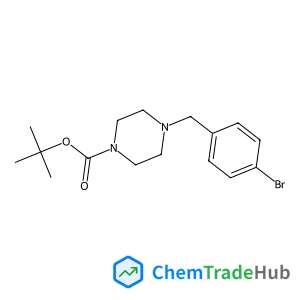
2-Methyl-2-propanyl 4-(4-bromobenzyl)-1-piperazinecarboxylate
CAS Number:
844891-10-7
Molecular Formula:
C16H23BrN2O2
Recommended Suppliers




Disclaimer
This page provides academic journal information for reference and research purposes only. We are not affiliated with any journal publishers and do not handle publication submissions. For publication-related inquiries, please contact the respective journal publishers directly.
If you notice any inaccuracies in the information displayed, please contact us at support@chemtradehub.com. We will promptly review and address your concerns.