












Electronic structure of delocalized singlet biradical Ph2-IDPL solid film
Literature Information
Publication Date
2010-08-20
DOI
10.1039/C0CP00178C
Impact Factor
3.676
Authors
Kaname Kanai, Yukiko Noda, Keita Kato, Takashi Kubo, Kai Iketaki, Akihiro Shimizu, Yukio Ouchi, Kazuhiro Nakasuji, Kazuhiko Seki
View Original
Abstract
The film structure and electronic structure of a biradical hydrocarbon, diphenyl derivative of s-indacenodiphenalene (Ph2-IDPL) solid film has been investigated. A small energy gap between the highest occupied molecular orbital (HOMO) and the lowest unoccupied molecular orbital (LUMO) compared with that of typical π-conjugated small molecules was observed even for the amorphous film of Ph2-IDPL. This result indicates that the small HOMO–LUMO gap is an important characteristic of the singlet biradical electronic structure and well explains the previously reported ambipolar field effects of amorphous Ph2-IDPL film by Chikamatsu et al., Appl. Phys. Lett. 2007, 91, 043506. It was found that the gas-deposition method substantially improved the crystallinity of the film where Ph2-IDPL molecules form quasi one-dimensional (1D) molecular chains normal to the substrate surface. An extremely small HOMO–LUMO gap was observed in the polycrystalline Ph2-IDPL film, which is possibly caused by strong intermolecular coupling. The photon energy dependence of ultraviolet photoemission spectra shows that the stacked Ph2-IDPL molecular chain in the polycrystalline film develops an energy band structure in the direction of the surface normal of the film. The intermolecular covalency therefore evolves into the quasi 1D energy band along the molecular stacking direction.
Related Literature
Theoretical study of dynamic electron-spin-polarization via the doublet-quartet quantum-mixed state and time-resolved ESR spectra of the quartet high-spin state
Yoshio Teki, Takafumi Matsumoto
2011-02-14
Paper
DOI: 10.1039/C0CP01752C
Iodobismuthates with N-alkyl- or N,N′-dialkyl-4,4′-bipyridinium: syntheses, structures and dielectric properties
Yang Chen, Zhou Yang, Xin-Yi Wu, Chun-Yan Ni, Zhi-Gang Ren, Hui-Fang Wang
2011-02-10
Paper
DOI: 10.1039/C0CP02431G
Analytical theory of ideal polydisperse polymers at interfaces
Clifford E. Woodward, Jan Forsman
2011-02-14
Paper
DOI: 10.1039/C0CP01239D
Kinetics and dynamics in physisorption of CH3Cl on HOPG: surface temperature and molecular orientation dependence
Michihiro Hashinokuchi, Tetsuya Fukuyama, Toshio Kasai
2011-03-07
Paper
DOI: 10.1039/C0CP02014A
Electrochemistry at Ru(0001) in a flowing CO-saturated electrolyte—reactive and inert adlayer phases
O. B. Alves, H. E. Hoster, R. J. Behm
2011-02-21
Paper
DOI: 10.1039/C0CP01001D
A thorough benchmark of density functional methods for general main group thermochemistry, kinetics, and noncovalent interactions
Stefan Grimme
2011-03-07
Paper
DOI: 10.1039/C0CP02984J
Role of surface ligands in optical properties of colloidal CdSe/CdS quantum dots
Zhijun Ning, Peter Friberg, Hans Ågren, Ying Fu
2011-02-16
Paper
DOI: 10.1039/C0CP02688C
Calibration and applications of the ΔMP2 method for calculating core electron binding energies
Jocelyne Shim, Mariusz Klobukowski, Maria Barysz, Jerzy Leszczynski
2011-02-11
Paper
DOI: 10.1039/C0CP01591A
Magnetic properties of all-carbon graphene-fullerene nanobuds
2011-02-21
Paper
DOI: 10.1039/C0CP02433C
Real space functions from experimental small angle scattering data
Alexander Bergmann, Otto Glatter
2011-02-18
Paper
DOI: 10.1039/C0CP01332C
You might also like
Compound Q&A
How is Ethyl 4-chlorothieno[2,3-b]pyridine-5-carboxylate (CAS: 59713-58-5) typically synthesized?
Ethyl 4-chlorothieno[2,3-b]pyridine-5-carboxylate (CAS: 59713-58-5) can be synth...
59713-58-5Ethyl 4-chlorothieno...
Compound Q&A
What regulatory guidelines apply to 5-Methyl-1H-indole-3-carbaldehyde (CAS: 52562-50-2)?
5-Methyl-1H-indole-3-carbaldehyde (CAS: 52562-50-2) is subject to various regula...
52562-50-25-Methyl-1H-indole-3...
Compound Q&A
What are the physical and chemical properties of (1,3-Dimethyl-2,4-dioxo-1,2,3,4-tetrahydro-5-pyrimidinyl)boronic acid (CAS: 223418-73-3)?
(1,3-Dimethyl-2,4-dioxo-1,2,3,4-tetrahydro-5-pyrimidinyl)boronic acid is a white...
223418-73-3(1,3-Dimethyl-2,4-di...
Compound Q&A
How should waste containing Sulfocostunolide A (CAS: 1016983-51-9) be handled?
Waste containing Sulfocostunolide A (CAS: 1016983-51-9) should be handled with c...
1016983-51-9Sulfocostunolide A
Compound Q&A
What precautions should be taken when handling Murraxocin (CAS: 88478-44-8)?
When handling Murraxocin (CAS: 88478-44-8), ensure proper personal protective eq...
88478-44-8Murraxocin
Compound Q&A
What are the physical and chemical properties of Formvar (CAS: 63148-64-1)?
Formvar (CAS: 63148-64-1) is an alkyd resin characterized by a high molecular we...
63148-64-1Formvar(R)
Compound Q&A
Is (S)-4-benzyl-2-((benzyloxy)methyl)morpholine (CAS: 205242-66-6) safe?
(S)-4-benzyl-2-((benzyloxy)methyl)morpholine is generally safe when handled with...
205242-66-6(S)-4-benzyl-2-((ben...
Compound Q&A
What industries use Methyl 1-(5-bromo-2-pyrimidinyl)cyclopropanecarboxylate (CAS: 1447607-69-3)?
Methyl 1-(5-bromo-2-pyrimidinyl)cyclopropanecarboxylate (CAS: 1447607-69-3) is p...
1447607-69-3Methyl 1-(5-bromo-2-...
Compound Q&A
Is 2-Methyl-1-phenyl-1-propanamine hydrochloride (CAS: 24290-47-9) safe?
2-Methyl-1-phenyl-1-propanamine hydrochloride (CAS: 24290-47-9) is generally con...
24290-47-92-Methyl-1-phenyl-1-...
Compound Q&A
How is 3-(4-Bromophenyl)-2-methylpropanoic acid (CAS: 66735-01-1) typically synthesized?
3-(4-Bromophenyl)-2-methylpropanoic acid is synthesized through a multi-step pro...
66735-01-13-(4-Bromophenyl)-2-...
Source Journal
Physical Chemistry Chemical Physics

CiteScore:
5.5
Self-citation Rate:
10.3%
Articles per Year:
3036
Physical Chemistry Chemical Physics (PCCP) is an international journal co-owned by 19 physical chemistry and physics societies from around the world. This journal publishes original, cutting-edge research in physical chemistry, chemical physics and biophysical chemistry. To be suitable for publication in PCCP, articles must include significant innovation and/or insight into physical chemistry; this is the most important criterion that reviewers and Editors will judge against when evaluating submissions. The journal has a broad scope and welcomes contributions spanning experiment, theory, computation and data science. Topical coverage includes spectroscopy, dynamics, kinetics, statistical mechanics, thermodynamics, electrochemistry, catalysis, surface science, quantum mechanics, quantum computing and machine learning. Interdisciplinary research areas such as polymers and soft matter, materials, nanoscience, energy, surfaces/interfaces, and biophysical chemistry are welcomed if they demonstrate significant innovation and/or insight into physical chemistry. Joined experimental/theoretical studies are particularly appreciated when complementary and based on up-to-date approaches.
Recommended Compounds
![4-{1-[4-(4,4,5,5-Tetramethyl-1,3,2-dioxaborolan-2-yl)phenyl]cyclopropyl}morpholine structure](https://static.chemtradehub.com/structs/120/1206594-08-2-7afb.webp "4-{1-[4-(4,4,5,5-Tetramethyl-1,3,2-dioxaborolan-2-yl)phenyl]cyclopropyl}morpholine structure")
4-{1-[4-(4,4,5,5-Tetramethyl-1,3,2-dioxaborolan-2-yl)phenyl]cyclopropyl}morpholine
CAS Number:
1206594-08-2
Molecular Formula:
C19H28BNO3
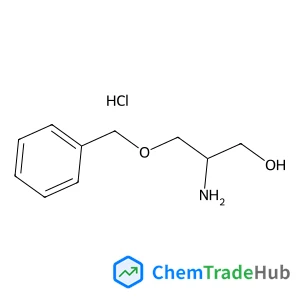
(R)-2-amino-3-(benzyloxy)propan-1-ol hydrochloride
CAS Number:
58577-95-0
Molecular Formula:
C10H16ClNO2
Recommended Suppliers






Disclaimer
This page provides academic journal information for reference and research purposes only. We are not affiliated with any journal publishers and do not handle publication submissions. For publication-related inquiries, please contact the respective journal publishers directly.
If you notice any inaccuracies in the information displayed, please contact us at support@chemtradehub.com. We will promptly review and address your concerns.