


Electrochemistry at Ru(0001) in a flowing CO-saturated electrolyte—reactive and inert adlayer phases
Literature Information
Publication Date
2011-02-21
DOI
10.1039/C0CP01001D
Impact Factor
3.676
Authors
O. B. Alves, H. E. Hoster, R. J. Behm
View Original
Abstract
We investigated the electrochemical oxidation and reduction processes on ultrahigh vacuum prepared, smooth and structurally well-characterized Ru(0001) electrodes in a CO-saturated and, for comparison, in a CO-free flowing perchloric acid electrolyte by electrochemical methods and by comparison with previous structural data. Structure and reactivity of the adsorbed layers are largely governed by a critical potential of E = 0.57 V, which determines the onset of Oad formation on the COad saturated surface in the positive-going scan and of Oadreduction in the negative-going scan. Oad formation proceeds via nucleation and 2D growth of high-coverage Oad islands in a surrounding COad phase, and it is connected with COadoxidation at the interface between the two phases. In the negative-going scan, mixed (COad + Oad) phases, most likely a (2 × 2)-(CO + 2O) and a (2×2)-(2CO + O), are proposed to form at E < 0.57 V by reduction of the Oad-rich islands and CO adsorption into the resulting lower-density Oad structures. CO bulk oxidation rates in the potential range E > 0.57 V are low, but significantly higher than those observed during oxidation of pre-adsorbed CO in the CO-free electrolyte. We relate this to high local COad coverages due to CO adsorption in the CO-saturated electrolyte, which lowers the CO adsorption energy and thus the barrier for COadoxidation during CO bulk oxidation.
Recommended Journals

Kinetics and Catalysis

Journal of Organometallic Chemistry

Helvetica Chimica Acta

Pure and Applied Chemistry

Proceedings of the National Academy of Sciences of the United States of America

Science Progress

Journal of Medicinal Chemistry

Molecular Pharmacology

Pharmacological Reviews

Israel Journal of Chemistry
Related Literature
Enhancement of electroluminescence in zirconium poly carboxylic acid-based light emitting diodes by bathophenanthroline ligand
Hashem Shahroosvand, Fahimeh Nasouti, Ahmad Sousaraei, Ezeddin Mohajerani, Amir Khabbazi
2013-04-16
Paper
DOI: 10.1039/C3CP51141C
The detailed characterization of electrochemically switchable molecular assemblies on silicon electrodes
Simone Ciampi, Michael James, Moinul H. Choudhury, Nadim A. Darwish, J. Justin Gooding
2013-05-02
Paper
DOI: 10.1039/C3CP50355K
Tuning the Förster overlap integral: energy transfer over 20 Ångstroms from a pyrene-based donor to borondipyrromethene (Bodipy)
Dan Bai, Andrew C. Benniston, Jerry Hagon, Helge Lemmetyinen, Nikolai V. Tkachenko, Ross W. Harrington
2013-05-07
Paper
DOI: 10.1039/C3CP50173F
The effect of the molecular structures of dicyanomethylene compounds on their supramolecular assembly, photophysical and electrochemical properties
Catiúcia R. M. O. Matos, Fabio S. Miranda, José W. de M. Carneiro, Carlos B. Pinheiro, Célia M. Ronconi
2013-05-31
Paper
DOI: 10.1039/C3CP51957K
The binding and fluorescence quenching efficiency of nitroaromatic (explosive) vapors in fluorescent carbazole dendrimer thin films
Paul E. Shaw, Hamish Cavaye, Simon S. Y. Chen, Ian R. Gentle, Paul L. Burn
2013-05-15
Paper
DOI: 10.1039/C3CP51372F
Sorption enhanced CO2 methanation
Andreas Borgschulte, Noris Gallandat, Benjamin Probst, Riccardo Suter, Elsa Callini, Davide Ferri, Yadira Arroyo, Rolf Erni, Hans Geerlings, Andreas Züttel
2013-04-15
Paper
DOI: 10.1039/C3CP51408K
Oxidatively stable polyaniline:polyacid electrodes for electrochemical energy storage
Ju-Won Jeon, Yuguang Ma, Jared F. Mike, Lin Shao, Perla B. Balbuena, Jodie L. Lutkenhaus
2013-04-18
Paper
DOI: 10.1039/C3CP51620B
Highly-efficient charge separation and polaron delocalization in polymer–fullerene bulk-heterojunctions: a comparative multi-frequency EPR and DFT study
Jens Niklas, Kristy L. Mardis, Brian P. Banks, Gregory M. Grooms, Andreas Sperlich, Vladimir Dyakonov, Serge Beaupré, Mario Leclerc, Tao Xu, Luping Yu, Oleg G. Poluektov
2013-05-14
Paper
DOI: 10.1039/C3CP51477C
Catalyst driven optical properties of the self – assembled ZnS nanostructures
M. Hafeez, S. Rehman, U. Manzoor, M. A. Khan, A. S. Bhatti
2013-04-15
Paper
DOI: 10.1039/C3CP50534K
You might also like
Compound Q&A
How is Ethyl 4-chlorothieno[2,3-b]pyridine-5-carboxylate (CAS: 59713-58-5) typically synthesized?
Ethyl 4-chlorothieno[2,3-b]pyridine-5-carboxylate (CAS: 59713-58-5) can be synth...
59713-58-5Ethyl 4-chlorothieno...
Compound Q&A
What regulatory guidelines apply to 5-Methyl-1H-indole-3-carbaldehyde (CAS: 52562-50-2)?
5-Methyl-1H-indole-3-carbaldehyde (CAS: 52562-50-2) is subject to various regula...
52562-50-25-Methyl-1H-indole-3...
Compound Q&A
What are the physical and chemical properties of (1,3-Dimethyl-2,4-dioxo-1,2,3,4-tetrahydro-5-pyrimidinyl)boronic acid (CAS: 223418-73-3)?
(1,3-Dimethyl-2,4-dioxo-1,2,3,4-tetrahydro-5-pyrimidinyl)boronic acid is a white...
223418-73-3(1,3-Dimethyl-2,4-di...
Compound Q&A
How should waste containing Sulfocostunolide A (CAS: 1016983-51-9) be handled?
Waste containing Sulfocostunolide A (CAS: 1016983-51-9) should be handled with c...
1016983-51-9Sulfocostunolide A
Compound Q&A
What precautions should be taken when handling Murraxocin (CAS: 88478-44-8)?
When handling Murraxocin (CAS: 88478-44-8), ensure proper personal protective eq...
88478-44-8Murraxocin
Compound Q&A
What are the physical and chemical properties of Formvar (CAS: 63148-64-1)?
Formvar (CAS: 63148-64-1) is an alkyd resin characterized by a high molecular we...
63148-64-1Formvar(R)
Compound Q&A
Is (S)-4-benzyl-2-((benzyloxy)methyl)morpholine (CAS: 205242-66-6) safe?
(S)-4-benzyl-2-((benzyloxy)methyl)morpholine is generally safe when handled with...
205242-66-6(S)-4-benzyl-2-((ben...
Compound Q&A
What industries use Methyl 1-(5-bromo-2-pyrimidinyl)cyclopropanecarboxylate (CAS: 1447607-69-3)?
Methyl 1-(5-bromo-2-pyrimidinyl)cyclopropanecarboxylate (CAS: 1447607-69-3) is p...
1447607-69-3Methyl 1-(5-bromo-2-...
Compound Q&A
Is 2-Methyl-1-phenyl-1-propanamine hydrochloride (CAS: 24290-47-9) safe?
2-Methyl-1-phenyl-1-propanamine hydrochloride (CAS: 24290-47-9) is generally con...
24290-47-92-Methyl-1-phenyl-1-...
Compound Q&A
How is 3-(4-Bromophenyl)-2-methylpropanoic acid (CAS: 66735-01-1) typically synthesized?
3-(4-Bromophenyl)-2-methylpropanoic acid is synthesized through a multi-step pro...
66735-01-13-(4-Bromophenyl)-2-...
Source Journal
Physical Chemistry Chemical Physics

CiteScore:
5.5
Self-citation Rate:
10.3%
Articles per Year:
3036
Physical Chemistry Chemical Physics (PCCP) is an international journal co-owned by 19 physical chemistry and physics societies from around the world. This journal publishes original, cutting-edge research in physical chemistry, chemical physics and biophysical chemistry. To be suitable for publication in PCCP, articles must include significant innovation and/or insight into physical chemistry; this is the most important criterion that reviewers and Editors will judge against when evaluating submissions. The journal has a broad scope and welcomes contributions spanning experiment, theory, computation and data science. Topical coverage includes spectroscopy, dynamics, kinetics, statistical mechanics, thermodynamics, electrochemistry, catalysis, surface science, quantum mechanics, quantum computing and machine learning. Interdisciplinary research areas such as polymers and soft matter, materials, nanoscience, energy, surfaces/interfaces, and biophysical chemistry are welcomed if they demonstrate significant innovation and/or insight into physical chemistry. Joined experimental/theoretical studies are particularly appreciated when complementary and based on up-to-date approaches.
Recommended Compounds



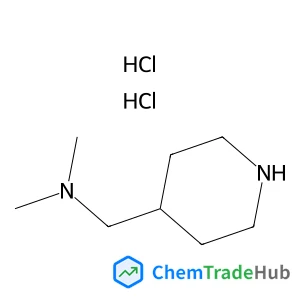
N,N-dimethyl(piperidin-4-yl)methanamine hydrochloride
CAS Number:
172281-72-0
Molecular Formula:
C8H20Cl2N2
Recommended Suppliers








Disclaimer
This page provides academic journal information for reference and research purposes only. We are not affiliated with any journal publishers and do not handle publication submissions. For publication-related inquiries, please contact the respective journal publishers directly.
If you notice any inaccuracies in the information displayed, please contact us at support@chemtradehub.com. We will promptly review and address your concerns.