












![4-{1-[4-(4,4,5,5-Tetramethyl-1,3,2-dioxaborolan-2-yl)phenyl]cyclopropyl}morpholine structure](https://static.chemtradehub.com/structs/120/1206594-08-2-7afb.webp "4-{1-[4-(4,4,5,5-Tetramethyl-1,3,2-dioxaborolan-2-yl)phenyl]cyclopropyl}morpholine structure")
4-{1-[4-(4,4,5,5-Tetramethyl-1,3,2-dioxaborolan-2-yl)phenyl]cyclopropyl}morpholine
CAS Number:
1206594-08-2
Molecular Formula:
C19H28BNO3
Emilia Tang, Devis Di Tommaso, Nora H. de Leeuw
First principles density functional theory (Perdew–Burke–Ernzerhof) calculations have been used to compute the hydration properties, aqueous-phase acid dissociation constants (pKa) and Gibbs free energies of formation of small polyphosphates in aqueous solution. The effect of the hydrated environment has been simulated through a hybrid microsolvation–continuum approach, where the phosphate species are simulated as microsolvated solutes, while the remainder of the bulk solvent is treated as a dielectric continuum using the COSMO solvation model. The solvation free energies of orthophosphates and pyrophosphates have been computed applying monomer and cluster thermodynamic cycles, and using the geometries optimised in the gas-phase as well as in the COSMO environment. The results indicate that the simple polarisable continuum or microsolvation–continuum models are unable to compute accurate free energies of solvation for charged species like phosphates. The calculation of the pKa shows that the computed values of acid dissociation constants are critically dependent on the number of water molecules nH2O included in the hydrated phosphate clusters. The optimal number nH2O is determined from the minimum value of the “incremental” water binding free energy associated with the process of adding a water molecule to a micro-solvated phosphate species. Analysis of the effect of nH2O on the free energies of orthophosphate condensation reactions shows that can vary by tenths of kcal mol−1, depending on the particular choice of nH2O for the monomeric and dimeric species. We discuss a methodology for the determination of nH2O; for the orthophosphates the “incremental” binding energy approach is used to determine nH2O, whereas for the polyphosphates the number of explicit water molecules is simply equal to the effective charge of these anions. The application of this method to compute the free energy of formation of pyro- and tri-phosphates gives generally good agreement with the available experimental data.
Richard P. Baker, Matthew L. Costen, Gus Hancock, Grant A. D. Ritchie, Dean Summerfield
DOI: 10.1039/A907955F
Denis J. Robinson, Lucinda Davies, Neil McGuire, Darren F. Lee, Paul McMorn, David J. Willock, Graeme W. Watson, Philip C. Bulman Page, Donald Bethell
DOI: 10.1039/A907605K
Qian Ma, Kewen Lei, Jian Ding, Lin Yu, Jiandong Ding
DOI: 10.1039/C7PY01411B
M. Tsuji, Y. Tamaura
DOI: 10.1039/A907614J
Sergei Skokov, Joel M. Bowman
DOI: 10.1039/A907983A
Juan M. Ruso, Pablo Taboada, David Attwood, Víctor Mosquera, Félix Sarmiento
DOI: 10.1039/A909407E
Wolfgang Knolle, Uwe Müller, Reiner Mehnert
DOI: 10.1039/A907162H
Ingeborg Schreur-Piet, Johan P. A. Heuts
DOI: 10.1039/C7PY01583F
Tanja van Mourik, David M. Benoit, Sarah L. Price, David C. Clary
DOI: 10.1039/A909183A
Ethyl 4-chlorothieno[2,3-b]pyridine-5-carboxylate (CAS: 59713-58-5) can be synth...
5-Methyl-1H-indole-3-carbaldehyde (CAS: 52562-50-2) is subject to various regula...
(1,3-Dimethyl-2,4-dioxo-1,2,3,4-tetrahydro-5-pyrimidinyl)boronic acid is a white...
Waste containing Sulfocostunolide A (CAS: 1016983-51-9) should be handled with c...
When handling Murraxocin (CAS: 88478-44-8), ensure proper personal protective eq...
Formvar (CAS: 63148-64-1) is an alkyd resin characterized by a high molecular we...
(S)-4-benzyl-2-((benzyloxy)methyl)morpholine is generally safe when handled with...
Methyl 1-(5-bromo-2-pyrimidinyl)cyclopropanecarboxylate (CAS: 1447607-69-3) is p...
2-Methyl-1-phenyl-1-propanamine hydrochloride (CAS: 24290-47-9) is generally con...
3-(4-Bromophenyl)-2-methylpropanoic acid is synthesized through a multi-step pro...

Physical Chemistry Chemical Physics (PCCP) is an international journal co-owned by 19 physical chemistry and physics societies from around the world. This journal publishes original, cutting-edge research in physical chemistry, chemical physics and biophysical chemistry. To be suitable for publication in PCCP, articles must include significant innovation and/or insight into physical chemistry; this is the most important criterion that reviewers and Editors will judge against when evaluating submissions. The journal has a broad scope and welcomes contributions spanning experiment, theory, computation and data science. Topical coverage includes spectroscopy, dynamics, kinetics, statistical mechanics, thermodynamics, electrochemistry, catalysis, surface science, quantum mechanics, quantum computing and machine learning. Interdisciplinary research areas such as polymers and soft matter, materials, nanoscience, energy, surfaces/interfaces, and biophysical chemistry are welcomed if they demonstrate significant innovation and/or insight into physical chemistry. Joined experimental/theoretical studies are particularly appreciated when complementary and based on up-to-date approaches.
![2-(Methylsulfonyl)-2,4,5,6-tetrahydropyrrolo[3,4-c]pyrazole structure](https://static.chemtradehub.com/structs/122/1226781-80-1-09d5.webp "2-(Methylsulfonyl)-2,4,5,6-tetrahydropyrrolo[3,4-c]pyrazole structure")
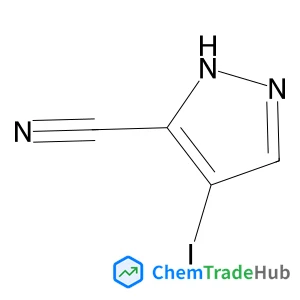
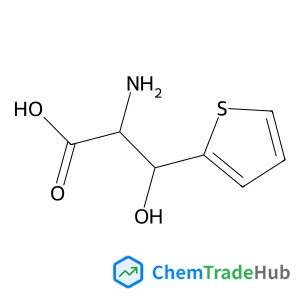
![9H-Fluoren-9-ylmethyl [(2S)-1-hydroxy-3-(1H-indol-3-yl)-2-propanyl]carbamate structure](https://static.chemtradehub.com/structs/153/153815-60-2-a67d.webp "9H-Fluoren-9-ylmethyl [(2S)-1-hydroxy-3-(1H-indol-3-yl)-2-propanyl]carbamate structure")






