


![L-Threonine, N-[[4,7,10-tris(carboxymethyl)-1,4,7,10-tetraazacyclododec-1-yl]acetyl]-D-phenylalanyl-L-cysteinyl-L-tyrosyl-D-tryptophyl-L-lysyl-L-threonyl-L-cysteinyl-, cyclic (2→7)-disulfide, acetate (salt) (9CI) structure](https://static.chemtradehub.com/structs/177/177943-89-4-6312.webp "L-Threonine, N-[[4,7,10-tris(carboxymethyl)-1,4,7,10-tetraazacyclododec-1-yl]acetyl]-D-phenylalanyl-L-cysteinyl-L-tyrosyl-D-tryptophyl-L-lysyl-L-threonyl-L-cysteinyl-, cyclic (2→7)-disulfide, acetate (salt) (9CI) structure")
Unravelling the atomic structure of cross-linked (1 × 2) TiO2(110)
Literature Information
Publication Date
2010-08-17
DOI
10.1039/C0CP00160K
Impact Factor
3.676
Authors
Jeppe V. Lauritsen, Flemming Besenbacher, Angelika Kühnle
View Original
Abstract
The cross-linked (1 × 2) reconstruction of TiO2(110) is a frequently observed phase reflecting the surface structure of titania in a significantly reduced state. Here we resolve the atomic scale structure of the cross-linked (1 × 2) phase with dynamic scanning force microscopy operated in the non-contact mode (NC-AFM). From an analysis of the atomic-scale contrast patterns of the titanium and oxygen sub-structures obtained by imaging the surface with AFM tips having different tip apex termination, we infer the hitherto most accurate model of the atomic structure of the cross-linked (1 × 2) phase. Our findings suggest that the reconstruction is based on added rows in [001] direction built up of Ti3O6 units with an uninterrupted central string of oxygen atoms accompanied by a regular sequence of cross-links consisting of linear triples of additional oxygen atoms in between the rows. The new insight obtained from NC-AFM solves previous controversy about the cross-linked TiO2(110) surface structure, since previously proposed models based on cross-links with a lower O content do not appear to be consistent with the atom-resolved data presented here. Instead, our measurements strongly support the Ti3O6 motif to be the structural base of the cross-linked (1 × 2) reconstruction of TiO2(110).
Recommended Journals

Science Progress

Journal of Organometallic Chemistry

Kinetics and Catalysis

Proceedings of the National Academy of Sciences of the United States of America

Journal of Medicinal Chemistry

Journal of Physics and Chemistry of Solids

Helvetica Chimica Acta

Journal of Catalysis

Israel Journal of Chemistry

Russian Chemical Reviews
Related Literature
First three examples of taxane-derived di-propellanes in Taxus canadensis needles
Qing Wen Shi, Françoise Sauriol, Alain Lesimple, Lolita O. Zamir
2004-02-04
Communication
DOI: 10.1039/B316051C
Relative importance of hydrogen bonding and coordinating groups in modulating the zinc–water acidity
Juan C. Mareque-Rivas, Ravi Prabaharan, Rafael Torres Martín de Rosales
2003-11-04
Communication
DOI: 10.1039/B310956A
Peroxides in ordered nanoporous silicas: clean alternatives to transition metal oxidants for the removal of toxic gases
Michael J. Hudson, Dominic B. Jackson, Jessica L. Ward, Matt J. Chinn
2003-11-07
Communication
DOI: 10.1039/B310872D
Utilisation of [11C]-labelled boron carbonyl complexes in palladium carbonylation reaction
Hélène Audrain, Laurent Martarello, Antony Gee, Dirk Bender
2004-01-29
Communication
DOI: 10.1039/B314982J
A novel water-soluble and self-doped conducting polyaniline graft copolymer
Woo Jin Bae, Keon Hyeong Kim, Yun Heum Park, Won Ho Jo
2003-10-09
Communication
DOI: 10.1039/B309346H
Structural codons: linearity/helicity interconversion by pyridine/pyrimidine exchange in molecular strands
Ibon Odriozola, Nathalie Kyritsakas, Jean-Marie Lehn
2003-11-12
Communication
DOI: 10.1039/B311045A
A novel azulene synthesis from the Ramirez ylide involving two different modes of its reaction with activated alkynes
Lee J. Higham, P. Gabriel Kelly, David M. Corr, Helge Müller-Bunz, Brian J. Walker, Declan G. Gilheany
2004-02-11
Communication
DOI: 10.1039/B316759C
Mesoporous silica with Ia3d cubic structure and good thermal stability
Jiebin Pang, J. Eric Hampsey, Qingyuan Hu, Zhiwang Wu, Vijay T. John, Yunfeng Lu
2004-02-12
Communication
DOI: 10.1039/B316501A
Self-indicating amine scavenger resins
Jin Ku Cho, Peter D. White, Wolfgang Klute, Tony W. Dean, Mark Bradley
2004-01-27
Communication
DOI: 10.1039/B315426B
Generation of strong, homochiral bases by electrochemical reduction of phenazine derivatives
A. Mateo Alonso, Roberto Horcajada, Helen J. Groombridge, Reshma Mandalia, Majid Motevalli, James H. P. Utley, Peter B. Wyatt
2004-01-20
Communication
DOI: 10.1039/B313995F
You might also like
Compound Q&A
How should waste containing 2-Ethyl-4-Methyl-1H-Imidazole-5-Carbaldehyde (CAS: 88634-80-4) be handled?
Waste containing 2-Ethyl-4-Methyl-1H-Imidazole-5-Carbaldehyde (CAS: 88634-80-4) ...
88634-80-42-Ethyl-4-Methyl-1H-...
Compound Q&A
What industries use Triethoxy(octyl)silane (CAS: 1385031-14-0)?
Triethoxy(octyl)silane (CAS: 1385031-14-0) is widely used in the pharmaceuticals...
1385031-14-0Triethoxy(octyl)sila...
Compound Q&A
Are there alternatives to 3-iodo-7-nitro-1H-indazole (CAS: 864724-64-1) in synthesis?
Several alternatives to 3-iodo-7-nitro-1H-indazole (CAS: 864724-64-1) exist in t...
864724-64-13-iodo-7-nitro-1H-in...
Compound Q&A
Are there alternatives to Benzene, bis[(trimethoxysilyl)ethyl] (CAS: 266317-71-9) in synthesis?
Yes, there are alternatives to Benzene, bis[(trimethoxysilyl)ethyl] (CAS: 266317...
266317-71-9Benzene, bis[(trimet...
Compound Q&A
Is Isothiazole-3-carbonitrile (CAS: 1452-17-1) safe?
Isothiazole-3-carbonitrile (CAS: 1452-17-1) is generally considered safe when us...
1452-17-1Isothiazole-3-carbon...
Compound Q&A
Is (3-Chlorophenyl)methanol (CAS: 873-63-2) safe?
(3-Chlorophenyl)methanol (CAS: 873-63-2) is considered low to moderately toxic. ...
873-63-2(3-Chlorophenyl)meth...
Compound Q&A
How is (2S,3S)-2-Hydroxy-3-({[(2-methyl-2-propanyl)oxy]carbonyl}amino)-3-(2-naphthyl)propanoic acid (CAS: 959583-98-3) typically synthesized?
(2S,3S)-2-Hydroxy-3-({[(2-methyl-2-propanyl)oxy]carbonyl}amino)-3-(2-naphthyl)pr...
959583-98-3(2S,3S)-2-Hydroxy-3-...
Compound Q&A
What precautions should be taken when handling Methyl 2-(bromomethyl)-5-methoxybenzoate (CAS: 788081-99-2)?
Proper handling of methyl 2-(bromomethyl)-5-methoxybenzoate requires the use of ...
788081-99-2Methyl 2-(bromomethy...
Compound Q&A
What is 6,8-Dibromoimidazo[1,2-a]pyridine-2-carboxylic acid (CAS: 904805-36-3)?
6,8-Dibromoimidazo[1,2-a]pyridine-2-carboxylic acid (CAS: 904805-36-3) is an aro...
904805-36-36,8-Dibromoimidazo[1...
Compound Q&A
Is 3-Amino-5-bromo-2-pyridinecarbonitrile (CAS: 573675-27-1) safe?
3-Amino-5-bromo-2-pyridinecarbonitrile is considered safe when handled under pro...
573675-27-13-Amino-5-bromo-2-py...
Source Journal
Physical Chemistry Chemical Physics

CiteScore:
5.5
Self-citation Rate:
10.3%
Articles per Year:
3036
Physical Chemistry Chemical Physics (PCCP) is an international journal co-owned by 19 physical chemistry and physics societies from around the world. This journal publishes original, cutting-edge research in physical chemistry, chemical physics and biophysical chemistry. To be suitable for publication in PCCP, articles must include significant innovation and/or insight into physical chemistry; this is the most important criterion that reviewers and Editors will judge against when evaluating submissions. The journal has a broad scope and welcomes contributions spanning experiment, theory, computation and data science. Topical coverage includes spectroscopy, dynamics, kinetics, statistical mechanics, thermodynamics, electrochemistry, catalysis, surface science, quantum mechanics, quantum computing and machine learning. Interdisciplinary research areas such as polymers and soft matter, materials, nanoscience, energy, surfaces/interfaces, and biophysical chemistry are welcomed if they demonstrate significant innovation and/or insight into physical chemistry. Joined experimental/theoretical studies are particularly appreciated when complementary and based on up-to-date approaches.
Recommended Compounds
![[3-Chloro-5-(diethylcarbamoyl)phenyl]boronic acid structure](https://static.chemtradehub.com/structs/957/957120-59-1-febc.webp "[3-Chloro-5-(diethylcarbamoyl)phenyl]boronic acid structure")
[3-Chloro-5-(diethylcarbamoyl)phenyl]boronic acid
CAS Number:
957120-59-1
Molecular Formula:
C11H15BClNO3
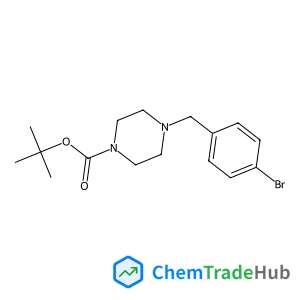
2-Methyl-2-propanyl 4-(4-bromobenzyl)-1-piperazinecarboxylate
CAS Number:
844891-10-7
Molecular Formula:
C16H23BrN2O2
Recommended Suppliers






Disclaimer
This page provides academic journal information for reference and research purposes only. We are not affiliated with any journal publishers and do not handle publication submissions. For publication-related inquiries, please contact the respective journal publishers directly.
If you notice any inaccuracies in the information displayed, please contact us at support@chemtradehub.com. We will promptly review and address your concerns.