












Antimicrobial polysiloxane polymers and coatings containing pendant levofloxacin
Literature Information
Publication Date
2010-01-28
DOI
10.1039/B9PY00309F
Impact Factor
5.582
Authors
Alex Kugel, Scott Ebert, Michael Jepperson, Laura Jarabek, Shane Stafslien
View Original
Abstract
A broad-spectrumantimicrobial drug, levofloxacin, was successfully incorporated into a siloxane coating by covalent attachment. First, an epoxy-functional poly(dimethylsiloxane) (Ep-PDMS) was synthesized by platinum-catalyzed hydrosilylation using poly(methylhydro-co-dimethyl)siloxane and allyl glycidyl ether. Next, levofloxacin was reacted with Ep-PDMS using a stoichiometric excess of epoxy groups relative to levofloxacin to produce a siloxanecopolymer containing both pendant levofloxacin and epoxy moieties (levo-Ep-PDMS). Since attachment (i.e. tethering) of levofloxacin occurred via ring-opening of epoxy groups by the carboxylic acidgroup of levofloxacin, the tether produced was an ester-functional tether. Crosslinked surface coatings were produced by solution blending the polymer with diethylenetriamine as a crosslinker. Compared to a control coating produced by simply blending levofloxacin into a polysiloxane, the coating containing tethered levofloxacin moieties displayed a uniform distribution of levofloxacin, higher initial kill, and sustained antimicrobial surface activity.
Recommended Journals
Related Literature
Chemoenzymatic synthesis of prodigiosin analogues—exploring the substrate specificity of PigC
Suresh R. Chawrai, Neil R. Williamson, George P. C. Salmond, Finian J. Leeper
2008-02-05
Communication
DOI: 10.1039/B719353J
A new enantiopure unsaturated dicarboxylate as a 4-connected unit in a flexible homochiral PtS-type framework
Jian Zhang, Xianhui Bu
2008-02-11
Communication
DOI: 10.1039/B719368H
Amplified nitric oxide photorelease in DNA proximity
Fiorella L. Callari, Salvatore Sortino
2008-03-20
Communication
DOI: 10.1039/B800132D
Stabilization of cobalt oxyhydrate superconductor
Zhi Ren, Cao Wang, Xiang-fan Xu, Guang-han Cao, Zhu-an Xu, Yu-heng Zhang
2008-03-03
Communication
DOI: 10.1039/B800378E
A practical demonstration of electronic promotion in the reduction of ceria coated PGM catalysts
Shik Chi Tsang, Stan Golunski, Paul Collier
2008-02-18
Communication
DOI: 10.1039/B718956G
A highly efficient and selective turn-on fluorescent sensor for Cu2+ ion based on calix[4]arene bearing four iminoquinoline subunits on the upper rim
Chuan-Feng Chen, Zhi-Tang Huang
2008-02-14
Communication
DOI: 10.1039/B800258D
Functionalized polyesters from organocatalyzed ROP of gluOCA, the O-carboxyanhydride derived from glutamic acid
Olivier Thillaye du Boullay, Colin Bonduelle, Blanca Martin-Vaca, Didier Bourissou
2008-03-17
Communication
DOI: 10.1039/B800852C
Cobalt promoted copper manganese oxide catalysts for ambient temperature carbon monoxide oxidation
Christopher Jones, Stuart H. Taylor, Andrew Burrows, Mandy J. Crudace, Christopher J. Kiely, Graham J. Hutchings
2008-02-01
Communication
DOI: 10.1039/B800052M
Cu-catalyzed stereoselective conjugate addition of arylboronic acids to alkynoates
Yoshihiko Yamamoto, Naohiro Kirai, Yu Harada
2008-03-25
Communication
DOI: 10.1039/B802231C
You might also like
Compound Q&A
What is the market or research trend for N-(4-Methoxybenzyl)-2-pyridinamine (CAS: 52818-63-0)?
N-(4-Methoxybenzyl)-2-pyridinamine (CAS: 52818-63-0) is increasingly being used ...
52818-63-0N-(4-Methoxybenzyl)-...
Compound Q&A
What precautions should be taken when handling Ethyl 4-(2-chlorophenyl)-1,3-thiazole-2-carboxylate (CAS: 1050507-06-6)?
When handling Ethyl 4-(2-chlorophenyl)-1,3-thiazole-2-carboxylate, appropriate p...
1050507-06-6Ethyl 4-(2-chlorophe...
Compound Q&A
What regulatory guidelines apply to diethyldiselane (CAS: 628-39-7)?
Diethyldiselane (CAS: 628-39-7) is classified under the Globally Harmonized Syst...
628-39-7Diethyldiselane
Compound Q&A
What is the market or research trend for oxocopper (CAS: 12053-18-8)?
The market for oxocopper (CAS: 12053-18-8) is primarily driven by its use in cat...
12053-18-8oxocopper; oxo-(oxoc...
Compound Q&A
What is the market or research trend for 5-{[(2-Methyl-2-propanyl)oxy]carbonyl}-5-azaspiro[2.4]heptane-7-carboxylic acid?
The market for 5-{[(2-Methyl-2-propanyl)oxy]carbonyl}-5-azaspiro[2.4]heptane-7-c...
1268519-54-55-{[(2-Methyl-2-prop...
Compound Q&A
What is 2-(1-Pyrrolidinyl)-4-pyridinamine (CAS: 35981-63-6)?
2-(1-Pyrrolidinyl)-4-pyridinamine is a chemical compound with the CAS number 359...
35981-63-62-(1-Pyrrolidinyl)-4...
Compound Q&A
What are the physical and chemical properties of 2-(3-Pyridinyl)-1-azabicyclo[2.2.2]octane (CAS: 91556-75-1)?
2-(3-Pyridinyl)-1-azabicyclo[2.2.2]octane (CAS: 91556-75-1) is a crystalline sol...
91556-75-12-(3-Pyridinyl)-1-az...
Compound Q&A
How is (S)-Alpha-allyl-proline hydrochloride (CAS: 129704-91-2) typically synthesized?
(S)-Alpha-allyl-proline hydrochloride is usually synthesized via a Wittig reacti...
129704-91-2(S)-Alpha-allyl-prol...
Compound Q&A
What is 3-Methyl-1,2-oxazole-5-carboxylic acid (CAS: 4857-42-5)?
3-Methyl-1,2-oxazole-5-carboxylic acid (CAS: 4857-42-5) is an organic compound w...
4857-42-53-Methyl-1,2-oxazole...
Compound Q&A
How is Lys-SMCC-DM1 (CAS: 1281816-04-3) typically synthesized?
Lys-SMCC-DM1 is synthesized via a multi-step process involving the coupling of S...
1281816-04-3Lys-SMCC-DM1
Source Journal
Polymer Chemistry

CiteScore:
8.6
Self-citation Rate:
7.3%
Articles per Year:
457
Polymer Chemistry welcomes submissions in all areas of polymer science that have a strong focus on macromolecular chemistry. Manuscripts may cover a broad range of fields, yet no direct application focus is required.
Recommended Compounds
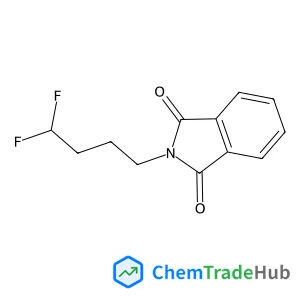
2-(4,4-Difluorobutyl)-1H-isoindole-1,3(2H)-dione
CAS Number:
1265341-14-7
Molecular Formula:
C12H11F2NO2
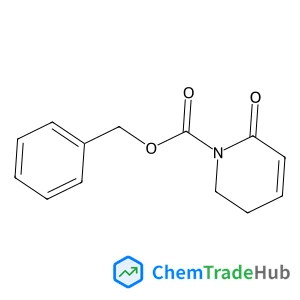
Benzyl 6-oxo-3,6-dihydro-1(2H)-pyridinecarboxylate
CAS Number:
725746-35-0
Molecular Formula:
C13H13NO3
![1,10-bis(3,5-dimethylphenyl)-12-hydroxy-4,5,6,7-tetrahydroiindeno[7,1-de:1',7'-fg][1,3,2]dioxaphosphocine 12-oxide structure](https://static.chemtradehub.com/structs/141/1412439-82-7-b9a9.webp "1,10-bis(3,5-dimethylphenyl)-12-hydroxy-4,5,6,7-tetrahydroiindeno[7,1-de:1',7'-fg][1,3,2]dioxaphosphocine 12-oxide structure")
1,10-bis(3,5-dimethylphenyl)-12-hydroxy-4,5,6,7-tetrahydroiindeno[7,1-de:1',7'-fg][1,3,2]dioxaphosphocine 12-oxide
CAS Number:
1412439-82-7
Molecular Formula:
C33H31O4P
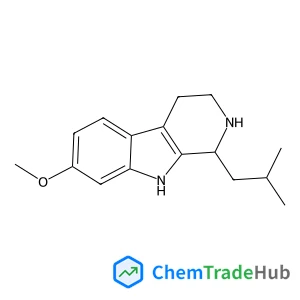
1-Isobutyl-7-methoxy-2,3,4,9-tetrahydro-1H-beta-carboline
CAS Number:
175975-76-5
Molecular Formula:
C16H22N2O
Recommended Suppliers





Disclaimer
This page provides academic journal information for reference and research purposes only. We are not affiliated with any journal publishers and do not handle publication submissions. For publication-related inquiries, please contact the respective journal publishers directly.
If you notice any inaccuracies in the information displayed, please contact us at support@chemtradehub.com. We will promptly review and address your concerns.