












Photophysics of aromatic thiourea derivatives and their complexes with anions. Fast and ultrafast spectroscopic investigations
Literature Information
Publication Date
2010-06-04
DOI
10.1039/B927442A
Impact Factor
3.676
Authors
Tiziana Del Giacco, Benedetta Carlotti, Stefano De Solis, Arianna Barbafina, Fausto Elisei
View Original
Abstract
In order to collect detailed information on the interaction mechanism between fluorescent thiourea derivatives and anions, 9-[4-(trifluoromethyl)phenylthioureidomethyl]anthracene (1) and the corresponding 10-cyanoanthracene derivative (2) were synthesized and investigated in DMSO and MeCN by using absorption and emission steady state techniques, both in the absence and in the presence of different anions (AcO−, H2PO4−, HSO4−, and Br−). A wide examination of the mechanism of anion recognition was also performed by time-resolved transient absorption spectroscopy, with nano- and femto-second time resolution. A complete picture of the excited state deactivation pathways of 1 and 2, where the main operative processes were fluorescence, intersystem crossing and internal conversion, was obtained. Even if steady-state measurements suggest that 1 and 2 selectively interact in the ground state with the anions H2PO4− and AcO−, time-resolved investigations demonstrate that the substrates are able to complex all the four anions. The photophysics of such complexes was fully characterized. The anions mainly modify the lifetime of the lowest excited singlet state and, especially in the cases of H2PO4− and AcO−, the efficiencies of fluorescence emission and triplet formation. In particular, no evidence was found of further deactivation processes such as photoinduced electron transfer, photodissociation, and photoionization.
Related Literature
Olefination of aldehydes with alpha-halo redox-active esters
Zhengqiang Liu, Wenbo H. Liu
2023-12-14
Research Article
DOI: 10.1039/D3QO01805A
Divergent synthesis of 3,4-dihydro-2H-benzo[h]chromen-2-one and fluorenone derivatives from ortho-alkynylarylketones
Jantra Jantrapirom, Nitwaree Palavong
2023-10-25
Paper
DOI: 10.1039/D3OB01492D
Halogen bonding and mechanochemistry combined: synthesis, characterization, and application of N-iodosaccharin pyridine complexes
Khai-Nghi Truong, Jas S. Ward, Rakesh Puttreddy, Anssi Rajala, Elias Lassila, Carsten Bolm, Kari Rissanen
2023-12-05
Research Article
DOI: 10.1039/D3QO01512B
Pulsed electrolysis: enhancing primary benzylic C(sp3)–H nucleophilic fluorination
Alexander P. Atkins, Atul K. Chaturvedi, Joseph A. Tate, Alastair J. J. Lennox
2023-12-13
Research Article
DOI: 10.1039/D3QO01865B
Porphyrin- and Bodipy-helicene conjugates: syntheses, separation of enantiomers and chiroptical properties
Vincent Silber, Marion Jean, Nicolas Vanthuyne, Natalia Del Rio, Paola Matozzo, Jeanne Crassous, Romain Ruppert
2023-10-25
Paper
DOI: 10.1039/D3OB01459B
Copper-catalyzed crosscoupling of vinyl nitrenes and CF3-carbenes to synthesize CF3-2-azadienes
Yongjuan Jiao, Tao Wu, Xinyu Zhang
2023-11-07
Research Article
DOI: 10.1039/D3QO01537H
Asymmetric total synthesis of montanine-type amaryllidaceae alkaloids
Fang Wang, Xiaohan Xu, Yangtian Yan, Jiayang Zhang, Yang Yang
2023-12-03
Research Article
DOI: 10.1039/D3QO01835K
Azaborahelicene fluorophores derived from four-coordinate N,C-boron chelates: synthesis, photophysical and chiroptical properties
José Francisco Rizo, Jesús F. Arteaga, Ludovic Favereau, Abel Ros, Uwe Pischel
2023-12-19
Research Article
DOI: 10.1039/D3QO01762A
You might also like
Compound Q&A
What precautions should be taken when handling 2-Methyl-2-propanyl 5-amino-2-thiophenecarboxylate (CAS: 1498311-57-1)?
When handling 2-Methyl-2-propanyl 5-amino-2-thiophenecarboxylate (CAS: 1498311-5...
1498311-57-12-Methyl-2-propanyl ...
Compound Q&A
What are the physical and chemical properties of 5-Bromo-1,2-dichloro-3-fluorobenzene (CAS: 1000572-93-9)?
5-Bromo-1,2-dichloro-3-fluorobenzene (CAS: 1000572-93-9) is a crystalline solid ...
1000572-93-95-Bromo-1,2-dichloro...
Compound Q&A
How should (2R)-2-Amino-2-(4-bromophenyl)ethanol (CAS: 354153-64-3) be stored?
(2R)-2-Amino-2-(4-bromophenyl)ethanol (CAS: 354153-64-3) should be stored in a c...
354153-64-3(2R)-2-Amino-2-(4-br...
Compound Q&A
What regulatory guidelines apply to Methyl 4-(aminomethyl)tetrahydro-2H-pyran-4-carboxylate hydrochloride (CAS: 362707-24-2)?
Methyl 4-(aminomethyl)tetrahydro-2H-pyran-4-carboxylate hydrochloride (CAS: 3627...
362707-24-2Methyl 4-(aminomethy...
Compound Q&A
What are the main uses of 1,4-dimethyl-1H-pyrazole-5-sulfonyl chloride (CAS: 1174834-52-6)?
1,4-Dimethyl-1H-pyrazole-5-sulfonyl chloride is primarily used as an intermediat...
1174834-52-61,4-dimethyl-1H-pyra...
Compound Q&A
Is Dinaphtho[1,2-b:2',1'-d]furan (CAS: 239-69-0) safe?
Dinaphtho[1,2-b:2',1'-d]furan is generally safe when handled with appropriate pe...
239-69-0Dinaphtho[1,2-b:2',1...
Compound Q&A
What is the market or research trend for 7-Methyl-7,9-dihydro-1H-purine-2,6,8(3H)-trione (CAS: 612-37-3)?
The market for 7-Methyl-7,9-dihydro-1H-purine-2,6,8(3H)-trione (CAS: 612-37-3) i...
612-37-37-Methyl-7,9-dihydro...
Compound Q&A
What are the physical and chemical properties of 2-(4-Chlorophenyl)malonaldehyde (CAS: 205676-17-1)?
2-(4-Chlorophenyl)malonaldehyde (CAS: 205676-17-1) is a colorless or light yello...
205676-17-12-(4-Chlorophenyl)ma...
Compound Q&A
How is 2-Methylchrysene (CAS: 3351-32-4) typically synthesized?
2-Methylchrysene (CAS: 3351-32-4) is typically synthesized via the reaction of c...
3351-32-42-Methylchrysene
Compound Q&A
Is N-(6-aminopyrimidin-4-yl)acetamide (CAS: 89533-23-3) safe?
N-(6-aminopyrimidin-4-yl)acetamide (CAS: 89533-23-3) is generally considered saf...
89533-23-3N-(6-aminopyrimidin-...
Source Journal
Physical Chemistry Chemical Physics

CiteScore:
5.5
Self-citation Rate:
10.3%
Articles per Year:
3036
Physical Chemistry Chemical Physics (PCCP) is an international journal co-owned by 19 physical chemistry and physics societies from around the world. This journal publishes original, cutting-edge research in physical chemistry, chemical physics and biophysical chemistry. To be suitable for publication in PCCP, articles must include significant innovation and/or insight into physical chemistry; this is the most important criterion that reviewers and Editors will judge against when evaluating submissions. The journal has a broad scope and welcomes contributions spanning experiment, theory, computation and data science. Topical coverage includes spectroscopy, dynamics, kinetics, statistical mechanics, thermodynamics, electrochemistry, catalysis, surface science, quantum mechanics, quantum computing and machine learning. Interdisciplinary research areas such as polymers and soft matter, materials, nanoscience, energy, surfaces/interfaces, and biophysical chemistry are welcomed if they demonstrate significant innovation and/or insight into physical chemistry. Joined experimental/theoretical studies are particularly appreciated when complementary and based on up-to-date approaches.
Recommended Compounds
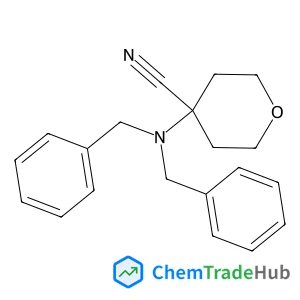
4-(Dibenzylamino)tetrahydro-2H-pyran-4-carbonitrile
CAS Number:
1630906-81-8
Molecular Formula:
C20H22N2O
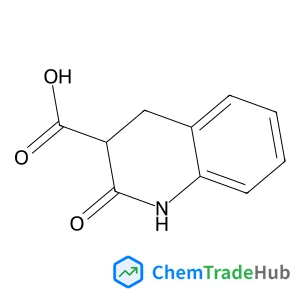
2-Oxo-1,2,3,4-tetrahydro-3-quinolinecarboxylic acid
CAS Number:
246867-17-4
Molecular Formula:
C10H9NO3
Recommended Suppliers





Disclaimer
This page provides academic journal information for reference and research purposes only. We are not affiliated with any journal publishers and do not handle publication submissions. For publication-related inquiries, please contact the respective journal publishers directly.
If you notice any inaccuracies in the information displayed, please contact us at support@chemtradehub.com. We will promptly review and address your concerns.