












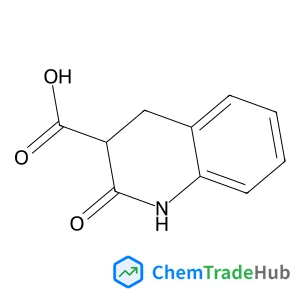
2-Oxo-1,2,3,4-tetrahydro-3-quinolinecarboxylic acid
CAS Number:
246867-17-4
Molecular Formula:
C10H9NO3
Simon R. Bare, Shelly D. Kelly, Bruce Ravel, Nan Greenlay, Lisa King, George E. Mickelson
In situ X-ray absorption spectroscopy (XAS) in catalysis research has traditionally been conducted by making one measurement at a time on a single sample. In an industrial research environment this is especially limiting as sample throughput (productivity) and turnaround time (direct project relevance) are critical issues in the use of XAS in a fast-moving technology delivery project. In order to address these issues we have developed and implemented a four-channel ionization chamber combined with two different in situ cells that allows XAS data to be collected simultaneously from four samples, or four regions, in transmission geometry without any sample or detector movement. In the development of this new capability it was realized that there are other benefits from this simultaneous detection in addition to increased productivity. Namely, (i) the use of EXAFS to determine the structure of a catalyst in situ axially at four different positions down a catalyst bed; (ii) the ability to collect up to four XAFS spectra simultaneously and thereby avoid any scan-to-scan uncertainties, and (iii) the added confidence in the ability to discriminate small differences in similarly prepared catalysts which is typical in the development of a commercial catalyst. Specific illustrations of each of these applications are shown. The methodology is simple to implement and could be used on any XAFS beamline with a horizontal fan of radiation, such as at a typical bending magnet or wiggler source beamline.
Krzysztof Bartkowski, Abhishek Kumar Gupta, Tomas Matulaitis, Maja Morawiak, Eli Zysman-Colman, Marcin Lindner
DOI: 10.1039/D3QO01914D
Zhen Liu, Mitch Mathiew, Jichao Chen, Xiangdong Yu, Dandan Shang, Javey Khiapeng Tan, Philip Wai Hong Chan, Weidong Rao
DOI: 10.1039/D3QO01655B
Shuyuan Liang, Liangjian Tang, Ying Chen, Xueqiu Huang, Xueqin Wei
DOI: 10.1039/D3QO01525D
Irene Paramio
DOI: 10.1039/D3QO01630G
Justin S. Lamb, Futa Koyama, Noriyuki Suzuki, Yumiko Suzuki
DOI: 10.1039/D3QO01579C
Adrián Luguera Ruiz, Elena Mariani, Stefano Protti, Maurizio Fagnoni
DOI: 10.1039/D3QO01856C
Ganesh Sambasivam, Govindarajulu Gavara, Ramraj S, Gaikwad Rajendra, Karthikeyan Sivashanmugam
DOI: 10.1039/D3OB90143B
Olga M. Mulina, Vera A. Vil’
DOI: 10.1039/D3QO01690K
Jiangwei Wen, Xue Sun, Kelu Yan, Tingtao Yan, Zhen Liu, Yang Li, Jianjing Yang
DOI: 10.1039/D3QO01577G
Yuanrui Jiang, Wenjing Zhu, Jiawen Huang, Fan Luo, Xiaobei Chen, Chunhui Fang, Xin Chen, Shihui Liu, Yanwei Hu, Shilei Zhang
DOI: 10.1039/D3QO01109G
When handling 2-Methyl-2-propanyl 5-amino-2-thiophenecarboxylate (CAS: 1498311-5...
5-Bromo-1,2-dichloro-3-fluorobenzene (CAS: 1000572-93-9) is a crystalline solid ...
(2R)-2-Amino-2-(4-bromophenyl)ethanol (CAS: 354153-64-3) should be stored in a c...
Methyl 4-(aminomethyl)tetrahydro-2H-pyran-4-carboxylate hydrochloride (CAS: 3627...
1,4-Dimethyl-1H-pyrazole-5-sulfonyl chloride is primarily used as an intermediat...
Dinaphtho[1,2-b:2',1'-d]furan is generally safe when handled with appropriate pe...
The market for 7-Methyl-7,9-dihydro-1H-purine-2,6,8(3H)-trione (CAS: 612-37-3) i...
2-(4-Chlorophenyl)malonaldehyde (CAS: 205676-17-1) is a colorless or light yello...
2-Methylchrysene (CAS: 3351-32-4) is typically synthesized via the reaction of c...
N-(6-aminopyrimidin-4-yl)acetamide (CAS: 89533-23-3) is generally considered saf...

Physical Chemistry Chemical Physics (PCCP) is an international journal co-owned by 19 physical chemistry and physics societies from around the world. This journal publishes original, cutting-edge research in physical chemistry, chemical physics and biophysical chemistry. To be suitable for publication in PCCP, articles must include significant innovation and/or insight into physical chemistry; this is the most important criterion that reviewers and Editors will judge against when evaluating submissions. The journal has a broad scope and welcomes contributions spanning experiment, theory, computation and data science. Topical coverage includes spectroscopy, dynamics, kinetics, statistical mechanics, thermodynamics, electrochemistry, catalysis, surface science, quantum mechanics, quantum computing and machine learning. Interdisciplinary research areas such as polymers and soft matter, materials, nanoscience, energy, surfaces/interfaces, and biophysical chemistry are welcomed if they demonstrate significant innovation and/or insight into physical chemistry. Joined experimental/theoretical studies are particularly appreciated when complementary and based on up-to-date approaches.
![3-(benzotriazol-1-yl)-N-[[2-[(3-bromophenyl)methoxy]phenyl]methylideneamino]propanamide structure](https://static.chemtradehub.com/structs/559/5595-78-8-0a32.webp "3-(benzotriazol-1-yl)-N-[[2-[(3-bromophenyl)methoxy]phenyl]methylideneamino]propanamide structure")
![4-Chloro-N-{[4-(dimethylamino)phenyl]carbamoyl}benzenesulfonamide structure](https://static.chemtradehub.com/structs/558/5581-42-0-7dcb.webp "4-Chloro-N-{[4-(dimethylamino)phenyl]carbamoyl}benzenesulfonamide structure")

![2-[2-(2-Methoxyethoxy)ethoxy]-2-methylpropane structure](https://static.chemtradehub.com/structs/527/52788-79-1-71c1.webp "2-[2-(2-Methoxyethoxy)ethoxy]-2-methylpropane structure")



