


A simple method for N-arylation of secondary amides/amines through a NaH-initiated aryne generation strategy
Literature Information
Publication Date
2023-10-03
DOI
10.1039/D3QO01109G
Impact Factor
5.281
Authors
Yuanrui Jiang, Wenjing Zhu, Jiawen Huang, Fan Luo, Xiaobei Chen, Chunhui Fang, Xin Chen, Shihui Liu, Yanwei Hu, Shilei Zhang
View Original
Abstract
A very simple and practical method has been uncovered for N-arylation of many sets of secondary amides/amines. The reaction could be easily conducted in a vial without the use of strictly anhydrous reagents and/or an inert atmosphere. This transition metal-free coupling reaction was based on the use of our previously reported novel aryne generation system: a combination of o-diiodoarene and sodium hydride. In our protocol, sodium hydride acts as an iodophile by forming a neighboring-group-assisted transition state with o-diiodoarene, which greatly enhances the metal–halogen exchange process. o-Diiodoarene has two roles in the reaction: (i) as an aryne precursor to produce an aryne at near room temperature and (ii) as an electrophilic iodine donor to support the generation of the final o-iodoaryl product. The generality of the method is demonstrated by 99 examples containing almost all kinds of amides and amines.
Recommended Journals

Faraday Discussions

Photochemical & Photobiological Sciences

CrystEngComm

Physical Chemistry Chemical Physics

Journal of Enzyme inhibition and Medicinal Chemistry

Foundations of Chemistry

Angewandte Chemie International Edition

Environmental Toxicology and Pharmacology

Molecular Diversity

Journal of Medical Biochemistry
Related Literature
A tunable single-component warm white-light Sr3Y(PO4)3:Eu2+,Mn2+ phosphor for white-light emitting diodes
Hongpeng You
2011-07-20
Paper
DOI: 10.1039/C1CP20635D
Sensitive triplet exciton detection in polyfluorene using Pd-coordinated porphyrin
Maria Antonietta Loi
2011-07-06
Communication
DOI: 10.1039/C1CP21146C
Existence of time-dependent density-functional theory for open electronic systems: Time-dependent holographic electron density theorem
Xiao Zheng, ChiYung Yam, Fan Wang, GuanHua Chen
2011-06-06
Paper
DOI: 10.1039/C1CP20777F
Nonequilibrium transport in quantum impurity models: exact path integral simulations
Dvira Segal, Andrew J. Millis, David R. Reichman
2011-06-15
Paper
DOI: 10.1039/C1CP20702D
Spin seebeck coefficient of a molecular spin pump
Jonas Fransson, Michael Galperin
2011-06-07
Paper
DOI: 10.1039/C1CP20720B
Monolayer properties of uronic acid bicatenary derivatives at the air–water interface: effect of hydroxyl group stereochemistry evidenced by experimental and computational approaches
Hary Razafindralambo, Aurore Richel, Bernard Wathelet, Christophe Blecker, Jean-Paul Wathelet, Robert Brasseur, Laurence Lins, Jose Miñones, Jr., Michel Paquot
2011-07-22
Paper
DOI: 10.1039/C1CP21365B
Questioning the photophysical model for the indolechromophore in the light of evidence obtained by controlling the non-specific effect of the medium with 1-chlorobutane as solvent
Juan Pablo Catalán
2011-07-14
Paper
DOI: 10.1039/C1CP21380F
Resonant dissociative electron attachments to cysteine and cystine
Yong-Feng Wang, Shan Xi Tian, Jinlong Yang
2011-07-25
Paper
DOI: 10.1039/C1CP21267B
Excitons in semiconducting carbon nanotubes: diameter-dependent photoluminescence spectra
Yoshihiko Kanemitsu
2011-07-07
Perspective
DOI: 10.1039/C1CP21235D
Polarization induced water molecule dissociation below the first-order electronic-phase transition temperature
Andrew Das Arulsamy, Zlatko Kregar, Kristina Eleršič, Martina Modic, Uma Shankar Subramani
2011-07-21
Paper
DOI: 10.1039/C1CP20138G
You might also like
Compound Q&A
How should 2-Methylbenzene-1,4-diamine dihydrochloride (CAS: 615-45-2) be stored?
2-Methylbenzene-1,4-diamine dihydrochloride (CAS: 615-45-2) should be stored in ...
615-45-22-Methylbenzene-1,4-...
Compound Q&A
Is (1S,4S)-2,5-Diazabicyclo[2.2.1]heptane dihydrobromide (CAS: 132747-20-7) safe?
(1S,4S)-2,5-Diazabicyclo[2.2.1]heptane dihydrobromide is generally considered sa...
132747-20-7(1S,4S)-2,5-Diazabic...
Compound Q&A
What industries use (6-Chloropyridazin-3-YL)methanamine (CAS: 871826-15-2)?
(6-Chloropyridazin-3-YL)methanamine finds applications in the pharmaceutical ind...
871826-15-2(6-Chloropyridazin-3...
Compound Q&A
What are the main uses of 2-Fluoro-3-methylphenol (CAS: 77772-72-6)?
2-Fluoro-3-methylphenol is primarily used in the synthesis of pharmaceuticals, p...
77772-72-62-Fluoro-3-methylphe...
Compound Q&A
What precautions should be taken when handling 3-Methoxy-4-nitrobenzonitrile (CAS: 177476-75-4)?
When handling 3-Methoxy-4-nitrobenzonitrile, it is important to wear appropriate...
177476-75-43-Methoxy-4-nitroben...
Compound Q&A
What precautions should be taken when handling 1,3-Oxazolo[4,5-b]pyridine-2(3H)-thione (CAS: 211949-57-4)?
When handling 1,3-Oxazolo[4,5-b]pyridine-2(3H)-thione (CAS: 211949-57-4), it is ...
211949-57-4[1,3]Oxazolo[4,5-b]p...
Compound Q&A
What regulatory guidelines apply to 4-Ethynylbenzamide (CAS: 90347-86-7)?
4-Ethynylbenzamide (CAS: 90347-86-7) falls under various regulatory guidelines i...
90347-86-74-Ethynylbenzamide
Compound Q&A
What are the main uses of 3-(2-Ethylphenyl)-2-thioxo-4-imidazolidinone (CAS: 186822-57-1)?
3-(2-Ethylphenyl)-2-thioxo-4-imidazolidinone is primarily used as an intermediat...
186822-57-13-(2-Ethylphenyl)-2-...
Compound Q&A
What is (2-Fluoro-6-methoxyphenyl)acetic acid (CAS: 500912-19-6)?
(2-Fluoro-6-methoxyphenyl)acetic acid, also known as 4-fluoro-3-methoxybenzoic a...
500912-19-6(2-Fluoro-6-methoxyp...
Compound Q&A
What is the market or research trend for 2-[4-(Hydroxymethyl)phenoxy]ethanol (CAS: 102196-18-9)?
Market trends for 2-[4-(Hydroxymethyl)phenoxy]ethanol (CAS: 102196-18-9) indicat...
102196-18-92-[4-(Hydroxymethyl)...
Source Journal
Organic Chemistry Frontiers

CiteScore:
7.8
Self-citation Rate:
8.7%
Articles per Year:
724
Organic Chemistry Frontiers publishes high-quality research from across organic chemistry. Emphases are placed on studies that make significant contributions to the field of organic chemistry by reporting either new or significantly improved protocols or methodologies. Topics include, but are not limited to the following: Organic synthesis Development of synthetic methodologies Catalysis Natural products Functional organic materials Supramolecular and macromolecular chemistry Physical and computational organic chemistry
Recommended Compounds

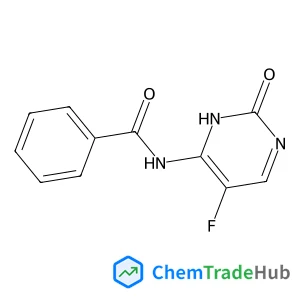
N-(5-Fluoro-2-oxo-2,3-dihydro-4-pyrimidinyl)benzamide
CAS Number:
10357-07-0
Molecular Formula:
C11H8FN3O2
Recommended Suppliers






Disclaimer
This page provides academic journal information for reference and research purposes only. We are not affiliated with any journal publishers and do not handle publication submissions. For publication-related inquiries, please contact the respective journal publishers directly.
If you notice any inaccuracies in the information displayed, please contact us at support@chemtradehub.com. We will promptly review and address your concerns.