












Self-promotion mechanism for CO electrooxidation on gold
Literature Information
Publication Date
2010-06-24
DOI
10.1039/B926365A
Impact Factor
3.676
Authors
Paramaconi Rodriguez, Marc T. M. Koper
View Original
Abstract
CO electrooxidation on Au(111), Au(100) and Au(110) electrodes in 0.1 M HClO4 and 0.1 M NaOH solutions has been studied by means of voltammetric measurements with hanging meniscus rotating bead-type electrodes. It is found that the reaction order in CO concentration is close to unity at potentials close to the onset of CO oxidation, and then it becomes higher than unity at higher potentials for all studied surfaces except for Au(111) in 0.1 M HClO4. This behavior indicates that CO oxidation on gold takes place through a self-promotion mechanism, in which the presence of CO on the gold surface enhances the adsorption of its own oxidant. Specifically, this mechanism offers a plausible explanation for the higher catalytic activity in alkaline solutions, since CO adsorption is stronger under these conditions, and thus it can lead to a higher enhancement of the adsorption of the oxidant species.
Related Literature
Metal-free spin and spin-gapless semiconducting heterobilayers: monolayer boron carbonitrides on hexagonal boron nitride
Hongyu Zhang, Yuanyuan Sun, Yingchun Ding, Jie Chen, Youwei Du, Nujiang Tang
2017-05-08
Paper
DOI: 10.1039/C7CP01088E
Buckling behaviour of composites with double walled nanotubes from carbon and phosphorus
Jing Wan, Likui Yang, Ning Wei, Jiao Shi, Qing-Hua Qin
2017-03-28
Paper
DOI: 10.1039/C7CP01274H
Electron stimulated desorption from condensed pyrimidine and pyridazine
L. Ellis-Gibbings, A. D. Bass, P. Cloutier, G. García, L. Sanche
2017-04-28
Paper
DOI: 10.1039/C7CP00715A
Ultrathin CoOx-modified hematite with low onset potential for solar water oxidation
Chun Du, Jun Wang, Xiao Liu, Jie Yang, Kun Cao, Yanwei Wen
2017-05-22
Paper
DOI: 10.1039/C7CP01588G
Effects of orientation at the phthalocyanine–CdSe interface on the electron transfer characteristics
B. V. Nazarchuk, V. V. Golovanova, N. V. Tkachenko, T. T. Rantala
2017-03-24
Paper
DOI: 10.1039/C7CP00833C
Chiral supramolecular organization from a sheet-like achiral gel: a study of chiral photoinduction
Jorge Royes, Víctor Polo, Santiago Uriel, Luis Oriol, Milagros Piñol, Rosa M. Tejedor
2017-05-05
Paper
DOI: 10.1039/C7CP01739A
CH stretching excitation promotes its cleavage in the F + CHD3(ν1 = 1) → HF + CD3 reaction at low collision energies
Jiayue Yang, Bo Jiang
2017-04-27
Paper
DOI: 10.1039/C7CP01428G
Phonons spreading from laser-heated gold nanoparticle array accelerate diffusion of excitons in an underlying polythiophene thin film
David Rais, Miroslav Menšík, Bartosz Paruzel, Dharmalingam Kurunthu, Jiří Pfleger
2017-03-24
Paper
DOI: 10.1039/C7CP00286F
The effect of Y3+ substitution on the structural, optical band-gap, and magnetic properties of cobalt ferrite nanoparticles
H. V. S. Pessoni, A. Franco Jr.
2017-06-01
Paper
DOI: 10.1039/C7CP02167D
Can boron antisites of BNNTs be an efficient metal-free catalyst for nitrogen fixation? – A DFT investigation
2017-05-23
Paper
DOI: 10.1039/C7CP02220D
You might also like
Compound Q&A
How should waste containing N-Methoxy-N-methyl-1,3-thiazole-5-carboxamide (CAS: 898825-89-3) be handled?
Waste containing N-Methoxy-N-methyl-1,3-thiazole-5-carboxamide (CAS: 898825-89-3...
898825-89-3N-Methoxy-N-methyl-1...
Compound Q&A
How should N-(4-Biphenylyl)dibenzo[b,d]furan-4-amine (CAS: 1318338-47-4) be stored?
N-(4-Biphenylyl)dibenzo[b,d]furan-4-amine should be stored in a tightly sealed c...
1318338-47-4N-(4-Biphenylyl)dibe...
Compound Q&A
What is the market or research trend for 3-Acetamido-5-amino-2,4,6-triiodobenzoic acid (CAS: 1713-07-1)?
The market for 3-Acetamido-5-amino-2,4,6-triiodobenzoic acid (CAS: 1713-07-1) is...
1713-07-13-Acetamido-5-amino-...
Compound Q&A
How should Benzyl 2-O-acetyl-3,4,6-tri-O-benzyl-beta-D-galactopyranoside (CAS: 61820-03-9) be stored?
Benzyl 2-O-acetyl-3,4,6-tri-O-benzyl-beta-D-galactopyranoside (CAS: 61820-03-9) ...
61820-03-9Benzyl 2-O-acetyl-3,...
Compound Q&A
What regulatory guidelines apply to 2-Ethylpiperazine dihydrochloride (CAS: 438050-52-3)?
2-Ethylpiperazine dihydrochloride (CAS: 438050-52-3) is regulated under the Glob...
438050-52-32-Ethylpiperazine di...
Compound Q&A
What regulatory guidelines apply to 1,1'-[1,3-Phenylenebis(methylene)]bis(3-methyl-1H-pyrrole-2,5-dione) (CAS: 119462-56-5)?
1,1'-[1,3-Phenylenebis(methylene)]bis(3-methyl-1H-pyrrole-2,5-dione) (CAS: 11946...
119462-56-51,1'-[1,3-Phenyleneb...
Compound Q&A
Are there alternatives to 5-Fluoro-2-(1-pyrrolidinyl)pyridine (CAS: 1287217-79-1) in synthesis?
Several alternatives can be used in the synthesis of 5-Fluoro-2-(1-pyrrolidinyl)...
1287217-79-15-Fluoro-2-(1-pyrrol...
Compound Q&A
What precautions should be taken when handling 1-((2R,3R,4R,5R)-5-((bis(4-methoxyphenyl)(phenyl)methoxy)methyl)-4-hydroxy-3-methoxytetrahydrofuran-2-yl)-5-methylpyrimidine-2,4(1H,3H)-dione (CAS: 153631-19-7)?
Proper personal protective equipment (PPE) must be worn when handling this compo...
153631-19-71-((2R,3R,4R,5R)-5-(...
Compound Q&A
What precautions should be taken when handling 6-Bromoimidazo[1,2-a]pyridin-8-amine (CAS: 676371-00-9)?
When handling 6-Bromoimidazo[1,2-a]pyridin-8-amine, it is important to wear appr...
676371-00-96-Bromoimidazo[1,2-a...
Compound Q&A
Are there alternatives to (2S,4R)-4-(4-Nitrobenzyl)pyrrolidine-2-carboxylic acid hydrochloride (CAS: 1049740-22-8) in synthesis?
Alternatives to (2S,4R)-4-(4-Nitrobenzyl)pyrrolidine-2-carboxylic acid hydrochlo...
1049740-22-8(2S,4R)-4-(4-Nitrobe...
Source Journal
Physical Chemistry Chemical Physics

CiteScore:
5.5
Self-citation Rate:
10.3%
Articles per Year:
3036
Physical Chemistry Chemical Physics (PCCP) is an international journal co-owned by 19 physical chemistry and physics societies from around the world. This journal publishes original, cutting-edge research in physical chemistry, chemical physics and biophysical chemistry. To be suitable for publication in PCCP, articles must include significant innovation and/or insight into physical chemistry; this is the most important criterion that reviewers and Editors will judge against when evaluating submissions. The journal has a broad scope and welcomes contributions spanning experiment, theory, computation and data science. Topical coverage includes spectroscopy, dynamics, kinetics, statistical mechanics, thermodynamics, electrochemistry, catalysis, surface science, quantum mechanics, quantum computing and machine learning. Interdisciplinary research areas such as polymers and soft matter, materials, nanoscience, energy, surfaces/interfaces, and biophysical chemistry are welcomed if they demonstrate significant innovation and/or insight into physical chemistry. Joined experimental/theoretical studies are particularly appreciated when complementary and based on up-to-date approaches.
Recommended Compounds
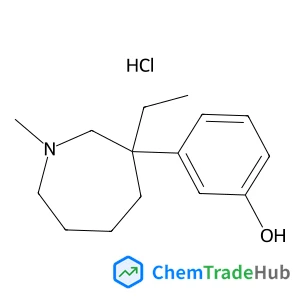
3-(3-Ethyl-1-methyl-3-azepanyl)phenol hydrochloride (1:1)
CAS Number:
59263-76-2
Molecular Formula:
C15H24ClNO

Methyl 2-cyano-3,12-dioxooleana-1,9(11)-dien-28-oate
CAS Number:
218600-53-4
Molecular Formula:
C32H43NO4

Recommended Suppliers





Disclaimer
This page provides academic journal information for reference and research purposes only. We are not affiliated with any journal publishers and do not handle publication submissions. For publication-related inquiries, please contact the respective journal publishers directly.
If you notice any inaccuracies in the information displayed, please contact us at support@chemtradehub.com. We will promptly review and address your concerns.