













Methanol oxidation enhanced by the presence of O2 at novel Pt–C co-sputtered electrode
Literature Information
Publication Date
2010-05-15
DOI
10.1039/B926115J
Impact Factor
3.676
Authors
Minoru Umeda, Kazuhiro Nagai, Masahiko Shibamine, Mitsuhiro Inoue
View Original
Abstract
In this paper, we describe a novel electrode that exhibits sensitized methanol electrooxidation in an oxygen atmosphere. A binary Pt–C electrode has been developed for use as the anode catalyst of a direct methanol fuel cell using a co-sputtering technique. Characterizations of the electrodes revealed that the sputtered Pt–C forms nanosize and phase-separated Pt and C domains, in which the Pt particle size decreases and its crystallinity gradually becomes amorphous with increasing C content. The current density of methanol oxidation in deaerated conditions exhibited a maximum value at a C content of 23 at%. The result can be well explained from the viewpoints of the morphology and binding energy of Pt. The methanol oxidation current is sensitized by O2 when the Pt–C electrode contains >23 at% C, and the extent of sensitization increases monotonically with C content. This phenomenon is not observed at a Pt electrode. The sensitization mechanism was investigated by considering the reduction reaction of O2; it was clarified that the amount of adsorbed species created by O2 reduction increases with increasing C content. It was deduced that the Pt–OH produced by O2 reduction participates in oxidation of Pt–CO, which is believed to be the rate-determining step of the methanol electrooxidation.
Related Literature
Harnessing photocatalytic and electrochemical approaches for C–H bond trifluoromethylation and fluoroalkylation
Naveen Sihag, Hemaang Bhartiya, M. Ramu Yadav
2023-12-14
Review Article
DOI: 10.1039/D3QO01603J
Synthesis of biologically important tetrahydroisoquinoline (THIQ) motifs using quantum dot photocatalyst and evaluation of their anti-bacterial activity
Jiteshkumar P. Deore, Mrinmoy De
2023-11-02
Paper
DOI: 10.1039/D3OB01305G
Olefination of aldehydes with alpha-halo redox-active esters
Zhengqiang Liu, Wenbo H. Liu
2023-12-14
Research Article
DOI: 10.1039/D3QO01805A
A deconstruction–reconstruction strategy to access 1-naphthol derivatives: application to the synthesis of aristolactam scaffolds
Jeong Min Bak, Moonyeong Song, Inji Shin, Hee Nam Lim
2023-10-27
Paper
DOI: 10.1039/D3OB01603J
Visible light photoredox-catalyzed deoxydisulfuration of alcohols
Chaoyang Liu, Xiaoman Lin, Delie An
2023-11-22
Research Article
DOI: 10.1039/D3QO01742G
Autocatalytic photoinduced oxidative dehydrogenation of pyrido[2,3-d]pyrimidin-7(8H)-ones: synthesis of C5–C6 unsaturated systems with concomitant formation of a long-lived radical
Claudi de Rocafiguera, Vega Lloveras, José Vidal-Gancedo, Jordi Teixidó, Roger Estrada-Tejedor, José I. Borrell, Raimon Puig de la Bellacasa
2023-11-02
Research Article
DOI: 10.1039/D3QO01358H
Correction: A facile, one-pot reductive alkylation of aromatic and heteroaromatic amines in aqueous micellar media: a chemoenzymatic approach
Ganesh Sambasivam, Karthikeyan Sivashanmugam
2023-11-03
Correction
DOI: 10.1039/D3OB90144K
Polycyclic aromatic hydrocarbons containing antiaromatic chalcogenopyrano[3,2-b]-chalcogenopyrans
Weinan Chen, Yujie Xie, Jianping Xu, Jia-Wei Cai, Gang Zhou
2023-11-23
Research Article
DOI: 10.1039/D3QO01708G
Synthesis of imidazo[1,2-a]pyridinones via a visible light-photocatalyzed functionalization of alkynes/nitrile insertion/cyclization tandem sequence using micro-flow technology
Minghui Wei, Jiankun Chen, Chengkou Liu, Zhao Yang, Hong Qin, Yujing Hu, Jindian Duan, Yuguang Li
2023-11-17
Research Article
DOI: 10.1039/D3QO01508D
You might also like
Compound Q&A
What precautions should be taken when handling 2-Methyl-2-propanyl 5-amino-2-thiophenecarboxylate (CAS: 1498311-57-1)?
When handling 2-Methyl-2-propanyl 5-amino-2-thiophenecarboxylate (CAS: 1498311-5...
1498311-57-12-Methyl-2-propanyl ...
Compound Q&A
What are the physical and chemical properties of 5-Bromo-1,2-dichloro-3-fluorobenzene (CAS: 1000572-93-9)?
5-Bromo-1,2-dichloro-3-fluorobenzene (CAS: 1000572-93-9) is a crystalline solid ...
1000572-93-95-Bromo-1,2-dichloro...
Compound Q&A
How should (2R)-2-Amino-2-(4-bromophenyl)ethanol (CAS: 354153-64-3) be stored?
(2R)-2-Amino-2-(4-bromophenyl)ethanol (CAS: 354153-64-3) should be stored in a c...
354153-64-3(2R)-2-Amino-2-(4-br...
Compound Q&A
What regulatory guidelines apply to Methyl 4-(aminomethyl)tetrahydro-2H-pyran-4-carboxylate hydrochloride (CAS: 362707-24-2)?
Methyl 4-(aminomethyl)tetrahydro-2H-pyran-4-carboxylate hydrochloride (CAS: 3627...
362707-24-2Methyl 4-(aminomethy...
Compound Q&A
What are the main uses of 1,4-dimethyl-1H-pyrazole-5-sulfonyl chloride (CAS: 1174834-52-6)?
1,4-Dimethyl-1H-pyrazole-5-sulfonyl chloride is primarily used as an intermediat...
1174834-52-61,4-dimethyl-1H-pyra...
Compound Q&A
Is Dinaphtho[1,2-b:2',1'-d]furan (CAS: 239-69-0) safe?
Dinaphtho[1,2-b:2',1'-d]furan is generally safe when handled with appropriate pe...
239-69-0Dinaphtho[1,2-b:2',1...
Compound Q&A
What is the market or research trend for 7-Methyl-7,9-dihydro-1H-purine-2,6,8(3H)-trione (CAS: 612-37-3)?
The market for 7-Methyl-7,9-dihydro-1H-purine-2,6,8(3H)-trione (CAS: 612-37-3) i...
612-37-37-Methyl-7,9-dihydro...
Compound Q&A
What are the physical and chemical properties of 2-(4-Chlorophenyl)malonaldehyde (CAS: 205676-17-1)?
2-(4-Chlorophenyl)malonaldehyde (CAS: 205676-17-1) is a colorless or light yello...
205676-17-12-(4-Chlorophenyl)ma...
Compound Q&A
How is 2-Methylchrysene (CAS: 3351-32-4) typically synthesized?
2-Methylchrysene (CAS: 3351-32-4) is typically synthesized via the reaction of c...
3351-32-42-Methylchrysene
Compound Q&A
Is N-(6-aminopyrimidin-4-yl)acetamide (CAS: 89533-23-3) safe?
N-(6-aminopyrimidin-4-yl)acetamide (CAS: 89533-23-3) is generally considered saf...
89533-23-3N-(6-aminopyrimidin-...
Source Journal
Physical Chemistry Chemical Physics

CiteScore:
5.5
Self-citation Rate:
10.3%
Articles per Year:
3036
Physical Chemistry Chemical Physics (PCCP) is an international journal co-owned by 19 physical chemistry and physics societies from around the world. This journal publishes original, cutting-edge research in physical chemistry, chemical physics and biophysical chemistry. To be suitable for publication in PCCP, articles must include significant innovation and/or insight into physical chemistry; this is the most important criterion that reviewers and Editors will judge against when evaluating submissions. The journal has a broad scope and welcomes contributions spanning experiment, theory, computation and data science. Topical coverage includes spectroscopy, dynamics, kinetics, statistical mechanics, thermodynamics, electrochemistry, catalysis, surface science, quantum mechanics, quantum computing and machine learning. Interdisciplinary research areas such as polymers and soft matter, materials, nanoscience, energy, surfaces/interfaces, and biophysical chemistry are welcomed if they demonstrate significant innovation and/or insight into physical chemistry. Joined experimental/theoretical studies are particularly appreciated when complementary and based on up-to-date approaches.
Recommended Compounds
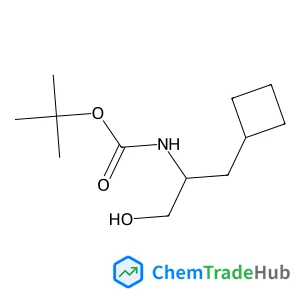
2-Methyl-2-propanyl (1-cyclobutyl-3-hydroxy-2-propanyl)carbamate
CAS Number:
816429-99-9
Molecular Formula:
C12H23NO3
![3-(benzotriazol-1-yl)-N-[[2-[(3-bromophenyl)methoxy]phenyl]methylideneamino]propanamide structure](https://static.chemtradehub.com/structs/559/5595-78-8-0a32.webp "3-(benzotriazol-1-yl)-N-[[2-[(3-bromophenyl)methoxy]phenyl]methylideneamino]propanamide structure")
3-(benzotriazol-1-yl)-N-[[2-[(3-bromophenyl)methoxy]phenyl]methylideneamino]propanamide
CAS Number:
5595-78-8
Molecular Formula:
C32H52O2
Recommended Suppliers





Disclaimer
This page provides academic journal information for reference and research purposes only. We are not affiliated with any journal publishers and do not handle publication submissions. For publication-related inquiries, please contact the respective journal publishers directly.
If you notice any inaccuracies in the information displayed, please contact us at support@chemtradehub.com. We will promptly review and address your concerns.