


Harnessing photocatalytic and electrochemical approaches for C–H bond trifluoromethylation and fluoroalkylation
Literature Information
Publication Date
2023-12-14
DOI
10.1039/D3QO01603J
Impact Factor
5.281
Authors
Naveen Sihag, Hemaang Bhartiya, M. Ramu Yadav
View Original
Abstract
Owing to the importance of trifluoromethyl (CF3) and related moieties in pharmaceuticals and agrochemicals, the photoinduced and electrochemically enabled redox functionalisation of C–H bonds has emerged as one of the most efficient, sustainable, and convenient tools to construct the C–Rf (CF3 and fluoroalkyl) bond. Accordingly, several trifluoromethylating reagents such as CF3I, triflyl chloride, Langlois, Umemoto, and Togni reagents serve as excellent trifluoromethyl radical sources under single-electron redox reaction conditions. The analogous fluoroalkylating reagents have also been developed to achieve C–H bond fluoroalkylation. The present article is mainly focused on recent developments in the “photocatalytic and/or electrochemical” redox approaches for direct trifluoromethylation and fluoroalkylation of diverse C–H bonds. The choice of the fluoroalkylating reagent in different photocatalytic and electrochemical systems and the mechanistic overview of such reactions are deliberated. Furthermore, the current limitations and the future prospects of such reactions are also highlighted.
Recommended Journals

Current Pharmaceutical Biotechnology

Journal of Medical Biochemistry

Contact Lens & Anterior Eye

Angewandte Chemie International Edition

Environmental Toxicology and Pharmacology

Physical Chemistry Chemical Physics

Faraday Discussions

European Journal of Organic Chemistry

Mini-Reviews in Medicinal Chemistry

Molecules
Related Literature
Interactions of 1-butyl-3-methylimidazolium carboxylate ionic liquids with glucose in water: a study of volumetric properties, viscosity, conductivity and NMR
Kelei Zhuo, Yujuan Chen, Jing Chen, Guangyue Bai, Jianji Wang
2011-07-12
Paper
DOI: 10.1039/C1CP20948E
Platinum-nanogaps for single-molecule electronics: room-temperature stability
Ferry Prins, Ahson J. Shaikh, Jan H. van Esch, Rienk Eelkema, Herre S. J. van der Zant
2011-05-09
Paper
DOI: 10.1039/C1CP20555B
Confined crystallization of binary n-alkane mixtures: stabilization of a new rotator phase by enhanced surface freezing and weakened intermolecular interactions
Dongsheng Fu, Yufeng Liu, Guoming Liu, Yunlan Su, Dujin Wang
2011-07-26
Paper
DOI: 10.1039/C1CP21281H
Questioning the photophysical model for the indolechromophore in the light of evidence obtained by controlling the non-specific effect of the medium with 1-chlorobutane as solvent
Juan Pablo Catalán
2011-07-14
Paper
DOI: 10.1039/C1CP21380F
Voltammetry and in situscanning tunnelling spectroscopy of osmium, iron, and ruthenium complexes of 2,2′:6′,2′′-terpyridine covalently linked to Au(111)-electrodes
Princia Salvatore, Allan Glargaard Hansen, Thomas Bjørnholm, Richard John Nichols, Jens Ulstrup
2011-06-23
Paper
DOI: 10.1039/C1CP21197H
Broadening of the derivative discontinuity in density functional theory
P. Schmitteckert
2011-07-27
Paper
DOI: 10.1039/C1CP21247H
A layered structure at the surface of P3HT/PCBM blends
Natalya Schmerl, Gunther Andersson
2011-07-18
Paper
DOI: 10.1039/C1CP20734B
Graphical prediction of quantum interference-induced transmission nodes in functionalized organic molecules
Troels Markussen, Robert Stadler, Kristian S. Thygesen
2011-06-28
Paper
DOI: 10.1039/C1CP20924H
You might also like
Compound Q&A
How should 2-Methylbenzene-1,4-diamine dihydrochloride (CAS: 615-45-2) be stored?
2-Methylbenzene-1,4-diamine dihydrochloride (CAS: 615-45-2) should be stored in ...
615-45-22-Methylbenzene-1,4-...
Compound Q&A
Is (1S,4S)-2,5-Diazabicyclo[2.2.1]heptane dihydrobromide (CAS: 132747-20-7) safe?
(1S,4S)-2,5-Diazabicyclo[2.2.1]heptane dihydrobromide is generally considered sa...
132747-20-7(1S,4S)-2,5-Diazabic...
Compound Q&A
What industries use (6-Chloropyridazin-3-YL)methanamine (CAS: 871826-15-2)?
(6-Chloropyridazin-3-YL)methanamine finds applications in the pharmaceutical ind...
871826-15-2(6-Chloropyridazin-3...
Compound Q&A
What are the main uses of 2-Fluoro-3-methylphenol (CAS: 77772-72-6)?
2-Fluoro-3-methylphenol is primarily used in the synthesis of pharmaceuticals, p...
77772-72-62-Fluoro-3-methylphe...
Compound Q&A
What precautions should be taken when handling 3-Methoxy-4-nitrobenzonitrile (CAS: 177476-75-4)?
When handling 3-Methoxy-4-nitrobenzonitrile, it is important to wear appropriate...
177476-75-43-Methoxy-4-nitroben...
Compound Q&A
What precautions should be taken when handling 1,3-Oxazolo[4,5-b]pyridine-2(3H)-thione (CAS: 211949-57-4)?
When handling 1,3-Oxazolo[4,5-b]pyridine-2(3H)-thione (CAS: 211949-57-4), it is ...
211949-57-4[1,3]Oxazolo[4,5-b]p...
Compound Q&A
What regulatory guidelines apply to 4-Ethynylbenzamide (CAS: 90347-86-7)?
4-Ethynylbenzamide (CAS: 90347-86-7) falls under various regulatory guidelines i...
90347-86-74-Ethynylbenzamide
Compound Q&A
What are the main uses of 3-(2-Ethylphenyl)-2-thioxo-4-imidazolidinone (CAS: 186822-57-1)?
3-(2-Ethylphenyl)-2-thioxo-4-imidazolidinone is primarily used as an intermediat...
186822-57-13-(2-Ethylphenyl)-2-...
Compound Q&A
What is (2-Fluoro-6-methoxyphenyl)acetic acid (CAS: 500912-19-6)?
(2-Fluoro-6-methoxyphenyl)acetic acid, also known as 4-fluoro-3-methoxybenzoic a...
500912-19-6(2-Fluoro-6-methoxyp...
Compound Q&A
What is the market or research trend for 2-[4-(Hydroxymethyl)phenoxy]ethanol (CAS: 102196-18-9)?
Market trends for 2-[4-(Hydroxymethyl)phenoxy]ethanol (CAS: 102196-18-9) indicat...
102196-18-92-[4-(Hydroxymethyl)...
Source Journal
Organic Chemistry Frontiers

CiteScore:
7.8
Self-citation Rate:
8.7%
Articles per Year:
724
Organic Chemistry Frontiers publishes high-quality research from across organic chemistry. Emphases are placed on studies that make significant contributions to the field of organic chemistry by reporting either new or significantly improved protocols or methodologies. Topics include, but are not limited to the following: Organic synthesis Development of synthetic methodologies Catalysis Natural products Functional organic materials Supramolecular and macromolecular chemistry Physical and computational organic chemistry
Recommended Compounds
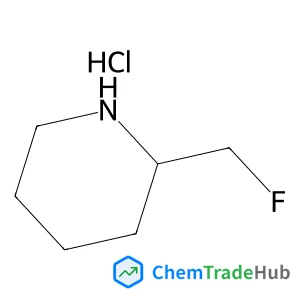
(2S)-2-(Fluoromethyl)piperidine hydrochloride (1:1)
CAS Number:
886216-73-5
Molecular Formula:
C6H13ClFN
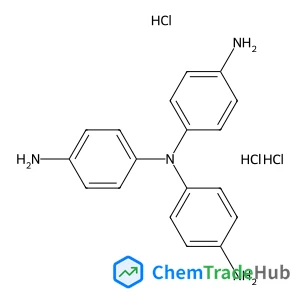
N1,N1-Bis(4-aminophenyl)benzene-1,4-diamine trihydrochloride
CAS Number:
114254-48-7
Molecular Formula:
C18H21Cl3N4
Recommended Suppliers





Disclaimer
This page provides academic journal information for reference and research purposes only. We are not affiliated with any journal publishers and do not handle publication submissions. For publication-related inquiries, please contact the respective journal publishers directly.
If you notice any inaccuracies in the information displayed, please contact us at support@chemtradehub.com. We will promptly review and address your concerns.