













Synthesis of biologically important tetrahydroisoquinoline (THIQ) motifs using quantum dot photocatalyst and evaluation of their anti-bacterial activity
Literature Information
Publication Date
2023-11-02
DOI
10.1039/D3OB01305G
Impact Factor
3.876
Authors
Jiteshkumar P. Deore, Mrinmoy De
View Original
Abstract
Our study introduces an efficient photocatalytic approach for synthesizing biologically significant C1-substituted tetrahydroisoquinoline (THIQ) motifs, employing WS2 quantum dots (QDs) as catalysts. This method enables the formation of C–C and C–P bonds at the C1 position of the THIQ motif. The resulting compounds exhibit substantial antimicrobial activity against methicillin-resistant Staphylococcus aureus (MRSA) bacteria, with low minimum inhibitory concentration (MIC) values. Notably, the WS2 QD catalyst demonstrates recyclability and suitability for gram-scale reactions, underscoring the sustainability and scalability of our approach. Overall, our research presents a versatile and cost-effective strategy for synthesizing C1-substituted THIQ derivatives, highlighting their potential as novel therapeutic agents in biology and medicinal chemistry.
Related Literature
Structures, spectroscopic properties and redox potentials of quaterpyridyl Ru(ii) photosensitizer and its derivatives for solar energy cell: a density functional study
Qing-Jiang Pan, Yuan-Ru Guo, Li Li, Samuel O. Odoh, Hong-Gang Fu, Hong-Xing Zhang
2011-07-07
Paper
DOI: 10.1039/C1CP00030F
Effects of cross-links, pressure and temperature on the thermal properties and glass transition behaviour of polybutadiene
Bounphanh Tonpheng, Junchun Yu, Ove Andersson
2011-07-21
Paper
DOI: 10.1039/C1CP20785G
Theoretical study of the electronically excited radical cations of naphthalene and anthracene as archetypal models for astrophysical observations. Part II. Dynamics consequences‡
S. Ghanta, V. Sivaranjana Reddy, S. Mahapatra
2011-07-12
Paper
DOI: 10.1039/C1CP21084J
Oxygen-containing gas-phase diatomic trications and tetracations: ReOz+, NbOz+ and HfOz+ (z = 3, 4)
V. Brites, K. Franzreb, J. N. Harvey, S. G. Sayres, M. W. Ross, D. E. Blumling, A. W. Castleman, Jr., M. Hochlaf
2011-07-15
Paper
DOI: 10.1039/C1CP21566C
Confined crystallization of binary n-alkane mixtures: stabilization of a new rotator phase by enhanced surface freezing and weakened intermolecular interactions
Dongsheng Fu, Yufeng Liu, Guoming Liu, Yunlan Su, Dujin Wang
2011-07-26
Paper
DOI: 10.1039/C1CP21281H
π-Stacking between Casiopeinas® and DNA bases
Rodrigo Galindo-Murillo, Joseelyne Hernandez-Lima, Mayra González-Rendón, Lena Ruíz-Azuara, Rafael Moreno-Esparza
2011-07-12
Paper
DOI: 10.1039/C1CP20183B
Sensitive triplet exciton detection in polyfluorene using Pd-coordinated porphyrin
Maria Antonietta Loi
2011-07-06
Communication
DOI: 10.1039/C1CP21146C
The protein folding transition-state ensemble from a Gō-like model
Athi N. Naganathan
2011-07-21
Paper
DOI: 10.1039/C1CP20964G
Acid properties of solid acid catalysts characterized by solid-state 31P NMR of adsorbed phosphorous probe molecules
Anmin Zheng, Shing-Jong Huang, Feng Deng
2011-07-25
Perspective
DOI: 10.1039/C1CP20417C
Bias-stress effects in organic field-effect transistors based on self-assembled monolayer nanodielectrics
Florian Colléaux, James M. Ball, Paul H. Wöbkenberg, Peter J. Hotchkiss, Seth R. Marder, Thomas D. Anthopoulos
2011-06-20
Paper
DOI: 10.1039/C1CP20769E
You might also like
Compound Q&A
How should 2-Methylbenzene-1,4-diamine dihydrochloride (CAS: 615-45-2) be stored?
2-Methylbenzene-1,4-diamine dihydrochloride (CAS: 615-45-2) should be stored in ...
615-45-22-Methylbenzene-1,4-...
Compound Q&A
Is (1S,4S)-2,5-Diazabicyclo[2.2.1]heptane dihydrobromide (CAS: 132747-20-7) safe?
(1S,4S)-2,5-Diazabicyclo[2.2.1]heptane dihydrobromide is generally considered sa...
132747-20-7(1S,4S)-2,5-Diazabic...
Compound Q&A
What industries use (6-Chloropyridazin-3-YL)methanamine (CAS: 871826-15-2)?
(6-Chloropyridazin-3-YL)methanamine finds applications in the pharmaceutical ind...
871826-15-2(6-Chloropyridazin-3...
Compound Q&A
What are the main uses of 2-Fluoro-3-methylphenol (CAS: 77772-72-6)?
2-Fluoro-3-methylphenol is primarily used in the synthesis of pharmaceuticals, p...
77772-72-62-Fluoro-3-methylphe...
Compound Q&A
What precautions should be taken when handling 3-Methoxy-4-nitrobenzonitrile (CAS: 177476-75-4)?
When handling 3-Methoxy-4-nitrobenzonitrile, it is important to wear appropriate...
177476-75-43-Methoxy-4-nitroben...
Compound Q&A
What precautions should be taken when handling 1,3-Oxazolo[4,5-b]pyridine-2(3H)-thione (CAS: 211949-57-4)?
When handling 1,3-Oxazolo[4,5-b]pyridine-2(3H)-thione (CAS: 211949-57-4), it is ...
211949-57-4[1,3]Oxazolo[4,5-b]p...
Compound Q&A
What regulatory guidelines apply to 4-Ethynylbenzamide (CAS: 90347-86-7)?
4-Ethynylbenzamide (CAS: 90347-86-7) falls under various regulatory guidelines i...
90347-86-74-Ethynylbenzamide
Compound Q&A
What are the main uses of 3-(2-Ethylphenyl)-2-thioxo-4-imidazolidinone (CAS: 186822-57-1)?
3-(2-Ethylphenyl)-2-thioxo-4-imidazolidinone is primarily used as an intermediat...
186822-57-13-(2-Ethylphenyl)-2-...
Compound Q&A
What is (2-Fluoro-6-methoxyphenyl)acetic acid (CAS: 500912-19-6)?
(2-Fluoro-6-methoxyphenyl)acetic acid, also known as 4-fluoro-3-methoxybenzoic a...
500912-19-6(2-Fluoro-6-methoxyp...
Compound Q&A
What is the market or research trend for 2-[4-(Hydroxymethyl)phenoxy]ethanol (CAS: 102196-18-9)?
Market trends for 2-[4-(Hydroxymethyl)phenoxy]ethanol (CAS: 102196-18-9) indicat...
102196-18-92-[4-(Hydroxymethyl)...
Source Journal
Organic & Biomolecular Chemistry

CiteScore:
3.4
Self-citation Rate:
10.3%
Articles per Year:
1041
Organic & Biomolecular Chemistry (OBC) publishes original and high impact research and reviews in organic chemistry. We welcome research that shows new or significantly improved protocols or methodologies in total synthesis, synthetic methodology or physical and theoretical organic chemistry as well as research that shows a significant advance in the organic chemistry or molecular design aspects of chemical biology, catalysis, supramolecular and macromolecular chemistry, theoretical chemistry, mechanism-oriented physical organic chemistry, medicinal chemistry or natural products. Articles published in the journal should report new work which makes a highly-significant impact in the field. Routine and incremental work is generally not suitable for publication in the journal. More details about key areas of our scope are below. In all cases authors should include in their article clear rationale for why their research has been carried out.
Recommended Compounds
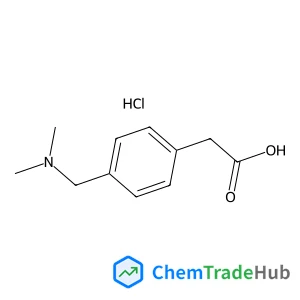
4-(Dimethylaminomethyl)phenylacetic acid hydrochloride
CAS Number:
99985-52-1
Molecular Formula:
C11H16ClNO2
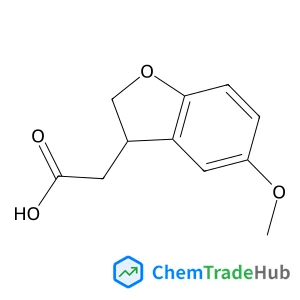
![tert-Butyl 6-chloro-4-oxospiro[chroman-2,4'-piperidine]-1'-carboxylate structure](https://static.chemtradehub.com/structs/101/1011482-37-3-88a5.webp "tert-Butyl 6-chloro-4-oxospiro[chroman-2,4'-piperidine]-1'-carboxylate structure")
tert-Butyl 6-chloro-4-oxospiro[chroman-2,4'-piperidine]-1'-carboxylate
CAS Number:
1011482-37-3
Molecular Formula:
C18H22ClNO4
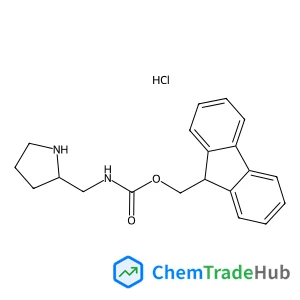
(S)-(9H-Fluoren-9-yl)methyl (pyrrolidin-2-ylmethyl)carbamate hydrochloride
CAS Number:
1217813-15-4
Molecular Formula:
C20H23ClN2O2
Recommended Suppliers




Disclaimer
This page provides academic journal information for reference and research purposes only. We are not affiliated with any journal publishers and do not handle publication submissions. For publication-related inquiries, please contact the respective journal publishers directly.
If you notice any inaccuracies in the information displayed, please contact us at support@chemtradehub.com. We will promptly review and address your concerns.