













Ionicity in ionic liquids: correlation with ionic structure and physicochemical properties
Literature Information
Publication Date
2010-01-12
DOI
10.1039/B921462N
Impact Factor
3.676
Authors
Kazuhide Ueno, Hiroyuki Tokuda, Masayoshi Watanabe
View Original
Abstract
Ionic liquids (ILs) are ambient temperature molten salts that have attracted considerable attention because of their negligible volatility, thermal stability, nonflammability, and high ionic conductivity. These remarkable properties result essentially from their ionic nature. Thus, the concept of ionicity of ILs (i.e. how ionic they are) is of great significance for characterising their properties. Here, we show the methodologies used to assess the ionic nature in ILs. On the basis of quantitative estimation of the ionicity, their dependence on ionic structure, polarity scales, and physicochemical properties is reviewed. The ionicity of certain ILs is also predicted from their physicochemical properties. The effects of different classes of ILs (e.g., protic ILs and lithium ILs) and binary systems consisting of ILs and other components on the ionicity are also discussed.
Related Literature
Thermal reduction of ceria nanostructures on rhodium(111) and re-oxidation by CO2
Benjamin Hagman, Uta Hejral, Johan Gustafson
2018-07-03
Paper
DOI: 10.1039/C8CP01505H
Solute clustering in undersaturated solutions – systematic dependence on time, temperature and concentration
K. Renuka Devi, Dikshitkumar Khamar, Donal Mealey, Dominic Cheuk, Jacek Zeglinski
2018-05-21
Paper
DOI: 10.1039/C8CP01509K
Unraveling doping induced anatase–rutile phase transition in TiO2 using electron, X-ray and gamma-ray as spectroscopic probes
D. Banerjee, Santosh K. Gupta, N. Patra, Sk Wasim Raja, N. Pathak, D. Bhattacharyya, P. K. Pujari, S. V. Thakare, S. N. Jha
2018-10-25
Paper
DOI: 10.1039/C8CP04310H
Photophysics and peripheral ring size dependent aggregate emission of cross-conjugated enediynes: applications to white light emission and vapor sensing
Anuja Singh, Avik Kumar Pati, Ashok Kumar Mishra
2018-01-05
Paper
DOI: 10.1039/C7CP08091C
Electrolyte solvents for high voltage lithium ion batteries: ion correlation and specific anion effects in adiponitrile
Anand Narayanan Kirshnamoorthy, Kristina Oldiges, Andreas Heuer, Isidora Cekic-Laskovic, Christian Holm
2018-09-24
Paper
DOI: 10.1039/C8CP04102D
Optical frequency comb photoacoustic spectroscopy
Ibrahim Sadiek, Tommi Mikkonen, Juha Toivonen, Aleksandra Foltynowicz
2018-10-27
Paper
DOI: 10.1039/C8CP05666H
Rotationally resolved electronic spectroscopy of 3-cyanoindole and the 3-cyanoindole–water complex
Michael Schneider, Marie-Luise Hebestreit, Mirko Matthias Lindic, Hilda Parsian, América Yareth Torres-Boy, Leonardo Álvarez-Valtierra, W. Leo Meerts, Ralf Kühnemuth, Michael Schmitt
2018-08-27
Paper
DOI: 10.1039/C8CP04020F
The effect of N-methylation on the conformational landscape of alanine: the case of N-methyl-l-alanine
E. M. Neeman, I. León, E. R. Alonso, L. Kolesniková, S. Mata, J. L. Alonso
2018-11-08
Paper
DOI: 10.1039/C8CP06043F
Electrokinetic flow of an aqueous electrolyte in amorphous silica nanotubes
Christopher D. Daub, Natalie M. Cann, D. Bratko, Alenka Luzar
2018-10-12
Paper
DOI: 10.1039/C8CP03791D
Synthesis and self-assembly behavior of polyhedral oligomeric silsesquioxane-based triblock copolymers in selective solvents by dissipative particle dynamics simulation
Yun Jin, Danyi Guo, Bo Li, Shouping Xu, Jiang Cheng, Li Li, Xiufang Wen, Pihui Pi
2018-01-10
Paper
DOI: 10.1039/C7CP06020C
You might also like
Compound Q&A
Is 6-(3-Fluorophenyl)picolinic acid (CAS: 887982-40-3) safe?
6-(3-Fluorophenyl)picolinic acid is generally considered safe for laboratory use...
887982-40-36-(3-Fluorophenyl)pi...
Compound Q&A
What industries use (3R)-3-Pyrrolidinol (CAS: 2799-21-5)?
(3R)-3-Pyrrolidinol is used in the pharmaceutical industry as a precursor for dr...
2799-21-5(3R)-3-Pyrrolidinol
Compound Q&A
What precautions should be taken when handling (4R,5R)-4,5-Diethoxycarbonyl-2,2-dimethyldioxolane (CAS: 59779-75-8)?
When handling (4R,5R)-4,5-Diethoxycarbonyl-2,2-dimethyldioxolane (CAS: 59779-75-...
59779-75-8(4R,5R)-4,5-Diethoxy...
Compound Q&A
How is 1-(6-Chloroimidazo[1,2-b]pyridazin-3-yl)ethanone (CAS: 90734-71-7) typically synthesized?
1-(6-Chloroimidazo[1,2-b]pyridazin-3-yl)ethanone is often synthesized via a mult...
90734-71-71-(6-Chloroimidazo[1...
Compound Q&A
What is the market or research trend for N-Ethyl-3,4-dimethylbenzylamine (CAS: 39180-83-1)?
The market for N-Ethyl-3,4-dimethylbenzylamine (CAS: 39180-83-1) remains steady,...
39180-83-1N-Ethyl-3,4-dimethyl...
Compound Q&A
What is Tert-butyl 3-(pyrrolidin-1-yl)azetidine-1-carboxylate (CAS: 1019008-21-9)?
Tert-butyl 3-(pyrrolidin-1-yl)azetidine-1-carboxylate is a chemical compound wit...
1019008-21-9Tert-butyl 3-(pyrrol...
Compound Q&A
What regulatory guidelines apply to 1-Bromo-3-chloro-2,4-dimethoxybenzene (CAS: 1228956-93-1)?
1-Bromo-3-chloro-2,4-dimethoxybenzene (CAS: 1228956-93-1) falls under the classi...
1228956-93-11-Bromo-3-chloro-2,4...
Compound Q&A
Is 8-Bromo-2-methyl-3,4-dihydroisoquinolin-1(2H)-one (CAS: 1368622-07-4) safe?
The safety of 8-Bromo-2-methyl-3,4-dihydroisoquinolin-1(2H)-one (CAS: 1368622-07...
1368622-07-48-Bromo-2-methyl-3,4...
Compound Q&A
Is Benzyl [(3S)-2,6-dioxo-3-piperidinyl]carbamate (CAS: 22785-43-9) safe?
Benzyl [(3S)-2,6-dioxo-3-piperidinyl]carbamate is generally safe when handled wi...
22785-43-9Benzyl [(3S)-2,6-dio...
Compound Q&A
How should 1-{[4-(4,4,5,5-Tetramethyl-1,3,2-dioxaborolan-2-yl)phenyl]sulfonyl}pyrrolidine (CAS: 928657-21-0) be stored?
1-{[4-(4,4,5,5-Tetramethyl-1,3,2-dioxaborolan-2-yl)phenyl]sulfonyl}pyrrolidine s...
928657-21-01-{[4-(4,4,5,5-Tetra...
Source Journal
Physical Chemistry Chemical Physics

CiteScore:
5.5
Self-citation Rate:
10.3%
Articles per Year:
3036
Physical Chemistry Chemical Physics (PCCP) is an international journal co-owned by 19 physical chemistry and physics societies from around the world. This journal publishes original, cutting-edge research in physical chemistry, chemical physics and biophysical chemistry. To be suitable for publication in PCCP, articles must include significant innovation and/or insight into physical chemistry; this is the most important criterion that reviewers and Editors will judge against when evaluating submissions. The journal has a broad scope and welcomes contributions spanning experiment, theory, computation and data science. Topical coverage includes spectroscopy, dynamics, kinetics, statistical mechanics, thermodynamics, electrochemistry, catalysis, surface science, quantum mechanics, quantum computing and machine learning. Interdisciplinary research areas such as polymers and soft matter, materials, nanoscience, energy, surfaces/interfaces, and biophysical chemistry are welcomed if they demonstrate significant innovation and/or insight into physical chemistry. Joined experimental/theoretical studies are particularly appreciated when complementary and based on up-to-date approaches.
Recommended Compounds
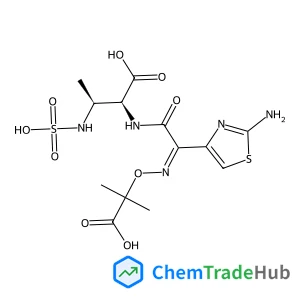
Aztreonam USP Related Compound A (Open-ring Aztreonam)
CAS Number:
87500-74-1
Molecular Formula:
C13H19N5O9S2

4-Cyclohexene-1,2-dicarboxylic acid, 1,2-dimethyl ester, (1R,2R)-rel-
CAS Number:
17673-68-6
Molecular Formula:
C10H14O4
Recommended Suppliers





Disclaimer
This page provides academic journal information for reference and research purposes only. We are not affiliated with any journal publishers and do not handle publication submissions. For publication-related inquiries, please contact the respective journal publishers directly.
If you notice any inaccuracies in the information displayed, please contact us at support@chemtradehub.com. We will promptly review and address your concerns.