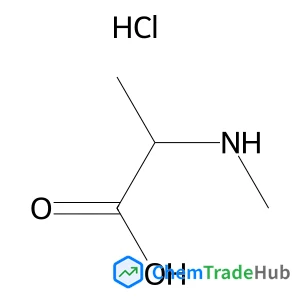
(R)-2-(Methylamino)propanoic acid hydrochloride
CAS Number:
1155878-14-0
Molecular Formula:
C4H10ClNO2
Christopher D. Daub, Natalie M. Cann, D. Bratko, Alenka Luzar
We study the pressure-driven flow of aqueous NaCl in amorphous silica nanotubes using nonequilibrium molecular dynamics simulations featuring both polarizable and non-polarizable molecular models. Different pressures, electrolyte concentrations and pore sizes are examined. Our results indicate a flow that deviates considerably from the predictions of Poiseuille fluid mechanics. Due to preferential adsorption of the different ionic species by surface SiO− or SiOH groups, we find that a significant electric current is generated, but with opposite polarities using polarizable vs. fixed charge models for water and ions, emphasizing the need for careful parameterization in such complex systems. We also examine the influence of partial deprotonation of the silica surface, and we find that much more current is generated in a dehydrogenated nanopore, even though the overall efficiency remains low. These findings indicate that different methods of nanopore preparation, which can produce a range of surface properties, should be examined more closely in the related experimental methods to generate electrokinetic current.
Andrea Gardin, Alberta Ferrarini
DOI: 10.1039/D0CP90053B
Glen J. Smales, Tihomir Solomun, Heinz Sturm
DOI: 10.1039/D0CP00092B
Li Xiang, Lu Gong, Jiawen Zhang, Ling Zhang, Wenjihao Hu, Wenda Wang, Qingye Lu, Hongbo Zeng
DOI: 10.1039/C9CP03189H
P. S. Stepanov, F. A. Selim, A. V. Bokov, O. V. Ilyukhina, G. Duplâtre
DOI: 10.1039/C9CP06105C
Hassan Ghermezcheshme, Hesam Makki, Mohsen Mohseni, Morteza Ebrahimi, Gijsbertus de With
DOI: 10.1039/C9CP03407B
Debkumar Rana, Patrice Donfack, Vladislav Jovanov, Veit Wagner, Arnulf Materny
DOI: 10.1039/C9CP03736E
Zhihui Zhang, Zifeng Xie, Jian Liu, Ye Tian, Yan Zhang, Xing Wei, Tingting Guo, Lei Ni, Jibin Fan, Yijun Weng, Zhengdi Zha, Li Duan
DOI: 10.1039/C9CP06696A
Drew F. Parsons, Friedrich Anton Burger, Priyadarshini Thiyam, I. Brevik, Clas Persson
DOI: 10.1039/C9CP03165K
Chenyi Li, Hichem Dammak, Guilhem Dezanneau
DOI: 10.1039/C9CP03048D
6-(3-Fluorophenyl)picolinic acid is generally considered safe for laboratory use...
(3R)-3-Pyrrolidinol is used in the pharmaceutical industry as a precursor for dr...
When handling (4R,5R)-4,5-Diethoxycarbonyl-2,2-dimethyldioxolane (CAS: 59779-75-...
1-(6-Chloroimidazo[1,2-b]pyridazin-3-yl)ethanone is often synthesized via a mult...
The market for N-Ethyl-3,4-dimethylbenzylamine (CAS: 39180-83-1) remains steady,...
Tert-butyl 3-(pyrrolidin-1-yl)azetidine-1-carboxylate is a chemical compound wit...
1-Bromo-3-chloro-2,4-dimethoxybenzene (CAS: 1228956-93-1) falls under the classi...
The safety of 8-Bromo-2-methyl-3,4-dihydroisoquinolin-1(2H)-one (CAS: 1368622-07...
Benzyl [(3S)-2,6-dioxo-3-piperidinyl]carbamate is generally safe when handled wi...
1-{[4-(4,4,5,5-Tetramethyl-1,3,2-dioxaborolan-2-yl)phenyl]sulfonyl}pyrrolidine s...

Physical Chemistry Chemical Physics (PCCP) is an international journal co-owned by 19 physical chemistry and physics societies from around the world. This journal publishes original, cutting-edge research in physical chemistry, chemical physics and biophysical chemistry. To be suitable for publication in PCCP, articles must include significant innovation and/or insight into physical chemistry; this is the most important criterion that reviewers and Editors will judge against when evaluating submissions. The journal has a broad scope and welcomes contributions spanning experiment, theory, computation and data science. Topical coverage includes spectroscopy, dynamics, kinetics, statistical mechanics, thermodynamics, electrochemistry, catalysis, surface science, quantum mechanics, quantum computing and machine learning. Interdisciplinary research areas such as polymers and soft matter, materials, nanoscience, energy, surfaces/interfaces, and biophysical chemistry are welcomed if they demonstrate significant innovation and/or insight into physical chemistry. Joined experimental/theoretical studies are particularly appreciated when complementary and based on up-to-date approaches.