


Role of van der Waals interaction in forming molecule-metal junctions: flat organic molecules on the Au(111) surface
Literature Information
Publication Date
2010-03-17
DOI
10.1039/B920121A
Impact Factor
3.676
Authors
M. Mura, A. Gulans, T. Thonhauser, L. Kantorovich
View Original
Abstract
The self-assembly of flat organic molecules on metal surfaces is controlled, apart from the kinetic factors, by the interplay between the molecule–molecule and molecule–surface interactions. These are typically calculated using standard density functional theory within the generalized gradient approximation, which significantly underestimates nonlocal correlations, i.e. van der Waals (vdW) contributions, and thus affects interactions between molecules and the metal surface in the junction. In this paper we address this question systematically for the Au(111) surface and a number of popular flat organic molecules which form directional hydrogen bonds with each other. This is done using the recently developed first-principles vdW-DF method which takes into account the nonlocal nature of electron correlation [M. Dion et al., Phys. Rev. Lett. 2004, 92, 246401]. We report here a systematic study of such systems involving completely self-consistent vdW-DF calculations with full geometry relaxation. We find that the hydrogen bonding between the molecules is only insignificantly affected by the vdW contribution, both in the gas phase and on the gold surface. However, the adsorption energies of these molecules on the surface increase dramatically as compared with the ordinary density functional (within the generalized gradient approximation, GGA) calculations, in agreement with available experimental data and previous calculations performed within approximate or semiempirical models, and this is entirely due to the vdW contribution which provides the main binding mechanism. We also stress the importance of self-consistency in calculating the binding energy by the vdW-DF method since the results of non-self-consistent calculations in some cases may be off by up to 20%. Our calculations still support the usually made assumption of the molecule–surface interaction changing little laterally suggesting that single molecules and their small clusters should be quite mobile at room temperature on the surface. These findings support a gas-phase modeling for some flat metal surfaces, such as Au(111), and flat molecules, at least as a first approximation.
Recommended Journals

Russian Journal of Bioorganic Chemistry

Current Opinion in Colloid & Interface Science

Russian Journal of Coordination Chemistry

Nature Medicine

Russian Journal of General Chemistry

Russian Journal of Applied Chemistry

Chemistry Education Research and Practice

Chemical Communications

Acta Materialia

Saudi Pharmaceutical Journal
Related Literature
Spiropyran as a reusable chemosensor for selective colorimetric detection of aromatic thiols
Yasuhiro Shiraishi, Kohei Yamamoto, Shigehiro Sumiya, Takayuki Hirai
2014-02-19
Paper
DOI: 10.1039/C3CP55478C
Ab initio study of TaON, an active photocatalyst under visible light irradiation
2014-03-03
Paper
DOI: 10.1039/C4CP00285G
Effect of ozone exposure on the electrical characteristics of high-purity, large-diameter semiconducting carbon nanotubes
Jia Gao, Yueh-Lin Loo
2014-04-08
Paper
DOI: 10.1039/C4CP00665H
13C NMR relaxation and reorientation dynamics in imidazolium-based ionic liquids: revising interpretation
Petri Ingman, Erkki Lähderanta
2014-04-09
Paper
DOI: 10.1039/C4CP00637B
Effect of amide bonds on the self-assembly of gemini surfactants
Jiaul Hoque, Spandhana Gonuguntla, Venkateswarlu Yarlagadda, Vinod K. Aswal, Jayanta Haldar
2014-04-09
Paper
DOI: 10.1039/C3CP55244F
A quasi-classical trajectory study of the OH + SO reaction: the role of ro-vibrational energy
W. A. D. Pires, J. D. Garrido, M. A. C. Nascimento, M. Y. Ballester
2014-05-02
Paper
DOI: 10.1039/C4CP01363H
Combined excitatory and inhibitory coupling in a 1-D array of Belousov–Zhabotinsky droplets
Ning Li, Irving R. Epstein, Seth Fraden
2014-04-17
Paper
DOI: 10.1039/C4CP00957F
Optical response of quantum-sized Ag and Au clusters – cage vs. compact structures and the remarkable insensitivity to compression
Robert L. Whetten, Xóchitl López-Lozano
2014-05-07
Paper
DOI: 10.1039/C4CP01277A
Electrochemical properties of oxygenated cup-stacked carbon nanofiber-modified electrodes
Seongjae Ko, Tetsu Tatsuma, Akiyoshi Sakoda, Yasuyuki Sakai, Kikuo Komori
2014-05-12
Paper
DOI: 10.1039/C4CP01278J
Self-healing mechanism of metallopolymers investigated by QM/MM simulations and Raman spectroscopy
Julien Guthmuller
2014-05-15
Paper
DOI: 10.1039/C4CP00562G
You might also like
Compound Q&A
What precautions should be taken when handling 2-Chloro-1,2-bis(4-methylphenyl)ethanone (CAS: 71193-32-3)?
When handling 2-Chloro-1,2-bis(4-methylphenyl)ethanone (CAS: 71193-32-3), it is ...
71193-32-32-Chloro-1,2-bis(4-m...
Compound Q&A
What industries use 4-Ethoxy-3-(5-methyl-4-oxo-7-propyl-1,4-dihydroimidazo[5,1-f][1,2,4]triazin-2-yl)benzenesulfonyl chloride (CAS: 224789-26-8)?
4-Ethoxy-3-(5-methyl-4-oxo-7-propyl-1,4-dihydroimidazo[5,1-f][1,2,4]triazin-2-yl...
224789-26-84-Ethoxy-3-(5-methyl...
Compound Q&A
How should Methyl 3-Oxo-4-Androsten-17-Carboxylate (CAS: 2681-55-2) be stored?
Methyl 3-Oxo-4-Androsten-17-Carboxylate (CAS: 2681-55-2) should be stored in a c...
2681-55-2Methyl 3-Oxo-4-Andro...
Compound Q&A
What are the main uses of (R)-3-Amino-4-(3-hexylphenylamino)-4-oxobutylphosphonic acid (CAS: 909725-61-7)?
(R)-3-Amino-4-(3-hexylphenylamino)-4-oxobutylphosphonic acid is primarily used i...
909725-61-7(R)-3-Amino-4-(3-hex...
Compound Q&A
What regulatory guidelines apply to 2-Methyl-2-propanyl 3-amino-3-carbamoyl-1-azetidinecarboxylate (CAS: 1254120-14-3)?
2-Methyl-2-propanyl 3-amino-3-carbamoyl-1-azetidinecarboxylate (CAS: 1254120-14-...
1254120-14-32-Methyl-2-propanyl ...
Compound Q&A
Are there alternatives to (E)-4-(tert-Butoxy)-4-oxobut-2-enoic acid (CAS: 135355-96-3) in synthesis?
There are alternative reagents that can be used in synthesis instead of (E)-4-(t...
135355-96-3(E)-4-(tert-Butoxy)-...
Compound Q&A
What are the physical and chemical properties of [2-(3-Chlorophenyl)-1,3-thiazol-4-yl]methanol (CAS: 121202-20-8)?
[2-(3-Chlorophenyl)-1,3-thiazol-4-yl]methanol (CAS: 121202-20-8) is a crystallin...
121202-20-8[2-(3-Chlorophenyl)-...
Compound Q&A
What is the market or research trend for Methyl (2S)-[(4S)-2,2-dimethyl-1,3-dioxolan-4-yl]{[(4-methylphenyl)sulfonyl]oxy}acetate (CAS: 166249-17-8)?
The market and research trends for Methyl (2S)-[(4S)-2,2-dimethyl-1,3-dioxolan-4...
166249-17-8Methyl (2S)-[(4S)-2,...
Compound Q&A
What is the market or research trend for 1-Bromo-2-isocyanatoethane (CAS: 42865-19-0)?
The market for 1-Bromo-2-isocyanatoethane (CAS: 42865-19-0) is driven by its use...
42865-19-01-Bromo-2-isocyanato...
Compound Q&A
What are the main uses of 4-Nitro-D-phenylalanine hydrochloride (CAS: 147065-06-3)?
4-Nitro-D-phenylalanine hydrochloride (CAS: 147065-06-3) is primarily used in re...
147065-06-34-Nitro-D-phenylalan...
Source Journal
Physical Chemistry Chemical Physics

CiteScore:
5.5
Self-citation Rate:
10.3%
Articles per Year:
3036
Physical Chemistry Chemical Physics (PCCP) is an international journal co-owned by 19 physical chemistry and physics societies from around the world. This journal publishes original, cutting-edge research in physical chemistry, chemical physics and biophysical chemistry. To be suitable for publication in PCCP, articles must include significant innovation and/or insight into physical chemistry; this is the most important criterion that reviewers and Editors will judge against when evaluating submissions. The journal has a broad scope and welcomes contributions spanning experiment, theory, computation and data science. Topical coverage includes spectroscopy, dynamics, kinetics, statistical mechanics, thermodynamics, electrochemistry, catalysis, surface science, quantum mechanics, quantum computing and machine learning. Interdisciplinary research areas such as polymers and soft matter, materials, nanoscience, energy, surfaces/interfaces, and biophysical chemistry are welcomed if they demonstrate significant innovation and/or insight into physical chemistry. Joined experimental/theoretical studies are particularly appreciated when complementary and based on up-to-date approaches.
Recommended Compounds
![2-Hydroxy-4-[({[(4-methylphenyl)sulfonyl]oxy}acetyl)amino]benzoic acid structure](https://static.chemtradehub.com/structs/501/501919-59-1-579f.webp "2-Hydroxy-4-[({[(4-methylphenyl)sulfonyl]oxy}acetyl)amino]benzoic acid structure")
2-Hydroxy-4-[({[(4-methylphenyl)sulfonyl]oxy}acetyl)amino]benzoic acid
CAS Number:
501919-59-1
Molecular Formula:
C16H15NO7S
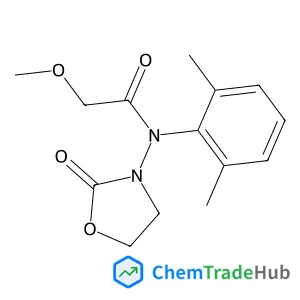
N-(2,6-Dimethylphenyl)-2-methoxy-N-(2-oxo-1,3-oxazolidin-3-yl)acetamide
CAS Number:
77732-09-3
Molecular Formula:
C14H18N2O4
Recommended Suppliers





Disclaimer
This page provides academic journal information for reference and research purposes only. We are not affiliated with any journal publishers and do not handle publication submissions. For publication-related inquiries, please contact the respective journal publishers directly.
If you notice any inaccuracies in the information displayed, please contact us at support@chemtradehub.com. We will promptly review and address your concerns.