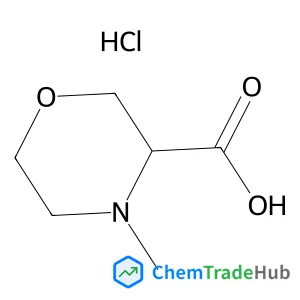
4-Methyl-3-morpholinecarboxylic acid hydrochloride (1:1)
CAS Number:
1240518-90-4
Molecular Formula:
C6H12ClNO3
Yasuhiro Shiraishi, Kohei Yamamoto, Shigehiro Sumiya, Takayuki Hirai
Design of optical molecular probes for selective detection of aromatic thiols has attracted much attention. Although several types of probes have been proposed, all of them exhibit colorimetric or fluorometric response via irreversible reaction with aromatic thiols and cannot be reused. Here we report that a spiropyran dye is the first example of a reusable chemosensor for aromatic thiols. A colorless spiropyran dye (1) dissolved in aqueous media containing aromatic thiols is selectively isomerized to the colored merocyanine form in the dark. In contrast, visible light irradiation of the merocyanine form promotes successful reversion to the colorless spirocyclic form. Kinetic absorption analysis and ab initio calculations of the transition states revealed that this colorimetric response in the dark is ascribed to the decrease in activation energy for isomerization via the nucleophilic interaction between the aromatic thiol and the olefinic carbon of the dye.

Bioorganic & Medicinal Chemistry Letters

Chinese Journal of Chemistry

Journal of Asian Natural Products Research

Bioorganic & Medicinal Chemistry

Atomization and Sprays

Heteroatom Chemistry

Journal of the Indian Institute of Science

Cellulose

Herald of the Russian Academy of Sciences

Journal of Chemical Sciences
Ji Zhou, Guo-Fang Jiang, Yong-Gui Zhou
DOI: 10.1039/C7QO01158J
Lei Xie, Hongli Ma, Jiaqi Li, Xuan Yu, Zhaohai Qin, Bin Fu
DOI: 10.1039/C7QO90032E
Ali Keivanloo, Atena Soozani, Mohammad Bakherad, Amir Hossein Amin
DOI: 10.1039/C7QO00751E
Sanliang Li, Bo Zhu, Richmond Lee, Baokun Qiao, Zhiyong Jiang
DOI: 10.1039/C7QO00798A
Huimin Dai, Chun-Xiao Li, Chao Yu, Zihao Wang, Hong Yan, Changsheng Lu
DOI: 10.1039/C7QO00333A
Shupeng Dong, Guibing Wu, Xiaoqian Yuan, Chuncheng Zou, Jinxing Ye
DOI: 10.1039/C7QO00453B
Shiju Zhang, Sha-Hua Huang
DOI: 10.1039/C7QO00837F
Jiawei Zhu, Song Sun, Minfang Xia, Ning Gu, Jiang Cheng
DOI: 10.1039/C7QO00478H
Zhi-Xiang Zhang, Wei Wei, Fu-Quan Bai, Shamsa Bibi, Hong-Xing Zhang
DOI: 10.1039/C7QO00476A
Jundie Hu, Guobao Li, Zhi-Bin Huang, Jingyu Zhang, Da-Qing Shi, Yingsheng Zhao
DOI: 10.1039/C7QO00236J
When handling 4-Methyl-6-(trifluoromethyl)quinoline (CAS: 40716-16-3), safety go...
4-(3,5-Difluorophenyl)aniline is an aromatic organic compound with the CAS numbe...
5-{[4-(Trifluoromethyl)phenyl]sulfanyl}-1,2,3-thiadiazole-4-carboxylic acid can ...
The market for 4-Benzylaniline hydrochloride (CAS: 6317-57-3) is steadily growin...
[3-(Diethylsulfamoyl)phenyl]boronic acid is generally considered safe when handl...
3-Bromo-2,5-dimethoxyaniline is mainly used in the pharmaceutical and chemical i...
N-Methyl-1-(5-methyl-1H-indol-3-yl)methanamine (CAS: 915922-67-7) is subject to ...
This compound is primarily used in the pharmaceutical industry for the synthesis...
2-Methyl-2-propanyl [(1S,3R)-3-aminocyclohexyl]carbamate (CAS: 1298101-47-9) sho...
Ethyl 2-bromo-4,4,4-trifluorobutanoate (CAS: 367-33-9) is utilized in the pharma...

Physical Chemistry Chemical Physics (PCCP) is an international journal co-owned by 19 physical chemistry and physics societies from around the world. This journal publishes original, cutting-edge research in physical chemistry, chemical physics and biophysical chemistry. To be suitable for publication in PCCP, articles must include significant innovation and/or insight into physical chemistry; this is the most important criterion that reviewers and Editors will judge against when evaluating submissions. The journal has a broad scope and welcomes contributions spanning experiment, theory, computation and data science. Topical coverage includes spectroscopy, dynamics, kinetics, statistical mechanics, thermodynamics, electrochemistry, catalysis, surface science, quantum mechanics, quantum computing and machine learning. Interdisciplinary research areas such as polymers and soft matter, materials, nanoscience, energy, surfaces/interfaces, and biophysical chemistry are welcomed if they demonstrate significant innovation and/or insight into physical chemistry. Joined experimental/theoretical studies are particularly appreciated when complementary and based on up-to-date approaches.