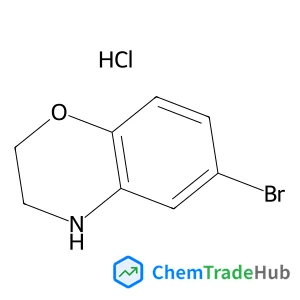
6-Bromo-3,4-dihydro-2H-1,4-benzoxazine hydrochloride (1:1)
CAS Number:
1260803-10-8
Molecular Formula:
C8H9BrClNO
W. A. D. Pires, J. D. Garrido, M. A. C. Nascimento, M. Y. Ballester
A study of the OH + SO → H + SO2 reaction using a quasi-classical trajectory method is presented with the aim of investigating the role of the ro-vibrational energy of the reactants in the reactivity. The calculations were carried out using a previously reported global potential energy surface for HSO2(2A). Different initial conditions with one and both reactants ro-vibrationally excited were studied. The reactive cross sections, for each studied combination, are calculated and then fitted to a capture-like model combined with a factor accounting for the recrossing effects. The Vibrational Energy Quantum Mechanical Threshold of the Complex method was used to correct for the zero-point vibrational energy leakage of the classical calculations. State specific and averaged rate constants are reported. The reactivity is affected when ro-vibrational energy of either of the reactants is changed. The present calculations provide a theoretical support for the experimental rate constant for temperatures below 550 K, but fail to account for the significant fall in the observed rate constant upon increasing the temperature above this value.
Yang Tang, Qiong Yu
DOI: 10.1039/C7QO00419B
Pengbo Zhang, Jianxi Ying, Guo Tang
DOI: 10.1039/C7QO00466D
E. de Julián, E. Menéndez-Pedregal, M. Claros, M. Vaquero, J. Díez, E. Lastra, P. Gamasa, A. Pizzano
DOI: 10.1039/C7QO00908A
Zhi-Lin Ren, Zhi-Rong Guan, Han-Han Kong, Ming-Wu Ding
DOI: 10.1039/C7QO00490G
Qian Yao, Lili Lin, Hang Zhang, Han Yu, Qian Xiong, Xiaohua Liu, Xiaoming Feng
DOI: 10.1039/C7QO00408G
Shuanhu Gao, Armen Zakarian
DOI: 10.1039/C8QO90009D
Huimin Dai, Chun-Xiao Li, Chao Yu, Zihao Wang, Hong Yan, Changsheng Lu
DOI: 10.1039/C7QO00333A
Tanzeel Arif, Cyril Borie, Marion Jean, Nicolas Vanthuyne, Michèle P. Bertrand, Didier Siri, Malek Nechab
DOI: 10.1039/C7QO00288B
T. Sony, S. Prabhakar, L. Raju Chowhan
DOI: 10.1039/C7QO00109F
When handling 4-Methyl-6-(trifluoromethyl)quinoline (CAS: 40716-16-3), safety go...
4-(3,5-Difluorophenyl)aniline is an aromatic organic compound with the CAS numbe...
5-{[4-(Trifluoromethyl)phenyl]sulfanyl}-1,2,3-thiadiazole-4-carboxylic acid can ...
The market for 4-Benzylaniline hydrochloride (CAS: 6317-57-3) is steadily growin...
[3-(Diethylsulfamoyl)phenyl]boronic acid is generally considered safe when handl...
3-Bromo-2,5-dimethoxyaniline is mainly used in the pharmaceutical and chemical i...
N-Methyl-1-(5-methyl-1H-indol-3-yl)methanamine (CAS: 915922-67-7) is subject to ...
This compound is primarily used in the pharmaceutical industry for the synthesis...
2-Methyl-2-propanyl [(1S,3R)-3-aminocyclohexyl]carbamate (CAS: 1298101-47-9) sho...
Ethyl 2-bromo-4,4,4-trifluorobutanoate (CAS: 367-33-9) is utilized in the pharma...

Physical Chemistry Chemical Physics (PCCP) is an international journal co-owned by 19 physical chemistry and physics societies from around the world. This journal publishes original, cutting-edge research in physical chemistry, chemical physics and biophysical chemistry. To be suitable for publication in PCCP, articles must include significant innovation and/or insight into physical chemistry; this is the most important criterion that reviewers and Editors will judge against when evaluating submissions. The journal has a broad scope and welcomes contributions spanning experiment, theory, computation and data science. Topical coverage includes spectroscopy, dynamics, kinetics, statistical mechanics, thermodynamics, electrochemistry, catalysis, surface science, quantum mechanics, quantum computing and machine learning. Interdisciplinary research areas such as polymers and soft matter, materials, nanoscience, energy, surfaces/interfaces, and biophysical chemistry are welcomed if they demonstrate significant innovation and/or insight into physical chemistry. Joined experimental/theoretical studies are particularly appreciated when complementary and based on up-to-date approaches.
![[(1S,2S,3R,4S,7R,9S,10S,12R,15S)-4,12-Diacetyloxy-15-[(2R,3S)-3-benzamido-3-phenyl-2-(2,2,2-trichloroethoxycarbonyloxy)propanoyl]oxy-1,9-dihydroxy-10,14,17,17-tetramethyl-11-oxo-6-oxatetracyclo[11.3.1.03,10.04,7]heptadec-13-en-2-yl] benzoate structure](https://static.chemtradehub.com/structs/100/100431-55-8-7104.webp "[(1S,2S,3R,4S,7R,9S,10S,12R,15S)-4,12-Diacetyloxy-15-[(2R,3S)-3-benzamido-3-phenyl-2-(2,2,2-trichloroethoxycarbonyloxy)propanoyl]oxy-1,9-dihydroxy-10,14,17,17-tetramethyl-11-oxo-6-oxatetracyclo[11.3.1.03,10.04,7]heptadec-13-en-2-yl] benzoate structure")
![(3R,5R)-1-[(Benzyloxy)carbonyl]-5-methyl-3-piperidinecarboxylic acid structure](https://static.chemtradehub.com/structs/126/1269757-29-0-c552.webp "(3R,5R)-1-[(Benzyloxy)carbonyl]-5-methyl-3-piperidinecarboxylic acid structure")