












Secondary relaxation in ultrastable etoricoxib: evidence of correlation with structural relaxation
Literature Information
Publication Date
2018-01-23
DOI
10.1039/C7CP06445D
Impact Factor
3.676
Authors
K. L. Ngai, Javier Rodríguez-Viejo
View Original
Abstract
Secondary relaxations are fundamental for their impact in the properties of glasses and for their inseparable connection to the structural relaxation. Understanding their density dependence and aging behavior is key to fully address the nature of glasses. Ultrastable glasses establish a new benchmark to study the characteristics of secondary relaxations, since their enthalpy and density levels are unattainable by other routes. Here, we use dielectric spectroscopy at ambient and elevated pressures to study the characteristics of the secondary relaxation in ultrastable etoricoxib, reporting a 71% decrease in dielectric strength and one decade increase in relaxation time compared to the ordinary glass. Interestingly, we find an unprecedented connection between secondary and structural relaxations in ultrastable etoricoxib in exactly the same manner as in the ordinary glass, manifested through different properties, such as aging and devitrification. These results further support and extend the general validity of the connection between the secondary and structural relaxation.
Related Literature
Probing molecular interactions of PEGylated chitosan in aqueous solutions using a surface force apparatus
Li Xiang, Lu Gong, Jiawen Zhang, Ling Zhang, Wenjihao Hu, Wenda Wang, Qingye Lu, Hongbo Zeng
2019-07-22
Paper
DOI: 10.1039/C9CP03189H
Turing patterns modulation by chemical gradient in isothermal and non-isothermal conditions
Leonardo Silva-Dias, Alejandro Lopez-Castillo
2020-03-02
Paper
DOI: 10.1039/D0CP00650E
A DNP-hyperpolarized solid-state water NMR MASER: observation and qualitative analysis
Emmanuelle M. M. Weber, Dennis Kurzbach, Daniel Abergel
2019-09-11
Paper
DOI: 10.1039/C9CP03334C
Ultrafast polaron-pair dynamics in a poly(3-hexylthiophene-2,5-diyl) device influenced by a static electric field: insights into electric-field-related charge loss
Debkumar Rana, Patrice Donfack, Vladislav Jovanov, Veit Wagner, Arnulf Materny
2019-09-11
Paper
DOI: 10.1039/C9CP03736E
Two-dimensional hydrogen hydrates: structure and stability
Hong Zhong, Liwen Li, Rui Ma, Jie Zhong, Youguo Yan, Shuguang Li, Jun Zhang, Jinxiang Liu
2020-01-31
Paper
DOI: 10.1039/C9CP06296C
Molecular dynamics investigations of oligosaccharides recognized by family 16 and 22 carbohydrate binding modules
Ruihan Wang
2019-09-05
Paper
DOI: 10.1039/C9CP04673A
The durability of carbon nanotubes in the selective reduction of nitrobenzene
Zhenzhen Guo, Nuoyi Zheng, Liyun Zhang, Zhijun Xia, Dehua Wang, Jianfen Shen, Hua Yan, Shuchang Wu, Hongyang Liu
2020-02-26
Communication
DOI: 10.1039/D0CP00186D
Ab initio spectroscopy of water under electric fields
Giuseppe Cassone, Jiri Sponer, Sebastiano Trusso, Franz Saija
2019-07-23
Paper
DOI: 10.1039/C9CP03101D
Novel inorganic aromatic mixed-valent superalkali electride CaN3Ca: an alkaline-earth-based high-sensitivity multi-state nonlinear optical molecular switch
Yin-Feng Wang, Tian Qin, Jia-Min Tang, Yan-Jiao Liu, Miao Xie, Jia Li, Jiangen Huang, Zhi-Ru Li
2020-02-19
Paper
DOI: 10.1039/C9CP06848A
You might also like
Compound Q&A
Is 6-(3-Fluorophenyl)picolinic acid (CAS: 887982-40-3) safe?
6-(3-Fluorophenyl)picolinic acid is generally considered safe for laboratory use...
887982-40-36-(3-Fluorophenyl)pi...
Compound Q&A
What industries use (3R)-3-Pyrrolidinol (CAS: 2799-21-5)?
(3R)-3-Pyrrolidinol is used in the pharmaceutical industry as a precursor for dr...
2799-21-5(3R)-3-Pyrrolidinol
Compound Q&A
What precautions should be taken when handling (4R,5R)-4,5-Diethoxycarbonyl-2,2-dimethyldioxolane (CAS: 59779-75-8)?
When handling (4R,5R)-4,5-Diethoxycarbonyl-2,2-dimethyldioxolane (CAS: 59779-75-...
59779-75-8(4R,5R)-4,5-Diethoxy...
Compound Q&A
How is 1-(6-Chloroimidazo[1,2-b]pyridazin-3-yl)ethanone (CAS: 90734-71-7) typically synthesized?
1-(6-Chloroimidazo[1,2-b]pyridazin-3-yl)ethanone is often synthesized via a mult...
90734-71-71-(6-Chloroimidazo[1...
Compound Q&A
What is the market or research trend for N-Ethyl-3,4-dimethylbenzylamine (CAS: 39180-83-1)?
The market for N-Ethyl-3,4-dimethylbenzylamine (CAS: 39180-83-1) remains steady,...
39180-83-1N-Ethyl-3,4-dimethyl...
Compound Q&A
What is Tert-butyl 3-(pyrrolidin-1-yl)azetidine-1-carboxylate (CAS: 1019008-21-9)?
Tert-butyl 3-(pyrrolidin-1-yl)azetidine-1-carboxylate is a chemical compound wit...
1019008-21-9Tert-butyl 3-(pyrrol...
Compound Q&A
What regulatory guidelines apply to 1-Bromo-3-chloro-2,4-dimethoxybenzene (CAS: 1228956-93-1)?
1-Bromo-3-chloro-2,4-dimethoxybenzene (CAS: 1228956-93-1) falls under the classi...
1228956-93-11-Bromo-3-chloro-2,4...
Compound Q&A
Is 8-Bromo-2-methyl-3,4-dihydroisoquinolin-1(2H)-one (CAS: 1368622-07-4) safe?
The safety of 8-Bromo-2-methyl-3,4-dihydroisoquinolin-1(2H)-one (CAS: 1368622-07...
1368622-07-48-Bromo-2-methyl-3,4...
Compound Q&A
Is Benzyl [(3S)-2,6-dioxo-3-piperidinyl]carbamate (CAS: 22785-43-9) safe?
Benzyl [(3S)-2,6-dioxo-3-piperidinyl]carbamate is generally safe when handled wi...
22785-43-9Benzyl [(3S)-2,6-dio...
Compound Q&A
How should 1-{[4-(4,4,5,5-Tetramethyl-1,3,2-dioxaborolan-2-yl)phenyl]sulfonyl}pyrrolidine (CAS: 928657-21-0) be stored?
1-{[4-(4,4,5,5-Tetramethyl-1,3,2-dioxaborolan-2-yl)phenyl]sulfonyl}pyrrolidine s...
928657-21-01-{[4-(4,4,5,5-Tetra...
Source Journal
Physical Chemistry Chemical Physics

CiteScore:
5.5
Self-citation Rate:
10.3%
Articles per Year:
3036
Physical Chemistry Chemical Physics (PCCP) is an international journal co-owned by 19 physical chemistry and physics societies from around the world. This journal publishes original, cutting-edge research in physical chemistry, chemical physics and biophysical chemistry. To be suitable for publication in PCCP, articles must include significant innovation and/or insight into physical chemistry; this is the most important criterion that reviewers and Editors will judge against when evaluating submissions. The journal has a broad scope and welcomes contributions spanning experiment, theory, computation and data science. Topical coverage includes spectroscopy, dynamics, kinetics, statistical mechanics, thermodynamics, electrochemistry, catalysis, surface science, quantum mechanics, quantum computing and machine learning. Interdisciplinary research areas such as polymers and soft matter, materials, nanoscience, energy, surfaces/interfaces, and biophysical chemistry are welcomed if they demonstrate significant innovation and/or insight into physical chemistry. Joined experimental/theoretical studies are particularly appreciated when complementary and based on up-to-date approaches.
Recommended Compounds
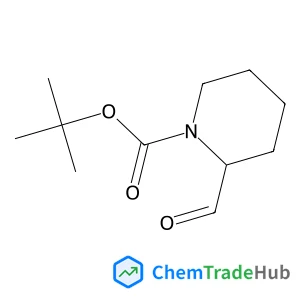
2-Methyl-2-propanyl (2R)-2-formyl-1-piperidinecarboxylate
CAS Number:
134526-69-5
Molecular Formula:
C11H19NO3

Recommended Suppliers





Disclaimer
This page provides academic journal information for reference and research purposes only. We are not affiliated with any journal publishers and do not handle publication submissions. For publication-related inquiries, please contact the respective journal publishers directly.
If you notice any inaccuracies in the information displayed, please contact us at support@chemtradehub.com. We will promptly review and address your concerns.