


Photoabsorption studies of neutral green fluorescent protein model chromophoresin vacuo
Literature Information
Publication Date
2009-09-17
DOI
10.1039/B914276B
Impact Factor
3.676
Authors
J. Rajput, D. B. Rahbek, L. H. Andersen, T. Rocha-Rinza, O. Christiansen, K. B. Bravaya, A. V. Erokhin, A. V. Bochenkova, K. M. Solntsev, J. Dong, J. Kowalik, L. M. Tolbert, M. Åxman Petersen, M. Brøndsted Nielsen
View Original
Abstract
We report on gas-phase experimental and theoretical studies on the neutral form of the green-fluorescent protein (GFP) chromophore using six different models, each carrying a spectator positive charge. Theoretical studies were carried out to quantify the effect of the spectator charge on the absorption maximum of the true neutral. The study also includes models having the possibility of forming intra-molecular hydrogen bonds, and their effect on the absorption profile is analyzed. The charge redistribution caused by a strong intra-molecular hydrogen bond was found to give rise to a red shift in going from non-hydrogen bonded to hydrogen bonded models. For the non-hydrogen bonded models, the length of the side chain as well as the group carrying the spectator charge, was varied to explore the possibility of shifts in absorption maximum due to these variations. No shifts were observed. The implications of these results in tuning the absorption maximum of the neutral form of the GFP chromophores are discussed.
Recommended Journals

Contact Lens & Anterior Eye

Journal of Enzyme inhibition and Medicinal Chemistry

Nature Reviews Drug Discovery

Advanced Engineering Materials

European Journal of Organic Chemistry

Faraday Discussions

Mini-Reviews in Medicinal Chemistry

Green Chemistry

Environmental Toxicology and Pharmacology

Current Pharmaceutical Biotechnology
Related Literature
Erythrocyte-like hollow carboncapsules and their application in proton exchange membranefuelcells‡
Jung Ho Kim, Jong-Sung Yu
2010-10-11
Paper
DOI: 10.1039/C0CP00698J
States and migration of an excess electron in a pyridinium-based, room-temperature ionic liquid: an ab initio molecular dynamics simulation exploration
Zhiping Wang, Liang Zhang, Robert I. Cukier, Yuxiang Bu
2010-01-07
Paper
DOI: 10.1039/B921104G
Selective removal of acetylenes from olefin mixtures through specific physicochemical interactions of ionic liquids with acetylenes
Jung Min Lee, Jelliarko Palgunadi, Jin Hyung Kim, Srun Jung, Young-seop Choi, Minserk Cheong, Hoon Sik Kim
2009-11-07
Paper
DOI: 10.1039/B915989D
Exploring wavepacket dynamics behind strong-field momentum-dependent photodissociation in CH2BrI+
Jesús González-Vázquez, Leticia González, Sarah R. Nichols, Thomas C. Weinacht, Tamás Rozgonyi
2010-09-29
Paper
DOI: 10.1039/C0CP00303D
Electrodeposition of Zn and Au–Zn alloys at low temperature in an ionic liquid
Dimitar Borissov, Aparna Pareek, Frank Uwe Renner, Michael Rohwerder
2010-01-11
Communication
DOI: 10.1039/B919669B
Ionicity in ionic liquids: correlation with ionic structure and physicochemical properties
Kazuhide Ueno, Hiroyuki Tokuda, Masayoshi Watanabe
2010-01-12
Perspective
DOI: 10.1039/B921462N
Combinatorial discovery of new methanol-tolerant non-noble metal cathode electrocatalysts for direct methanolfuelcells
Jong-Sung Yu, Min-Sik Kim, Jung Ho Kim
2010-10-18
Paper
DOI: 10.1039/C0CP00767F
Activity, stability and degradation of multi walled carbon nanotube (MWCNT) supported Ptfuelcell electrocatalysts‡
Frédéric Hasché, Mehtap Oezaslan
2010-10-29
Paper
DOI: 10.1039/C0CP00609B
Electrical conductivity–defect structure correlation of variable-valence and fixed-valence acceptor-doped BaTiO3 in quenched state
Han-Ill Yoo, Tae-Sik Oh, Hyung-Soon Kwon, Dong-Kyu Shin, Jong-Sook Lee
2009-03-18
Paper
DOI: 10.1039/B822381P
Theoretical study of electronic structures of [(H2O)3(O-)Mn(μ-oxo)2Mn(OH2)4]q+ (q = 2 or 3) with Mn–O bond
Masashi Katsuda, Erika Hishikawa, Masaki Mitani, Yasunori Yoshioka
2010-01-27
Paper
DOI: 10.1039/B914793D
You might also like
Compound Q&A
Is 6-(3-Fluorophenyl)picolinic acid (CAS: 887982-40-3) safe?
6-(3-Fluorophenyl)picolinic acid is generally considered safe for laboratory use...
887982-40-36-(3-Fluorophenyl)pi...
Compound Q&A
What industries use (3R)-3-Pyrrolidinol (CAS: 2799-21-5)?
(3R)-3-Pyrrolidinol is used in the pharmaceutical industry as a precursor for dr...
2799-21-5(3R)-3-Pyrrolidinol
Compound Q&A
What precautions should be taken when handling (4R,5R)-4,5-Diethoxycarbonyl-2,2-dimethyldioxolane (CAS: 59779-75-8)?
When handling (4R,5R)-4,5-Diethoxycarbonyl-2,2-dimethyldioxolane (CAS: 59779-75-...
59779-75-8(4R,5R)-4,5-Diethoxy...
Compound Q&A
How is 1-(6-Chloroimidazo[1,2-b]pyridazin-3-yl)ethanone (CAS: 90734-71-7) typically synthesized?
1-(6-Chloroimidazo[1,2-b]pyridazin-3-yl)ethanone is often synthesized via a mult...
90734-71-71-(6-Chloroimidazo[1...
Compound Q&A
What is the market or research trend for N-Ethyl-3,4-dimethylbenzylamine (CAS: 39180-83-1)?
The market for N-Ethyl-3,4-dimethylbenzylamine (CAS: 39180-83-1) remains steady,...
39180-83-1N-Ethyl-3,4-dimethyl...
Compound Q&A
What is Tert-butyl 3-(pyrrolidin-1-yl)azetidine-1-carboxylate (CAS: 1019008-21-9)?
Tert-butyl 3-(pyrrolidin-1-yl)azetidine-1-carboxylate is a chemical compound wit...
1019008-21-9Tert-butyl 3-(pyrrol...
Compound Q&A
What regulatory guidelines apply to 1-Bromo-3-chloro-2,4-dimethoxybenzene (CAS: 1228956-93-1)?
1-Bromo-3-chloro-2,4-dimethoxybenzene (CAS: 1228956-93-1) falls under the classi...
1228956-93-11-Bromo-3-chloro-2,4...
Compound Q&A
Is 8-Bromo-2-methyl-3,4-dihydroisoquinolin-1(2H)-one (CAS: 1368622-07-4) safe?
The safety of 8-Bromo-2-methyl-3,4-dihydroisoquinolin-1(2H)-one (CAS: 1368622-07...
1368622-07-48-Bromo-2-methyl-3,4...
Compound Q&A
Is Benzyl [(3S)-2,6-dioxo-3-piperidinyl]carbamate (CAS: 22785-43-9) safe?
Benzyl [(3S)-2,6-dioxo-3-piperidinyl]carbamate is generally safe when handled wi...
22785-43-9Benzyl [(3S)-2,6-dio...
Compound Q&A
How should 1-{[4-(4,4,5,5-Tetramethyl-1,3,2-dioxaborolan-2-yl)phenyl]sulfonyl}pyrrolidine (CAS: 928657-21-0) be stored?
1-{[4-(4,4,5,5-Tetramethyl-1,3,2-dioxaborolan-2-yl)phenyl]sulfonyl}pyrrolidine s...
928657-21-01-{[4-(4,4,5,5-Tetra...
Source Journal
Physical Chemistry Chemical Physics

CiteScore:
5.5
Self-citation Rate:
10.3%
Articles per Year:
3036
Physical Chemistry Chemical Physics (PCCP) is an international journal co-owned by 19 physical chemistry and physics societies from around the world. This journal publishes original, cutting-edge research in physical chemistry, chemical physics and biophysical chemistry. To be suitable for publication in PCCP, articles must include significant innovation and/or insight into physical chemistry; this is the most important criterion that reviewers and Editors will judge against when evaluating submissions. The journal has a broad scope and welcomes contributions spanning experiment, theory, computation and data science. Topical coverage includes spectroscopy, dynamics, kinetics, statistical mechanics, thermodynamics, electrochemistry, catalysis, surface science, quantum mechanics, quantum computing and machine learning. Interdisciplinary research areas such as polymers and soft matter, materials, nanoscience, energy, surfaces/interfaces, and biophysical chemistry are welcomed if they demonstrate significant innovation and/or insight into physical chemistry. Joined experimental/theoretical studies are particularly appreciated when complementary and based on up-to-date approaches.
Recommended Compounds
![2-[({[(2-Methyl-2-propanyl)oxy]carbonyl}amino)methyl]isonicotinic acid structure](https://static.chemtradehub.com/structs/473/473924-63-9-973b.webp "2-[({[(2-Methyl-2-propanyl)oxy]carbonyl}amino)methyl]isonicotinic acid structure")
2-[({[(2-Methyl-2-propanyl)oxy]carbonyl}amino)methyl]isonicotinic acid
CAS Number:
473924-63-9
Molecular Formula:
C12H16N2O4
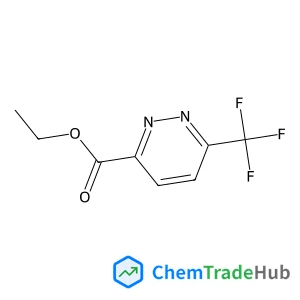
Ethyl 6-(trifluoromethyl)pyridazine-3-carboxylate
CAS Number:
1192155-06-8
Molecular Formula:
C8H7F3N2O2
Recommended Suppliers






Disclaimer
This page provides academic journal information for reference and research purposes only. We are not affiliated with any journal publishers and do not handle publication submissions. For publication-related inquiries, please contact the respective journal publishers directly.
If you notice any inaccuracies in the information displayed, please contact us at support@chemtradehub.com. We will promptly review and address your concerns.