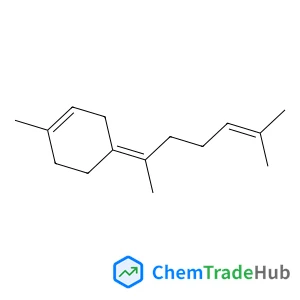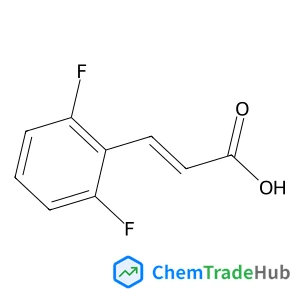
5,7-Dihydroxy-2-(4-hydroxyphenyl)-4-oxo-4H-chromen-3-yl 2-O-(6-deoxy-alpha-L-mannopyranosyl)-beta-D-glucopyranoside
CAS Number:
32602-81-6
Molecular Formula:
C27H30O15
Wiliam Ferreira da Cunha, Ramiro Marcelo dos Santos, Rafael Timóteo de Sousa Júnior, Renato Batista Santos, Geraldo Magela e Silva, Luiz Antônio Ribeiro Júnior
The structural and electronic properties of MoS2 sheets doped with carbon line domains are theoretically investigated through density functional theory calculations. It is primarily studied how the system's electronic properties change when different domain levels are considered. These changes are also reflected in the geometry of the system, which acquires new properties when compared to the pristine structure. We predict, both qualitative and quantitatively, how the energy gap changes as a function of domain types. Strikingly, the band structure for the doped system shows semiconducting behavior with an indirect-bandgap, which is narrower than the one for bulk MoS2. This is an important feature as far as gap tuning engineering is concerned. It has a profound impact on the applicability of these systems in electronic devices, where an indirect bandgap favors the quantum yield efficiency.

NDT & E International

Biocatalysis and Biotransformation

Journal of Chemical Sciences

Bioorganic & Medicinal Chemistry

Critical Reviews in Solid State and Materials Sciences

Journal of Asian Natural Products Research

Acta Metallurgica Sinica-English Letters

Heteroatom Chemistry

Cellulose

Herald of the Russian Academy of Sciences
Demian Marchione, Martin R. S. McCoustra
DOI: 10.1039/C6CP05814K
Pavel Zelenovskiy, Igor Kornev, Semen Vasilev
DOI: 10.1039/C6CP04337B
Reda Boulmène, Muthuramalingam Prakash, Majdi Hochlaf
DOI: 10.1039/C6CP04650A
Karin Fink, Valeriu Mereacre, Christopher E. Anson
DOI: 10.1039/C6CP03157A
Di Wu, Yue-Xing Chen, Tingting Wu, Jiaqing He
DOI: 10.1039/C6CP06466C
Ying-Feng Hsu, Yu-Hsun Chen, Chih-Wei Chang
DOI: 10.1039/C6CP05813B
Xue-Rong Shi, Norbert Köpfle, Dmitry Y. Zemlyanov, Axel Knop-Gericke, Michael Hävecker, Bernhard Klötzer, Simon Penner
DOI: 10.1039/C6CP07197J
Shinichi Enami, Michael R. Hoffmann, Agustín J. Colussi
DOI: 10.1039/C6CP06652F
Matthew B. Goldey, Daniel Reid, Juan de Pablo, Giulia Galli
DOI: 10.1039/C6CP04999K
Peng Liu, Dunyou Wang, Yulong Xu
DOI: 10.1039/C6CP06195H
When handling 2-Chloro-1,2-bis(4-methylphenyl)ethanone (CAS: 71193-32-3), it is ...
4-Ethoxy-3-(5-methyl-4-oxo-7-propyl-1,4-dihydroimidazo[5,1-f][1,2,4]triazin-2-yl...
Methyl 3-Oxo-4-Androsten-17-Carboxylate (CAS: 2681-55-2) should be stored in a c...
(R)-3-Amino-4-(3-hexylphenylamino)-4-oxobutylphosphonic acid is primarily used i...
2-Methyl-2-propanyl 3-amino-3-carbamoyl-1-azetidinecarboxylate (CAS: 1254120-14-...
There are alternative reagents that can be used in synthesis instead of (E)-4-(t...
[2-(3-Chlorophenyl)-1,3-thiazol-4-yl]methanol (CAS: 121202-20-8) is a crystallin...
The market and research trends for Methyl (2S)-[(4S)-2,2-dimethyl-1,3-dioxolan-4...
The market for 1-Bromo-2-isocyanatoethane (CAS: 42865-19-0) is driven by its use...
4-Nitro-D-phenylalanine hydrochloride (CAS: 147065-06-3) is primarily used in re...

Physical Chemistry Chemical Physics (PCCP) is an international journal co-owned by 19 physical chemistry and physics societies from around the world. This journal publishes original, cutting-edge research in physical chemistry, chemical physics and biophysical chemistry. To be suitable for publication in PCCP, articles must include significant innovation and/or insight into physical chemistry; this is the most important criterion that reviewers and Editors will judge against when evaluating submissions. The journal has a broad scope and welcomes contributions spanning experiment, theory, computation and data science. Topical coverage includes spectroscopy, dynamics, kinetics, statistical mechanics, thermodynamics, electrochemistry, catalysis, surface science, quantum mechanics, quantum computing and machine learning. Interdisciplinary research areas such as polymers and soft matter, materials, nanoscience, energy, surfaces/interfaces, and biophysical chemistry are welcomed if they demonstrate significant innovation and/or insight into physical chemistry. Joined experimental/theoretical studies are particularly appreciated when complementary and based on up-to-date approaches.