












Highly sensitive oxygen sensors based on Cu(i) complex–polystyrene composite nanofibrous membranes prepared by electrospinning
Literature Information
Publication Date
2009-08-12
DOI
10.1039/B910305H
Impact Factor
6.222
Authors
Bin Li, Zhongmin Su
View Original
Abstract
The first optical oxygen sensor based on Cu(I) complex–polystyrene composite nanofibrous membranes, showing high sensitivity (I0/I100 = 15.56), good linear Stern–Volmer characteristics (R2 = 0.9966) and short response/recovery time (t↓ (s) = 7 and t↑ (s) = 14), has been prepared; these results represent the best values reported for oxygen sensors based on Cu(I) complexes.
Related Literature
Efficient synthesis of a hetero[4]rotaxane by a “threading-stoppering-followed-by-clipping” approach
Jun Yin, Chunyan Chi, Jishan Wu
2010-04-08
Paper
DOI: 10.1039/C001343A
Synthesis and structure of a magnesium–amidoborane complex and its role in catalytic formation of a new bis-aminoborane ligand
Jan Spielmann, Michael Bolte, Sjoerd Harder
2009-10-21
Communication
DOI: 10.1039/B914979A
Studies on the reaction of glutathione and formaldehyde using NMR
Richard J. Hopkinson, Philippa S. Barlow, Christopher J. Schofield, Timothy D. W. Claridge
2010-08-24
Paper
DOI: 10.1039/C0OB00208A
Tin(ii) chloride assisted synthesis of N-protected γ-amino β-keto esters through semipinacol rearrangement
Anupam Bandyopadhyay, Neha Agrawal, Sachitanand M. Mali, Sandip V. Jadhav, Hosahudya N. Gopi
2010-08-24
Paper
DOI: 10.1039/C0OB00199F
Porous graphenes: two-dimensional polymer synthesis with atomic precision
Marco Bieri, Matthias Treier, Jinming Cai, Kamel Aït-Mansour, Pascal Ruffieux, Oliver Gröning, Pierangelo Gröning, Marcel Kastler, Ralph Rieger, Xinliang Feng, Klaus Müllen
2009-09-11
Communication
DOI: 10.1039/B915190G
Two-dimensional self-organization of rectangular OPE amphiphiles into microcrystalline lamellae
Gustavo Fernández, Fátima García, Fátima Aparicio, Emilio Matesanz, Luis Sánchez
2009-10-14
Communication
DOI: 10.1039/B916418A
Effect of substituents of alloxazine derivatives on the selectivity and affinity for adenine in AP-site-containing DNA duplexes
Burki Rajendar, Arivazhagan Rajendran, Zhiqiang Ye, Eriko Kanai, Yusuke Sato, Marek Sikorski
2010-08-31
Paper
DOI: 10.1039/C0OB00057D
Pyrophosphate selective fluorescent chemosensors based on coumarin–DPA–Cu(ii) complexes
Min Jung Kim, Kyung Mi Lee, Arun R. Jagdale, Youngmee Kim, Sung-Jin Kim, Kyung Ho Yoo
2009-10-22
Communication
DOI: 10.1039/B913809A
A paramagnetic chemical exchange-based MRI probe metabolized by cathepsin D: design, synthesis and cellular uptake studies
Robert Ta, Alex X. Li, Filip Wojciechowski, Stephen H. Pasternak, Robert Bartha, Robert H. E. Hudson
2010-03-26
Paper
DOI: 10.1039/B926639A
Understanding the mechanism of stereoselective synthesis of cyclopentenes viaN-heterocyclic carbene catalyzed reactions of enals with enones
Luis R. Domingo, Ramón J. Zaragozá, Manuel Arnó
2010-08-26
Paper
DOI: 10.1039/C0OB00088D
You might also like
Compound Q&A
What industries use (1R,3S)-1,3-Cyclopentanediol (CAS: 16326-97-9)?
(1R,3S)-1,3-Cyclopentanediol finds applications in various industries. In the ph...
16326-97-9(1R,3S)-1,3-Cyclopen...
Compound Q&A
What precautions should be taken when handling N'-[4-(Dimethylamino)phenyl]-N,N-dimethyl-1,4-benzenediamine (CAS: 637-31-0)?
When handling N'-[4-(Dimethylamino)phenyl]-N,N-dimethyl-1,4-benzenediamine, it i...
637-31-0N'-[4-(Dimethylamino...
Compound Q&A
Are there alternatives to 5-(2,4-Difluorophenyl)-2-methoxypyrimidine (CAS: 1352318-16-1) in synthesis?
There are several alternatives to 5-(2,4-Difluorophenyl)-2-methoxypyrimidine in ...
1352318-16-15-(2,4-Difluoropheny...
Compound Q&A
What regulatory guidelines apply to 1-(3-Methoxyphenoxy)propan-2-ol (CAS: 382141-68-6)?
1-(3-Methoxyphenoxy)propan-2-ol (CAS: 382141-68-6) must comply with the Globally...
382141-68-61-(3-Methoxyphenoxy)...
Compound Q&A
Is Tetrodotoxin Citrate (CAS: 18660-81-6) safe?
Tetrodotoxin Citrate is extremely dangerous and should be handled with extreme c...
18660-81-6Tetrodotoxin Citrate
Compound Q&A
What are the main uses of 2-Methyl-2-propanyl [(1R,3S)-3-hydroxycyclopentyl]carbamate (CAS: 225641-84-9)?
2-Methyl-2-propanyl [(1R,3S)-3-hydroxycyclopentyl]carbamate (CAS: 225641-84-9) i...
225641-84-92-Methyl-2-propanyl ...
Compound Q&A
How should waste containing 4-(2-Hydroxyhexafluoroisopropyl)Benzoic Acid (CAS: 16261-80-6) be handled?
Waste containing 4-(2-Hydroxyhexafluoroisopropyl)Benzoic Acid (CAS: 16261-80-6) ...
16261-80-64-(2-Hydroxyhexafluo...
Compound Q&A
How is 2-Methyl-2-proanyl {(2S)-1-[(benzyloxy)amino]-3-hydroxy-3-methyl-1-oxo-2-butanyl}carbamate (CAS: 102507-19-7) typically synthesized?
2-Methyl-2-proanyl {(2S)-1-[(benzyloxy)amino]-3-hydroxy-3-methyl-1-oxo-2-butanyl...
102507-19-72-Methyl-2-propanyl ...
Compound Q&A
What is Benzeneethanamine, α-ethyl-, hydrochloride (1:1) (CAS: 20735-15-3)?
Benzeneethanamine, α-ethyl-, hydrochloride (1:1) is an organic compound with the...
20735-15-3Benzeneethanamine, α...
Compound Q&A
Are there alternatives to 3-{(E)-[4-(Dimethylamino)phenyl]diazenyl}benzoic acid (CAS: 20691-84-3) in synthesis?
In the synthesis of compounds similar to 3-{(E)-[4-(Dimethylamino)phenyl]diazeny...
20691-84-33-{(E)-[4-(Dimethyla...
Source Journal
Chemical Communications

CiteScore:
8.6
Self-citation Rate:
4.7%
Articles per Year:
2458
ChemComm publishes urgent research which is of outstanding significance and interest to experts in the field, while also appealing to the journal’s broad chemistry readership. Our communication format is ideally suited to short, urgent studies that are of such importance that they require accelerated publication. Our scope covers all topics in chemistry, and research at the interface of chemistry and other disciplines (such as materials science, nanoscience, physics, engineering and biology) where there is a significant novelty in the chemistry aspects. Major topic areas covered include: Analytical Chemistry Catalysis Chemical Biology and medicinal chemistry Computational Chemistry and Machine Learning Energy and sustainable chemistry Environmental Chemistry Green Chemistry Inorganic Chemistry Materials Chemistry Nanoscience Organic Chemistry Physical Chemistry Polymer Chemistry Supramolecular Chemistry
Recommended Compounds
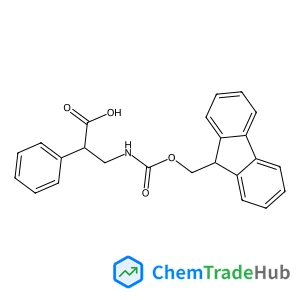
(S)-3-((((9H-Fluoren-9-yl)methoxy)carbonyl)amino)-2-phenylpropanoic acid
CAS Number:
1217663-60-9
Molecular Formula:
C24H21NO4
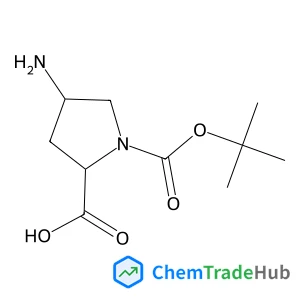
(2R,4R)-1-Boc-4-Aminopyrrolidine-2-carboxylic acid
CAS Number:
132622-98-1
Molecular Formula:
C10H18N2O4
Recommended Suppliers





Disclaimer
This page provides academic journal information for reference and research purposes only. We are not affiliated with any journal publishers and do not handle publication submissions. For publication-related inquiries, please contact the respective journal publishers directly.
If you notice any inaccuracies in the information displayed, please contact us at support@chemtradehub.com. We will promptly review and address your concerns.