












![1-Oxa-8-azaspiro[4.5]decan-3-ol structure](https://static.chemtradehub.com/structs/757/757239-76-2-a0ec.webp "1-Oxa-8-azaspiro[4.5]decan-3-ol structure")
Geometrically asymmetric electrodes for probing electrochemical reaction kinetics: a case study of hydrogen at the Pt–CsH2PO4 interface
Literature Information
Publication Date
2009-07-15
DOI
10.1039/B909498A
Impact Factor
3.676
Authors
Kenji A. Sasaki, Yong Hao, Sossina M. Haile
View Original
Abstract
Electrochemical reactions can exhibit considerable asymmetry, with the polarization behavior of oxidation at a given metal|electrolyte interface differing substantially from that of reduction. The reference-less, microcontact electrode geometry, in which the electrode overpotentials are geometrically constrained to the working electrode (by limiting its area) is experimentally convenient, particularly for fuel cell studies, because the results do not rely on accurate placement of a reference electrode nor must oxidant and reductant gases be sealed off from one another. Here, the conditions under which the critical assumption of this geometry applies—that the overpotential at the large-area counter electrode can be ignored—is numerically assessed. It is found that, for cells of sufficiently large area, the effective radius of the counter electrode (which defines the area through which the majority of the current passes) can be expressed directly as a function of electrolyte thickness and the materials properties, σ, the conductivity of the electrolyte, and k, the reaction rate constant for the electrochemical reaction at zero-bias. From this effective radius and the true radius of the working electrode, the fraction of electrode overpotential at the latter, defined as the extent of isolation, can be readily computed. Experimental studies of hydrogen electro-oxidation/proton electro-reduction at the Pt|CsH2PO4 interface using two cells of differing dimensions both validate the computational results and demonstrate that asymmetry in such reactions are readily revealed in the micro-electrode, reference-less geometry. The study furthermore confirms the insensitivity of the results to the precise placement of the working electrode, while indicating the importance of very high isolation values (>99%) to ensure that overpotential contributions of the counter electrode do not influence the measurements, particularly as bias is increased.
Related Literature
Chalcogen bonding enabled photosynthesis of aryl selenides from aryl sulfonium salts
Xiao-Di Su, Qing-Shuang Zhang, Bei-Bei Zhang, Lin He, Qiang Liu, Xiang-Yu Chen
2023-11-29
Research Article
DOI: 10.1039/D3QO01719B
Practical synthesis and divergent optimization of halichonine B for the discovery of novel pharmaceutical leads
Shengxin Sun, Juan Yang, Shengkun Li
2023-12-04
Research Article
DOI: 10.1039/D3QO01816D
A route to carbon-sp3 bridging spiro-molecules: synthetic methods and optoelectronic applications
2023-11-28
Review Article
DOI: 10.1039/D3QO01735D
Hydantoin hexameric rosettes: harnessing H-bonds for supergelation and liquid crystals
Lucía González, Iván Marín, Rosa M. Tejedor, Joaquín Barberá, Pilar Romero, Alberto Concellón, Santiago Uriel, José L. Serrano
2023-12-04
Research Article
DOI: 10.1039/D3QO01832F
N-heterocyclic nitrenium charge transfer catalysis via inner-sphere electron transfer in concert with halogen-atom dissociation
Chao-Shen Zhang, Chang-Zhen Fang, Liang Yi, Chen Zhu, Magnus Rueping
2023-11-28
Research Article
DOI: 10.1039/D3QO01779F
Syntheses of 3H-1,2,4-triazol-3-ones by copper-promoted oxidative N–N bond formation of amidines with isocyanates
Baihui Liang, Xiangya Cai, JingYu Liu, Jie Huang, Youzhi Chen, Haiyin Deng, Quanquan Zhou, Tianxiang Chen, Xiuwen Chen, Zhongzhi Zhu
2023-11-21
Research Article
DOI: 10.1039/D3QO01565C
Synthesis of 2-acyl benzofurans and indoles based on nucleophile-intercepted Meyer–Schuster rearrangement of o-hydroxyphenyl and o-aminophenyl propargylic alcohols
Zhao-Zhao Li, Si-Jing Jiang, Shu-Yun He, Yu-Ning Gao, Ming Bian, Hui-Yu Chen
2023-12-11
Research Article
DOI: 10.1039/D3QO01671D
Photocatalytic decarboxylative phosphorylation of N-aryl glycines
Jiangwei Wen, Xue Sun, Kelu Yan, Tingtao Yan, Zhen Liu, Yang Li, Jianjing Yang
2023-12-05
Research Article
DOI: 10.1039/D3QO01577G
Pd-catalyzed vinyl C–H amination with diaziridinone
Jianjun Wang, Huiying Hong, Daguo Hu, Jieling Liu, Wei Liu, Yian Shi
2023-11-23
Research Article
DOI: 10.1039/D3QO01472J
Photoredox chromium and cobalt dual catalysis for carbonyl allylation with butadiene via allyl radical intermediates
Huaipu Yan, Dandan Zhang, Yonghong Liu, Xin Wang, Zhixian Wu, Yunhe Jin, Xiaobo Ding, Jing-Ran Shan, Erjun Hao
2023-12-18
Research Article
DOI: 10.1039/D3QO01403G
You might also like
Compound Q&A
What precautions should be taken when handling 2-Methyl-2-propanyl 5-amino-2-thiophenecarboxylate (CAS: 1498311-57-1)?
When handling 2-Methyl-2-propanyl 5-amino-2-thiophenecarboxylate (CAS: 1498311-5...
1498311-57-12-Methyl-2-propanyl ...
Compound Q&A
What are the physical and chemical properties of 5-Bromo-1,2-dichloro-3-fluorobenzene (CAS: 1000572-93-9)?
5-Bromo-1,2-dichloro-3-fluorobenzene (CAS: 1000572-93-9) is a crystalline solid ...
1000572-93-95-Bromo-1,2-dichloro...
Compound Q&A
How should (2R)-2-Amino-2-(4-bromophenyl)ethanol (CAS: 354153-64-3) be stored?
(2R)-2-Amino-2-(4-bromophenyl)ethanol (CAS: 354153-64-3) should be stored in a c...
354153-64-3(2R)-2-Amino-2-(4-br...
Compound Q&A
What regulatory guidelines apply to Methyl 4-(aminomethyl)tetrahydro-2H-pyran-4-carboxylate hydrochloride (CAS: 362707-24-2)?
Methyl 4-(aminomethyl)tetrahydro-2H-pyran-4-carboxylate hydrochloride (CAS: 3627...
362707-24-2Methyl 4-(aminomethy...
Compound Q&A
What are the main uses of 1,4-dimethyl-1H-pyrazole-5-sulfonyl chloride (CAS: 1174834-52-6)?
1,4-Dimethyl-1H-pyrazole-5-sulfonyl chloride is primarily used as an intermediat...
1174834-52-61,4-dimethyl-1H-pyra...
Compound Q&A
Is Dinaphtho[1,2-b:2',1'-d]furan (CAS: 239-69-0) safe?
Dinaphtho[1,2-b:2',1'-d]furan is generally safe when handled with appropriate pe...
239-69-0Dinaphtho[1,2-b:2',1...
Compound Q&A
What is the market or research trend for 7-Methyl-7,9-dihydro-1H-purine-2,6,8(3H)-trione (CAS: 612-37-3)?
The market for 7-Methyl-7,9-dihydro-1H-purine-2,6,8(3H)-trione (CAS: 612-37-3) i...
612-37-37-Methyl-7,9-dihydro...
Compound Q&A
What are the physical and chemical properties of 2-(4-Chlorophenyl)malonaldehyde (CAS: 205676-17-1)?
2-(4-Chlorophenyl)malonaldehyde (CAS: 205676-17-1) is a colorless or light yello...
205676-17-12-(4-Chlorophenyl)ma...
Compound Q&A
How is 2-Methylchrysene (CAS: 3351-32-4) typically synthesized?
2-Methylchrysene (CAS: 3351-32-4) is typically synthesized via the reaction of c...
3351-32-42-Methylchrysene
Compound Q&A
Is N-(6-aminopyrimidin-4-yl)acetamide (CAS: 89533-23-3) safe?
N-(6-aminopyrimidin-4-yl)acetamide (CAS: 89533-23-3) is generally considered saf...
89533-23-3N-(6-aminopyrimidin-...
Source Journal
Physical Chemistry Chemical Physics

CiteScore:
5.5
Self-citation Rate:
10.3%
Articles per Year:
3036
Physical Chemistry Chemical Physics (PCCP) is an international journal co-owned by 19 physical chemistry and physics societies from around the world. This journal publishes original, cutting-edge research in physical chemistry, chemical physics and biophysical chemistry. To be suitable for publication in PCCP, articles must include significant innovation and/or insight into physical chemistry; this is the most important criterion that reviewers and Editors will judge against when evaluating submissions. The journal has a broad scope and welcomes contributions spanning experiment, theory, computation and data science. Topical coverage includes spectroscopy, dynamics, kinetics, statistical mechanics, thermodynamics, electrochemistry, catalysis, surface science, quantum mechanics, quantum computing and machine learning. Interdisciplinary research areas such as polymers and soft matter, materials, nanoscience, energy, surfaces/interfaces, and biophysical chemistry are welcomed if they demonstrate significant innovation and/or insight into physical chemistry. Joined experimental/theoretical studies are particularly appreciated when complementary and based on up-to-date approaches.
Recommended Compounds
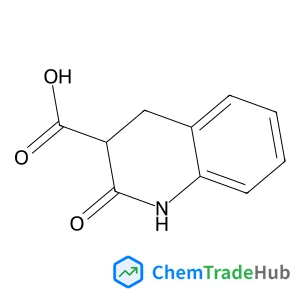
2-Oxo-1,2,3,4-tetrahydro-3-quinolinecarboxylic acid
CAS Number:
246867-17-4
Molecular Formula:
C10H9NO3
Recommended Suppliers




Disclaimer
This page provides academic journal information for reference and research purposes only. We are not affiliated with any journal publishers and do not handle publication submissions. For publication-related inquiries, please contact the respective journal publishers directly.
If you notice any inaccuracies in the information displayed, please contact us at support@chemtradehub.com. We will promptly review and address your concerns.