












Interrupting the Nazarov reaction: domino and cascade processes utilizing cyclopentenyl cations
Literature Information
Publication Date
2009-08-21
DOI
10.1039/B908515G
Impact Factor
6.222
Authors
Tina N. Grant, Curtis J. Rieder, Frederick G. West
View Original
Abstract
The Nazarov reaction entails the electrocyclic closure of a conjugated pentadienyl cation to furnish a cyclopentenyl cation. In its conventional protocol, this intermediate is allowed to undergo elimination through loss of an adjacent proton, providing cyclopentenone products. This feature article describes a relatively new class of domino and cascade processes in which the mechanistic course of the Nazarov reaction is diverted at the point of the cyclopentenyl cation intermediate, collectively referred to as “interrupted Nazarov reactions.” A variety of intra- or intermolecular nucleophiles, including silyl hydrides, alkenes, arenes, amines, halides, oxygen nucleophiles and azides, can capture the cation at one terminus, resulting in interesting polycyclic structures. 1,3-Dienes also trap the cyclopentenyl cation, but in this case via concerted [4 + 3]-cycloaddition to give keto-bridged cyclooctenes. An alternative method for generating the pentadienyl cyclization precursor from dichlorocyclopropanes rather than cross-conjugated dienones is also discussed, along with some novel trapping processes.
Related Literature
A fluorescence nanoprobe for detecting the effect of different oxygen and nutrient conditions on breast cancer cells’ migration and invasion
Ping Zhou, Bo Liu, Mingming Luan, Na Li, Bo Tang
2021-05-25
Communication
DOI: 10.1039/D1BM00619C
Reasonable construction of Fe3O4/Ni@N-RGO nanoflowers as highly efficient counter electrodes for dye-sensitized solar cells
Haifeng Xu, Zhong Jin
2020-05-14
Paper
DOI: 10.1039/D0SE00494D
Three-dimensional flower-like nickel phyllosilicates for CO2 methanation: enhanced catalytic activity and high stability
Tengfei Zhang, Zhiwei Tian, Qing Liu
2020-04-16
Paper
DOI: 10.1039/D0SE00360C
A facile route for preparing nickel(ii) oxide thin films for high-performance inverted perovskite solar cells
Guibin Shen, Hongye Dong, Qingbin Cai, Xiaoning Wen, Xiangning Xu, Cheng Mu
2020-04-28
Paper
DOI: 10.1039/D0SE00200C
Ligandless-ultrasound-assisted emulsification-microextraction combined with inductively coupled plasma-optical emission spectrometry for simultaneous determination of heavy metals in water samples
Hassan Sereshti, Vahid Khojeh, Maryam Karimi, Soheila Samadi
2011-11-23
Paper
DOI: 10.1039/C1AY05354J
Big problem, little answer: overcoming bed agglomeration and reactor slagging during the gasification of barley straw under continuous operation
Hassan A. Alabdrabalameer, Juho Kauppinen, Toni Pikkarainen
2020-05-25
Paper
DOI: 10.1039/D0SE00155D
Target and non-target screening strategies for organic contaminants, residues and illicit substances in food, environmental and human biological samples by UHPLC-QTOF-MS
Ramon Díaz, María Ibáñez, Juan V. Sancho, Félix Hernández
2011-11-28
Paper
DOI: 10.1039/C1AY05385J
A simple in-house dry ashing chamber for the rapid determination of total mercury in organic-rich solid materials by oxidative pyrolysis followed by CVAAS and FI-ICPMS detection
M. V. Balarama Krishna, A. C. Sahayam, D. Karunasagar
2011-11-30
Paper
DOI: 10.1039/C1AY05624G
Substrate strain engineering: an efficient strategy to enhance the catalytic activity of SACs on waved graphene for e-NRR
Di Liu, Haoqiang Ai, Wan Tong Lou, Feifei Li, Kin Ho Lo
2020-05-14
Paper
DOI: 10.1039/D0SE00518E
You might also like
Compound Q&A
What industries use (1R,3S)-1,3-Cyclopentanediol (CAS: 16326-97-9)?
(1R,3S)-1,3-Cyclopentanediol finds applications in various industries. In the ph...
16326-97-9(1R,3S)-1,3-Cyclopen...
Compound Q&A
What precautions should be taken when handling N'-[4-(Dimethylamino)phenyl]-N,N-dimethyl-1,4-benzenediamine (CAS: 637-31-0)?
When handling N'-[4-(Dimethylamino)phenyl]-N,N-dimethyl-1,4-benzenediamine, it i...
637-31-0N'-[4-(Dimethylamino...
Compound Q&A
Are there alternatives to 5-(2,4-Difluorophenyl)-2-methoxypyrimidine (CAS: 1352318-16-1) in synthesis?
There are several alternatives to 5-(2,4-Difluorophenyl)-2-methoxypyrimidine in ...
1352318-16-15-(2,4-Difluoropheny...
Compound Q&A
What regulatory guidelines apply to 1-(3-Methoxyphenoxy)propan-2-ol (CAS: 382141-68-6)?
1-(3-Methoxyphenoxy)propan-2-ol (CAS: 382141-68-6) must comply with the Globally...
382141-68-61-(3-Methoxyphenoxy)...
Compound Q&A
Is Tetrodotoxin Citrate (CAS: 18660-81-6) safe?
Tetrodotoxin Citrate is extremely dangerous and should be handled with extreme c...
18660-81-6Tetrodotoxin Citrate
Compound Q&A
What are the main uses of 2-Methyl-2-propanyl [(1R,3S)-3-hydroxycyclopentyl]carbamate (CAS: 225641-84-9)?
2-Methyl-2-propanyl [(1R,3S)-3-hydroxycyclopentyl]carbamate (CAS: 225641-84-9) i...
225641-84-92-Methyl-2-propanyl ...
Compound Q&A
How should waste containing 4-(2-Hydroxyhexafluoroisopropyl)Benzoic Acid (CAS: 16261-80-6) be handled?
Waste containing 4-(2-Hydroxyhexafluoroisopropyl)Benzoic Acid (CAS: 16261-80-6) ...
16261-80-64-(2-Hydroxyhexafluo...
Compound Q&A
How is 2-Methyl-2-proanyl {(2S)-1-[(benzyloxy)amino]-3-hydroxy-3-methyl-1-oxo-2-butanyl}carbamate (CAS: 102507-19-7) typically synthesized?
2-Methyl-2-proanyl {(2S)-1-[(benzyloxy)amino]-3-hydroxy-3-methyl-1-oxo-2-butanyl...
102507-19-72-Methyl-2-propanyl ...
Compound Q&A
What is Benzeneethanamine, α-ethyl-, hydrochloride (1:1) (CAS: 20735-15-3)?
Benzeneethanamine, α-ethyl-, hydrochloride (1:1) is an organic compound with the...
20735-15-3Benzeneethanamine, α...
Compound Q&A
Are there alternatives to 3-{(E)-[4-(Dimethylamino)phenyl]diazenyl}benzoic acid (CAS: 20691-84-3) in synthesis?
In the synthesis of compounds similar to 3-{(E)-[4-(Dimethylamino)phenyl]diazeny...
20691-84-33-{(E)-[4-(Dimethyla...
Source Journal
Chemical Communications

CiteScore:
8.6
Self-citation Rate:
4.7%
Articles per Year:
2458
ChemComm publishes urgent research which is of outstanding significance and interest to experts in the field, while also appealing to the journal’s broad chemistry readership. Our communication format is ideally suited to short, urgent studies that are of such importance that they require accelerated publication. Our scope covers all topics in chemistry, and research at the interface of chemistry and other disciplines (such as materials science, nanoscience, physics, engineering and biology) where there is a significant novelty in the chemistry aspects. Major topic areas covered include: Analytical Chemistry Catalysis Chemical Biology and medicinal chemistry Computational Chemistry and Machine Learning Energy and sustainable chemistry Environmental Chemistry Green Chemistry Inorganic Chemistry Materials Chemistry Nanoscience Organic Chemistry Physical Chemistry Polymer Chemistry Supramolecular Chemistry
Recommended Compounds

tert-Butyl 4-(2-(p-Tolylsulfonyl)hydrazono)piperidine-1-carboxylate
CAS Number:
1046478-89-0
Molecular Formula:
C17H25N3O4S

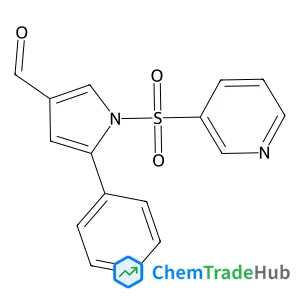
5-Phenyl-1-(pyridin-3-ylsulfonyl)-1H-pyrrole-3-carbaldehyde
CAS Number:
881676-90-0
Molecular Formula:
C16H12N2O3S
Recommended Suppliers





Disclaimer
This page provides academic journal information for reference and research purposes only. We are not affiliated with any journal publishers and do not handle publication submissions. For publication-related inquiries, please contact the respective journal publishers directly.
If you notice any inaccuracies in the information displayed, please contact us at support@chemtradehub.com. We will promptly review and address your concerns.