













![[4-(Isobutyrylamino)phenyl]boronic acid structure](https://static.chemtradehub.com/structs/874/874219-50-8-6ab5.webp "[4-(Isobutyrylamino)phenyl]boronic acid structure")
Three-dimensional flower-like nickel phyllosilicates for CO2 methanation: enhanced catalytic activity and high stability
Literature Information
Publication Date
2020-04-16
DOI
10.1039/D0SE00360C
Impact Factor
6.367
Authors
Tengfei Zhang, Zhiwei Tian, Qing Liu
View Original
Abstract
To simultaneously enhance both the activity and stability of the supported Ni catalysts for a high-temperature reaction is a great challenge in catalysis. Addressing this problem, three-dimensional flower-like nickel phyllosilicates were facilely prepared by a hydrothermal method through the reaction between mesostructured cellular foam silica (MCF) and nickel nitrate for CO2 methanation. These Ni-containing phyllosilicates samples are characterized by various techniques, such as nitrogen adsorption, X-ray diffraction, scanning electron microscopy, transmission electron microscopy, H2 temperature programmed reduction, H2 temperature programmed desorption, CO2 temperature programmed desorption and X-ray photoelectron spectroscopy. Our results showed that the nickel phyllosilicate became more pronounced and denser with the increase of hydrothermal time, leading to the enhanced interaction between metal and silicate with the Ni contents in the high level of 20.05–32.05 wt%. In addition, the particle size of Ni is small (<5 nm) after the reduction at 700 °C, ascribed to the formation of nickel phyllosilicate. The phyllosilicate catalyst with the hydrothermal time of 30 h (N/M-P-30) shows the highest catalytic activity, which achieves the maximum CO2 conversion of 79.5% at 450 °C, 0.1 MPa and a high weight hourly space velocity (WHSV) of 60 000 mL g−1 h−1. In the 100 h-lifetime test under the condition of 450 °C, 0.1 MPa, 60 000 mL g−1 h−1 and 6 h-hydrothermal treatments at 600 °C in 100% steam, N/M-P-30 shows high stability without Ni sintering and collapse of pores as well as the decrease of catalytic activity after two stability tests, which is attributed to the special properties of three-dimensional flower-like nickel phyllosilicates and the enhanced interaction between Ni species and silicate.
Related Literature
Modeling ultrasound-induced molecular weight decrease of polymers with multiple scissile azo-mechanophores
Mathieu A. Ayer, Cheyenne H. Liu, Christoph Weder
2021-06-22
Paper
DOI: 10.1039/D1PY00420D
The effect of alkyl chain lengths on the red-to-near-infrared emission of boron-fused azomethine conjugated polymers and their film-state stimuli-responsivities
Shunsuke Ohtani, Natsumi Yamada, Masayuki Gon, Kazuo Tanaka, Yoshiki Chujo
2021-04-19
Paper
DOI: 10.1039/D1PY00213A
Practical phosphorylation of polymers: an easy access to fully alcohol soluble synthetically and industrially important polymers
Gokhan Sagdic, Ozgun Daglar, Ufuk Saim Gunay, Emrah Cakmakci, Gurkan Hizal, Umit Tunca, Hakan Durmaz
2021-07-05
Paper
DOI: 10.1039/D1PY00726B
Synthesis of thermo-sensitive polymers with super narrow molecular weight distributions: PET-RAFT polymerization of N-isopropyl acrylamide mediated by cross-linked zinc porphyrins with high active site loadings
Fanfan Li, Yi Yu, Hanyu Lv, Guiting Cai, Yanwu Zhang
2021-03-22
Paper
DOI: 10.1039/D0PY01643H
Hollow microspherical carbazole-based conjugated polymers by photoinduced step-growth polymerization
Tugba Celiker, Ali Suerkan, Sinem Altinisik, Mert Akgun, Sermet Koyuncu
2021-07-21
Paper
DOI: 10.1039/D1PY00822F
Droplet nucleation in miniemulsion thiol–ene step photopolymerization
Marc Schmutz
2021-03-08
Paper
DOI: 10.1039/D1PY00139F
Hierarchical ordering and multilayer structure of poly(ε-caprolactone) end-functionalized by a liquid crystalline unit: role of polymer crystallization
Wenqing Xu, Xing Li, Wenhua Yuan, Jian Zhou
2021-07-05
Paper
DOI: 10.1039/D1PY00702E
Initiator-dependent kinetics of lyotropic liquid crystal-templated thermal polymerization
Younes Saadat, Kyungtae Kim, Reza Foudazi
2021-03-11
Paper
DOI: 10.1039/D1PY00127B
You might also like
Compound Q&A
What industries use (1R,3S)-1,3-Cyclopentanediol (CAS: 16326-97-9)?
(1R,3S)-1,3-Cyclopentanediol finds applications in various industries. In the ph...
16326-97-9(1R,3S)-1,3-Cyclopen...
Compound Q&A
What precautions should be taken when handling N'-[4-(Dimethylamino)phenyl]-N,N-dimethyl-1,4-benzenediamine (CAS: 637-31-0)?
When handling N'-[4-(Dimethylamino)phenyl]-N,N-dimethyl-1,4-benzenediamine, it i...
637-31-0N'-[4-(Dimethylamino...
Compound Q&A
Are there alternatives to 5-(2,4-Difluorophenyl)-2-methoxypyrimidine (CAS: 1352318-16-1) in synthesis?
There are several alternatives to 5-(2,4-Difluorophenyl)-2-methoxypyrimidine in ...
1352318-16-15-(2,4-Difluoropheny...
Compound Q&A
What regulatory guidelines apply to 1-(3-Methoxyphenoxy)propan-2-ol (CAS: 382141-68-6)?
1-(3-Methoxyphenoxy)propan-2-ol (CAS: 382141-68-6) must comply with the Globally...
382141-68-61-(3-Methoxyphenoxy)...
Compound Q&A
Is Tetrodotoxin Citrate (CAS: 18660-81-6) safe?
Tetrodotoxin Citrate is extremely dangerous and should be handled with extreme c...
18660-81-6Tetrodotoxin Citrate
Compound Q&A
What are the main uses of 2-Methyl-2-propanyl [(1R,3S)-3-hydroxycyclopentyl]carbamate (CAS: 225641-84-9)?
2-Methyl-2-propanyl [(1R,3S)-3-hydroxycyclopentyl]carbamate (CAS: 225641-84-9) i...
225641-84-92-Methyl-2-propanyl ...
Compound Q&A
How should waste containing 4-(2-Hydroxyhexafluoroisopropyl)Benzoic Acid (CAS: 16261-80-6) be handled?
Waste containing 4-(2-Hydroxyhexafluoroisopropyl)Benzoic Acid (CAS: 16261-80-6) ...
16261-80-64-(2-Hydroxyhexafluo...
Compound Q&A
How is 2-Methyl-2-proanyl {(2S)-1-[(benzyloxy)amino]-3-hydroxy-3-methyl-1-oxo-2-butanyl}carbamate (CAS: 102507-19-7) typically synthesized?
2-Methyl-2-proanyl {(2S)-1-[(benzyloxy)amino]-3-hydroxy-3-methyl-1-oxo-2-butanyl...
102507-19-72-Methyl-2-propanyl ...
Compound Q&A
What is Benzeneethanamine, α-ethyl-, hydrochloride (1:1) (CAS: 20735-15-3)?
Benzeneethanamine, α-ethyl-, hydrochloride (1:1) is an organic compound with the...
20735-15-3Benzeneethanamine, α...
Compound Q&A
Are there alternatives to 3-{(E)-[4-(Dimethylamino)phenyl]diazenyl}benzoic acid (CAS: 20691-84-3) in synthesis?
In the synthesis of compounds similar to 3-{(E)-[4-(Dimethylamino)phenyl]diazeny...
20691-84-33-{(E)-[4-(Dimethyla...
Source Journal
Recommended Compounds
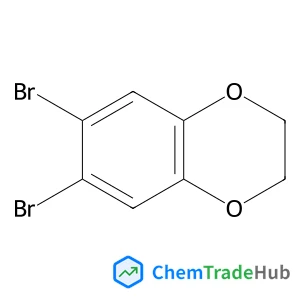
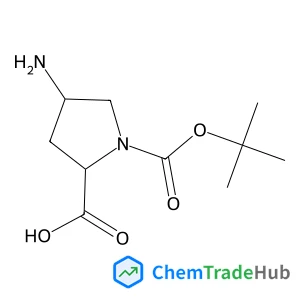
(2R,4R)-1-Boc-4-Aminopyrrolidine-2-carboxylic acid
CAS Number:
132622-98-1
Molecular Formula:
C10H18N2O4
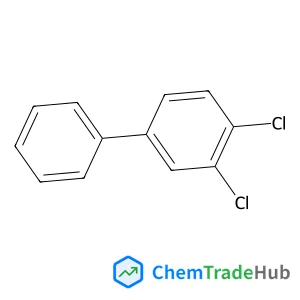
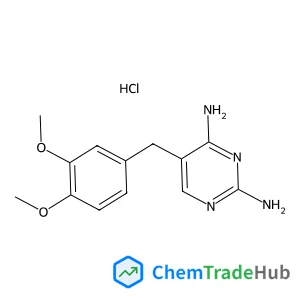
5-(3,4-Dimethoxybenzyl)-2,4-pyrimidinediamine hydrochloride (1:1)
CAS Number:
2507-23-5
Molecular Formula:
C13H17ClN4O2
Recommended Suppliers





Disclaimer
This page provides academic journal information for reference and research purposes only. We are not affiliated with any journal publishers and do not handle publication submissions. For publication-related inquiries, please contact the respective journal publishers directly.
If you notice any inaccuracies in the information displayed, please contact us at support@chemtradehub.com. We will promptly review and address your concerns.