












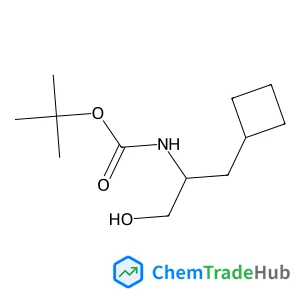
2-Methyl-2-propanyl (1-cyclobutyl-3-hydroxy-2-propanyl)carbamate
CAS Number:
816429-99-9
Molecular Formula:
C12H23NO3
André Rittermeier, Shaojun Miao, Xiaoning Zhang, Maurits W. E. van den Berg, Shankhamala Kundu, Yuemin Wang, Sabine Schimpf, Elke Löffler, Roland A. Fischer, Martin Muhler
A highly efficient one-step process to generate Cu–Zn colloids was developed, in which the colloidal particles were synthesized from Cu and Zn stearates by reduction with H2 in a continuously operated stirred tank reactor. The resulting spherical, well separated particles have a size of 5–10 nm, consisting of a crystalline Cu0 core (fcc) stabilized by a Zn stearate shell without long-range order. In situ attenuated total reflection FTIR spectroscopy was used to monitor the shift of the C–O stretching vibration of adsorbed CO as a function of temperature and pressure. The absence of the CO rotation–vibration bands of dissolved CO allowed us to obtain FTIR spectra at a CO pressure of 1.0 MPa at 473 K resulting in three shifted CO bands at 2030–2025, 1979–1978, and 1920 cm−1. These bands indicate the presence of reduced coadsorbed Zn species on the metallic Cu surface. Cyclic CO adsorption experiments demonstrated the dynamics of the interaction between the Cu core and the Zn stearate shell.
Zhuo Chen, Chen Li, Kui Liu, Li-Rong Wen, Ming Li, Lin-Bao Zhang
DOI: 10.1039/D3QO01616A
Huaipu Yan, Dandan Zhang, Yonghong Liu, Xin Wang, Zhixian Wu, Yunhe Jin, Xiaobo Ding, Jing-Ran Shan, Erjun Hao
DOI: 10.1039/D3QO01403G
Ming Bai, Yu-Fei Xi, Si-Hui Mi, Pei-Yuan Yang, Li-Li Lou, Tian-Ming Lv, Xin Zhang, Guo-Dong Yao, Bin Lin, Shao-Jiang Song
DOI: 10.1039/D3QO01769A
Wenzheng Zhang, Zhenxing Yan, Chuan-Ying Li
DOI: 10.1039/D3QO01651J
Yuanrui Jiang, Wenjing Zhu, Jiawen Huang, Fan Luo, Xiaobei Chen, Chunhui Fang, Xin Chen, Shihui Liu, Yanwei Hu, Shilei Zhang
DOI: 10.1039/D3QO01109G
Depeng Duan, Lu Song
DOI: 10.1039/D3QO01370G
Jianchao Liu, Jie-Ping Wan, Yunyun Liu
DOI: 10.1039/D3QO01844J
Qiwen Huang, Yanze Li, Cun Yang, Wendan Wu, Jingjie Hai, Xinyao Li
DOI: 10.1039/D3QO01877F
Xiao-Di Su, Qing-Shuang Zhang, Bei-Bei Zhang, Lin He, Qiang Liu, Xiang-Yu Chen
DOI: 10.1039/D3QO01719B
When handling 2-Methyl-2-propanyl 5-amino-2-thiophenecarboxylate (CAS: 1498311-5...
5-Bromo-1,2-dichloro-3-fluorobenzene (CAS: 1000572-93-9) is a crystalline solid ...
(2R)-2-Amino-2-(4-bromophenyl)ethanol (CAS: 354153-64-3) should be stored in a c...
Methyl 4-(aminomethyl)tetrahydro-2H-pyran-4-carboxylate hydrochloride (CAS: 3627...
1,4-Dimethyl-1H-pyrazole-5-sulfonyl chloride is primarily used as an intermediat...
Dinaphtho[1,2-b:2',1'-d]furan is generally safe when handled with appropriate pe...
The market for 7-Methyl-7,9-dihydro-1H-purine-2,6,8(3H)-trione (CAS: 612-37-3) i...
2-(4-Chlorophenyl)malonaldehyde (CAS: 205676-17-1) is a colorless or light yello...
2-Methylchrysene (CAS: 3351-32-4) is typically synthesized via the reaction of c...
N-(6-aminopyrimidin-4-yl)acetamide (CAS: 89533-23-3) is generally considered saf...

Physical Chemistry Chemical Physics (PCCP) is an international journal co-owned by 19 physical chemistry and physics societies from around the world. This journal publishes original, cutting-edge research in physical chemistry, chemical physics and biophysical chemistry. To be suitable for publication in PCCP, articles must include significant innovation and/or insight into physical chemistry; this is the most important criterion that reviewers and Editors will judge against when evaluating submissions. The journal has a broad scope and welcomes contributions spanning experiment, theory, computation and data science. Topical coverage includes spectroscopy, dynamics, kinetics, statistical mechanics, thermodynamics, electrochemistry, catalysis, surface science, quantum mechanics, quantum computing and machine learning. Interdisciplinary research areas such as polymers and soft matter, materials, nanoscience, energy, surfaces/interfaces, and biophysical chemistry are welcomed if they demonstrate significant innovation and/or insight into physical chemistry. Joined experimental/theoretical studies are particularly appreciated when complementary and based on up-to-date approaches.
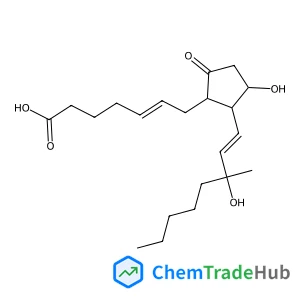
![N-[(1-Ethyl-2-pyrrolidinyl)methyl]-2-hydroxy-5-sulfamoylbenzamide structure](https://static.chemtradehub.com/structs/673/67381-52-6-877f.webp "N-[(1-Ethyl-2-pyrrolidinyl)methyl]-2-hydroxy-5-sulfamoylbenzamide structure")
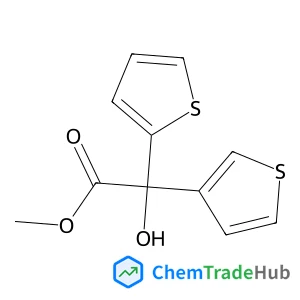
![2-Bromo-7-chloro-4H-pyrrolo[2,3-b]pyrazine structure](https://static.chemtradehub.com/structs/115/1150617-58-5-0b0a.webp "2-Bromo-7-chloro-4H-pyrrolo[2,3-b]pyrazine structure")






