












Response of CPO-27-Ni towards CO, N2 and C2H4
Literature Information
Publication Date
2009-09-08
DOI
10.1039/B907258F
Impact Factor
3.676
Authors
Sachin Chavan, Francesca Bonino, Jenny G. Vitillo, Elena Groppo, Carlo Lamberti, Pascal D. C. Dietzel, Adriano Zecchina, Silvia Bordiga
View Original
Abstract
Coordinatively unsaturated Ni2+ atoms in CPO-27-Ni form linear adducts with molecular nitrogen. The framework responds to the adsorption-modifying vibrational properties and local structure around adsorbing sites. The present paper deals with a fundamental infrared (IR) study of the interaction of gases on a microporous adsorbent metallorganic framework CPO-27-Ni containing, after solvent removal, coordinatively unsaturated Ni2+ atoms [Dietzel et al., Chem. Commun. 2006, 959]. CO, N2 and C2H4 have been chosen. Notwithstanding the relative medium (CO and C2H4) and weak (N2) adsorption enthalpies and the low equilibrium pressures adopted (100–10−3 mbar) the CPO-27-Ni framework responds promptly and reversibly to the adsorption process, modifying significantly both vibrational properties and local structure around Ni2+ adsorbing sites as determined by a parallel EXAFS investigation locating the N2 molecule 2.27 ± 0.03 Å apart from Ni2+. For both N2 and C2H4, IR spectra have been discussed and carefully compared with literature data. Isosteric heat of adsorption of the Ni2+⋯N2 complex formation has been evaluated from temperature dependent IR study to be −ΔHads = 17 kJ mol−1.
Recommended Journals
Related Literature
Effect of pH on the photophysical properties of two new carboxylic-substituted iridium(iii) complexes
Jiena Weng, Qunbo Mei, Weiwei Jiang, Quli Fan, Bihai Tong, Qidan Ling, Wei Huang
2012-12-18
Paper
DOI: 10.1039/C2AN36298H
Rapid and simultaneous detection of ricin, staphylococcal enterotoxin B and saxitoxin by chemiluminescence-based microarray immunoassay
A. Szkola, E. M. Linares, S. Worbs, B. G. Dorner, R. Dietrich, E. Märtlbauer, R. Niessner, M. Seidel
2014-09-05
Paper
DOI: 10.1039/C4AN00345D
A quantum dot–lucigenin probe for Cl−
Maria Jose Ruedas-Rama, Elizabeth A. H. Hall
2008-08-01
Paper
DOI: 10.1039/B801507D
Discrimination of prostate cancer cells by reflection mode FTIRphotoacoustic spectroscopy
Tim J. Harvey, Alex Henderson, Ehsan Gazi, Noel W. Clarke, Mick Brown, Elsa Correia Faria, Richard D. Snook, Peter Gardner
2007-03-08
Communication
DOI: 10.1039/B618618A
Novel integrated and portable endotoxin detection system based on an electrochemical biosensor
Fernando Arizti, Susana Sánchez-Gómez, Guillermo Martínez de Tejada, Klaus Brandenburg
2014-11-13
Paper
DOI: 10.1039/C4AN01324G
Significantly enhanced antibacterial activity of TiO2 nanofibers with hierarchical nanostructures and controlled crystallinity
Won Seok Lee, Yang-Seok Park
2014-11-11
Paper
DOI: 10.1039/C4AN01682C
Fast capillary electrophoresis coupled with time-of-flight mass spectrometry under separation conditions of high electrical field strengths
Frank-Michael Matysik, Christian Neusüß, Matthias Pelzing
2008-09-22
Paper
DOI: 10.1039/B806349D
Investigating acid-induced structural transitions of lysozyme in an electrospray ionization source
Jong Wha Lee
2014-11-18
Paper
DOI: 10.1039/C4AN01794C
Continuous monitoring of ascorbate transport through neuroblastoma cells with a ruthenium oxide hexacyanoferrate modified microelectrode
Thiago R. L. C. Paixão, Lívea F. Barbosa, Marisa H. G. Medeiros, Mauro Bertotti
2008-08-13
Paper
DOI: 10.1039/B805868G
Aptamer-aided target capturing with biocatalytic metal deposition: an electrochemical platform for sensitive detection of cancer cells
Zi Yi, Xiao-Yan Li, Qing Gao, Li-Juan Tang, Xia Chu
2013-01-16
Paper
DOI: 10.1039/C3AN36474G
You might also like
Compound Q&A
What precautions should be taken when handling 2-Chloro-1,2-bis(4-methylphenyl)ethanone (CAS: 71193-32-3)?
When handling 2-Chloro-1,2-bis(4-methylphenyl)ethanone (CAS: 71193-32-3), it is ...
71193-32-32-Chloro-1,2-bis(4-m...
Compound Q&A
What industries use 4-Ethoxy-3-(5-methyl-4-oxo-7-propyl-1,4-dihydroimidazo[5,1-f][1,2,4]triazin-2-yl)benzenesulfonyl chloride (CAS: 224789-26-8)?
4-Ethoxy-3-(5-methyl-4-oxo-7-propyl-1,4-dihydroimidazo[5,1-f][1,2,4]triazin-2-yl...
224789-26-84-Ethoxy-3-(5-methyl...
Compound Q&A
How should Methyl 3-Oxo-4-Androsten-17-Carboxylate (CAS: 2681-55-2) be stored?
Methyl 3-Oxo-4-Androsten-17-Carboxylate (CAS: 2681-55-2) should be stored in a c...
2681-55-2Methyl 3-Oxo-4-Andro...
Compound Q&A
What are the main uses of (R)-3-Amino-4-(3-hexylphenylamino)-4-oxobutylphosphonic acid (CAS: 909725-61-7)?
(R)-3-Amino-4-(3-hexylphenylamino)-4-oxobutylphosphonic acid is primarily used i...
909725-61-7(R)-3-Amino-4-(3-hex...
Compound Q&A
What regulatory guidelines apply to 2-Methyl-2-propanyl 3-amino-3-carbamoyl-1-azetidinecarboxylate (CAS: 1254120-14-3)?
2-Methyl-2-propanyl 3-amino-3-carbamoyl-1-azetidinecarboxylate (CAS: 1254120-14-...
1254120-14-32-Methyl-2-propanyl ...
Compound Q&A
Are there alternatives to (E)-4-(tert-Butoxy)-4-oxobut-2-enoic acid (CAS: 135355-96-3) in synthesis?
There are alternative reagents that can be used in synthesis instead of (E)-4-(t...
135355-96-3(E)-4-(tert-Butoxy)-...
Compound Q&A
What are the physical and chemical properties of [2-(3-Chlorophenyl)-1,3-thiazol-4-yl]methanol (CAS: 121202-20-8)?
[2-(3-Chlorophenyl)-1,3-thiazol-4-yl]methanol (CAS: 121202-20-8) is a crystallin...
121202-20-8[2-(3-Chlorophenyl)-...
Compound Q&A
What is the market or research trend for Methyl (2S)-[(4S)-2,2-dimethyl-1,3-dioxolan-4-yl]{[(4-methylphenyl)sulfonyl]oxy}acetate (CAS: 166249-17-8)?
The market and research trends for Methyl (2S)-[(4S)-2,2-dimethyl-1,3-dioxolan-4...
166249-17-8Methyl (2S)-[(4S)-2,...
Compound Q&A
What is the market or research trend for 1-Bromo-2-isocyanatoethane (CAS: 42865-19-0)?
The market for 1-Bromo-2-isocyanatoethane (CAS: 42865-19-0) is driven by its use...
42865-19-01-Bromo-2-isocyanato...
Compound Q&A
What are the main uses of 4-Nitro-D-phenylalanine hydrochloride (CAS: 147065-06-3)?
4-Nitro-D-phenylalanine hydrochloride (CAS: 147065-06-3) is primarily used in re...
147065-06-34-Nitro-D-phenylalan...
Source Journal
Physical Chemistry Chemical Physics

CiteScore:
5.5
Self-citation Rate:
10.3%
Articles per Year:
3036
Physical Chemistry Chemical Physics (PCCP) is an international journal co-owned by 19 physical chemistry and physics societies from around the world. This journal publishes original, cutting-edge research in physical chemistry, chemical physics and biophysical chemistry. To be suitable for publication in PCCP, articles must include significant innovation and/or insight into physical chemistry; this is the most important criterion that reviewers and Editors will judge against when evaluating submissions. The journal has a broad scope and welcomes contributions spanning experiment, theory, computation and data science. Topical coverage includes spectroscopy, dynamics, kinetics, statistical mechanics, thermodynamics, electrochemistry, catalysis, surface science, quantum mechanics, quantum computing and machine learning. Interdisciplinary research areas such as polymers and soft matter, materials, nanoscience, energy, surfaces/interfaces, and biophysical chemistry are welcomed if they demonstrate significant innovation and/or insight into physical chemistry. Joined experimental/theoretical studies are particularly appreciated when complementary and based on up-to-date approaches.
Recommended Compounds
![2-Hydroxy-4-[({[(4-methylphenyl)sulfonyl]oxy}acetyl)amino]benzoic acid structure](https://static.chemtradehub.com/structs/501/501919-59-1-579f.webp "2-Hydroxy-4-[({[(4-methylphenyl)sulfonyl]oxy}acetyl)amino]benzoic acid structure")
2-Hydroxy-4-[({[(4-methylphenyl)sulfonyl]oxy}acetyl)amino]benzoic acid
CAS Number:
501919-59-1
Molecular Formula:
C16H15NO7S

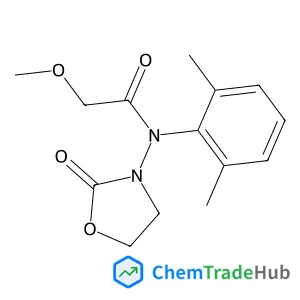
N-(2,6-Dimethylphenyl)-2-methoxy-N-(2-oxo-1,3-oxazolidin-3-yl)acetamide
CAS Number:
77732-09-3
Molecular Formula:
C14H18N2O4

Recommended Suppliers






Disclaimer
This page provides academic journal information for reference and research purposes only. We are not affiliated with any journal publishers and do not handle publication submissions. For publication-related inquiries, please contact the respective journal publishers directly.
If you notice any inaccuracies in the information displayed, please contact us at support@chemtradehub.com. We will promptly review and address your concerns.