












Effect of pH on the photophysical properties of two new carboxylic-substituted iridium(iii) complexes
Literature Information
Publication Date
2012-12-18
DOI
10.1039/C2AN36298H
Impact Factor
4.616
Authors
Jiena Weng, Qunbo Mei, Weiwei Jiang, Quli Fan, Bihai Tong, Qidan Ling, Wei Huang
View Original
Abstract
Two cyclometalated iridium(III) complexes have been prepared based on 2-(4-diphenylamino-phenyl)-quinoline and incorporating carboxylic acid ethyl ester (–COOC2H5, (TPAQCE)2Irpic and carboxylic acid (–COOH, (TPAQCOOH)2Irpic) substituents at the 4-position of the quinoline ligand, respectively. The absorption, emission and 1H NMR spectra of (TPAQCE)2Irpic and (TPAQCOOH)2Irpic under alkaline or acidic conditions demonstrate that they respond to the pH of the surrounding solvent environment. The deprotonation of the carboxylic acid group significantly blue-shifts the metal-to-ligand charge transfer absorption band of (TPAQCOOH)2Irpic by 48 nm and enhances the emission quantum-yield in DMSO. In addition, 1H-NMR titration reveals that (TPAQCOOH)2Irpic is deprotonated into negatively charged (TPAQCOO−)2Irpic in free DMSO-d6 solution, and the acid-induced N^O ancillary ligands cleavage or replacement in (TPAQCOOH)2Irpic could be ignored. A water-soluble near-neutral optical pH probe (TPAQCOOH)2Irpic with pKa of ∼7 is also reported. In aqueous buffer, (TPAQCOOH)2Irpic possesses an obvious emission response with an excellent linearity in the pH range of 6.50–8.00, showing a promising application in bioprocessing.
Related Literature
DNA triplex structure, thermodynamics, and destabilisation: insight from molecular simulations
Belinda J. Boehm, Charles Whidborne, Alexander L. Button, Tara L. Pukala, David M. Huang
2018-05-04
Paper
DOI: 10.1039/C8CP02385A
The structure–electrochemical property relationship of quinone electrodes for lithium-ion batteries
Licheng Miao, Luojia Liu, Zhenfeng Shang, Yixin Li, Yong Lu, Fangyi Cheng, Jun Chen
2018-04-17
Paper
DOI: 10.1039/C8CP00597D
Reverse electrodialysis in bilayer nanochannels: salinity gradient-driven power generation
Rui Long, Zhengfei Kuang, Zhichun Liu, Wei Liu
2018-02-19
Paper
DOI: 10.1039/C7CP08394G
All-atom molecular dynamics simulations of spin labelled double and single-strand DNA for EPR studies
C. Prior, L. Danilāne, V. S. Oganesyan
2018-04-16
Paper
DOI: 10.1039/C7CP08625C
Spatiotemporal dynamics of minimal bromate oscillators in an open one-side-fed reactor
Krisztina Kurin-Csörgei, István Szalai
2018-04-30
Paper
DOI: 10.1039/C8CP01953C
Phenothiazine-based small-molecule organic solar cells with power conversion efficiency over 7% and open circuit voltage of about 1.0 V using solvent vapor annealing
Yogajivan Rout, Rajneesh Misra, Rahul Singhal, Subhayan Biswas, Ganesh D. Sharma
2018-01-30
Paper
DOI: 10.1039/C7CP08308D
Vibrational satellites of C2S, C3S, and C4S: microwave spectral taxonomy as a stepping stone to the millimeter-wave band
Marie-Aline Martin-Drumel, Kin Long Kelvin Lee, John F. Stanton, Carl A. Gottlieb
2018-04-11
Paper
DOI: 10.1039/C8CP01102H
Sub-μL measurements of the thermal conductivity and heat capacity of liquids
C. López-Bueno, D. Bugallo, V. Leborán, F. Rivadulla
2018-02-08
Paper
DOI: 10.1039/C8CP00165K
Fermi resonance in solvated H3O+: a counter-intuitive trend confirmed via a joint experimental and theoretical investigation
Qian-Rui Huang, Tomoki Nishigori, Marusu Katada, Asuka Fujii, Jer-Lai Kuo
2018-04-30
Paper
DOI: 10.1039/C8CP02151A
A first-principles study of hydrogen storage capacity based on Li–Na-decorated silicene
Zhe Sheng, Shujing Wu, Xianying Dai, Tianlong Zhao, Yue Hao
2018-04-25
Paper
DOI: 10.1039/C8CP00722E
You might also like
Compound Q&A
What precautions should be taken when handling 2-Chloro-1,2-bis(4-methylphenyl)ethanone (CAS: 71193-32-3)?
When handling 2-Chloro-1,2-bis(4-methylphenyl)ethanone (CAS: 71193-32-3), it is ...
71193-32-32-Chloro-1,2-bis(4-m...
Compound Q&A
What industries use 4-Ethoxy-3-(5-methyl-4-oxo-7-propyl-1,4-dihydroimidazo[5,1-f][1,2,4]triazin-2-yl)benzenesulfonyl chloride (CAS: 224789-26-8)?
4-Ethoxy-3-(5-methyl-4-oxo-7-propyl-1,4-dihydroimidazo[5,1-f][1,2,4]triazin-2-yl...
224789-26-84-Ethoxy-3-(5-methyl...
Compound Q&A
How should Methyl 3-Oxo-4-Androsten-17-Carboxylate (CAS: 2681-55-2) be stored?
Methyl 3-Oxo-4-Androsten-17-Carboxylate (CAS: 2681-55-2) should be stored in a c...
2681-55-2Methyl 3-Oxo-4-Andro...
Compound Q&A
What are the main uses of (R)-3-Amino-4-(3-hexylphenylamino)-4-oxobutylphosphonic acid (CAS: 909725-61-7)?
(R)-3-Amino-4-(3-hexylphenylamino)-4-oxobutylphosphonic acid is primarily used i...
909725-61-7(R)-3-Amino-4-(3-hex...
Compound Q&A
What regulatory guidelines apply to 2-Methyl-2-propanyl 3-amino-3-carbamoyl-1-azetidinecarboxylate (CAS: 1254120-14-3)?
2-Methyl-2-propanyl 3-amino-3-carbamoyl-1-azetidinecarboxylate (CAS: 1254120-14-...
1254120-14-32-Methyl-2-propanyl ...
Compound Q&A
Are there alternatives to (E)-4-(tert-Butoxy)-4-oxobut-2-enoic acid (CAS: 135355-96-3) in synthesis?
There are alternative reagents that can be used in synthesis instead of (E)-4-(t...
135355-96-3(E)-4-(tert-Butoxy)-...
Compound Q&A
What are the physical and chemical properties of [2-(3-Chlorophenyl)-1,3-thiazol-4-yl]methanol (CAS: 121202-20-8)?
[2-(3-Chlorophenyl)-1,3-thiazol-4-yl]methanol (CAS: 121202-20-8) is a crystallin...
121202-20-8[2-(3-Chlorophenyl)-...
Compound Q&A
What is the market or research trend for Methyl (2S)-[(4S)-2,2-dimethyl-1,3-dioxolan-4-yl]{[(4-methylphenyl)sulfonyl]oxy}acetate (CAS: 166249-17-8)?
The market and research trends for Methyl (2S)-[(4S)-2,2-dimethyl-1,3-dioxolan-4...
166249-17-8Methyl (2S)-[(4S)-2,...
Compound Q&A
What is the market or research trend for 1-Bromo-2-isocyanatoethane (CAS: 42865-19-0)?
The market for 1-Bromo-2-isocyanatoethane (CAS: 42865-19-0) is driven by its use...
42865-19-01-Bromo-2-isocyanato...
Compound Q&A
What are the main uses of 4-Nitro-D-phenylalanine hydrochloride (CAS: 147065-06-3)?
4-Nitro-D-phenylalanine hydrochloride (CAS: 147065-06-3) is primarily used in re...
147065-06-34-Nitro-D-phenylalan...
Source Journal
Analyst

CiteScore:
7.8
Self-citation Rate:
5.6%
Articles per Year:
653
Analyst publishes analytical and bioanalytical research that reports premier fundamental discoveries and inventions, and the applications of those discoveries, unconfined by traditional discipline barriers.
Recommended Compounds
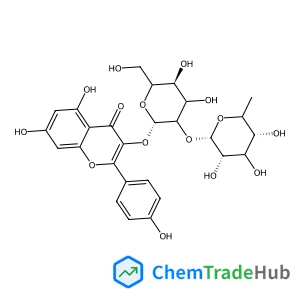
5,7-Dihydroxy-2-(4-hydroxyphenyl)-4-oxo-4H-chromen-3-yl 2-O-(6-deoxy-alpha-L-mannopyranosyl)-beta-D-glucopyranoside
CAS Number:
32602-81-6
Molecular Formula:
C27H30O15
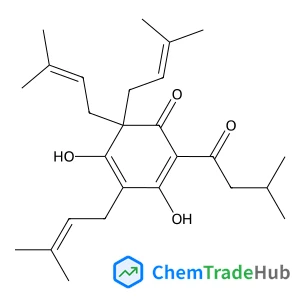
3,5-Dihydroxy-4-(3-methylbutanoyl)-2,6,6-tris(3-methyl-2-buten-1-yl)-2,4-cyclohexadien-1-one
CAS Number:
468-28-0
Molecular Formula:
C26H38O4
Recommended Suppliers




Disclaimer
This page provides academic journal information for reference and research purposes only. We are not affiliated with any journal publishers and do not handle publication submissions. For publication-related inquiries, please contact the respective journal publishers directly.
If you notice any inaccuracies in the information displayed, please contact us at support@chemtradehub.com. We will promptly review and address your concerns.