












Cu(ii)-mediated oxidative intermolecular ortho C–H functionalisation using tetrahydropyrimidine as the directing group
Literature Information
Publication Date
2009-05-07
DOI
10.1039/B905586J
Impact Factor
6.222
Authors
Tsukasa Mizuhara, Shinsuke Inuki, Shinya Oishi, Nobutaka Fujii, Hiroaki Ohno
View Original
Abstract
Tetrahydropyrimidine works efficiently as a directing group in Cu(II)-mediated oxidative aromatic C–H functionalisation for the selective introduction of oxygen or nitrogen to the ortho-position.
Related Literature
Heterogeneous OH oxidation of biomass burning organic aerosol surrogate compounds: assessment of volatilisation products and the role of OH concentration on the reactive uptake kinetics
Jonathan H. Slade, Daniel A. Knopf
2013-03-05
Paper
DOI: 10.1039/C3CP44695F
Multi-scale modeling and synthesis of polyester ionomers
Dragan Nikolić, Karen A. Moffat, Valerie M. Farrugia, Alexander E. Kobryn, Sergey Gusarov, Jordan H. Wosnick
2013-02-05
Paper
DOI: 10.1039/C3CP44285C
Template-free synthesis of 3D Nb3O7F hierarchical nanostructures and enhanced photocatalytic activities
Zheng Wang, Jungang Hou, Chao Yang, Shuqiang Jiao, Kai Huang, Hongmin Zhu
2013-01-24
Paper
DOI: 10.1039/C2CP44326K
Gas-phase structures and thermochemistry of neutral histidine and its conjugated acid and base
Vanessa Riffet, Guy Bouchoux
2013-02-25
Paper
DOI: 10.1039/C3CP00043E
Electrostatic spectral tuning mechanism of the green fluorescent protein
Ville R. I. Kaila, Robert Send, Dage Sundholm
2013-02-11
Communication
DOI: 10.1039/C3CP00058C
New insights into two-photon absorption properties of functionalized aza-BODIPY dyes at telecommunication wavelengths: a theoretical study
Jilong Zhang, Kai Li, Xiaobo Sun, Zhijian Wu, Aimin Ren, Jikang Feng
2013-01-28
Paper
DOI: 10.1039/C3CP44435J
Photobleaching of quantum dots by non-resonant light
Xingbo Shi, Yang Tu, Xiaojun Liu, Edward S. Yeung, Hongwei Gai
2013-01-14
Communication
DOI: 10.1039/C3CP43668C
CCSD(T) level interaction energy for halogen bond between pyridine and substituted iodobenzenes: origin and additivity of substituent effects
Seiji Tsuzuki, Tadafumi Uchimaru, Akihiro Wakisaka, Taizo Ono, Takaaki Sonoda
2013-02-27
Paper
DOI: 10.1039/C3CP43693D
Selective formation mechanisms of quantum dots on patterned substrates
Xinlei Li
2013-02-14
Paper
DOI: 10.1039/C3CP43890B
You might also like
Compound Q&A
How should waste containing (6-Bromo-2-naphthyl)oxy](dimethyl)(2-methyl-2-propanyl)silane be handled?
Waste containing (6-Bromo-2-naphthyl)oxy](dimethyl)(2-methyl-2-propanyl)silane (...
100751-65-3[(6-Bromo-2-naphthyl...
Compound Q&A
How is 7-Fluoro-4-isoquinolinecarboxylic acid (CAS: 1841081-40-0) typically synthesized?
7-Fluoro-4-isoquinolinecarboxylic acid can be synthesized via a multi-step proce...
1841081-40-07-Fluoro-4-isoquinol...
Compound Q&A
What are the physical and chemical properties of 2,3,5,6-Tetrabromothieno[3,2-b]thiophene (CAS: 124638-53-5)?
2,3,5,6-Tetrabromothieno[3,2-b]thiophene is a crystalline compound with a high m...
124638-53-52,3,5,6-Tetrabromoth...
Compound Q&A
Is 1-[4-(Benzylamino)-7,8-dihydro-5H-pyrano[4,3-d]pyrimidin-2-yl]-2-methyl-1H-indole-4-carboxamide (CAS: 1542705-92-9) safe?
1-[4-(Benzylamino)-7,8-dihydro-5H-pyrano[4,3-d]pyrimidin-2-yl]-2-methyl-1H-indol...
1542705-92-91-[4-(Benzylamino)-7...
Compound Q&A
What is the market or research trend for imidazo[5,1-d]-1,2,3,5-tetrazine-8-carboxylic acid, 3,4-dihydro-3-methyl-4-oxo- (CAS: 113942-30-6)?
The market for imidazo[5,1-d]-1,2,3,5-tetrazine-8-carboxylic acid, 3,4-dihydro-3...
113942-30-6Imidazo[5,1-d]-1,2,3...
Compound Q&A
What is 3-(Triisopropylsilyl)propiolaldehyde (CAS: 163271-80-5)?
3-(Triisopropylsilyl)propiolaldehyde is a synthetic organic compound with the CA...
163271-80-53-(Triisopropylsilyl...
Compound Q&A
What regulatory guidelines apply to 6-Nitro-2H-1,4-benzoxazin-3(4H)-one (CAS: 81721-87-1)?
6-Nitro-2H-1,4-benzoxazin-3(4H)-one (CAS: 81721-87-1) is subject to various regu...
81721-87-16-Nitro-2H-1,4-benzo...
Compound Q&A
How should waste containing (3-Fluorophenyl)(4-{[(2-methyl-2-propanyl)oxy]carbonyl}-1-piperazinyl)acetic acid (CAS: 885272-91-3) be handled?
Waste containing (3-Fluorophenyl)(4-{[(2-methyl-2-propanyl)oxy]carbonyl}-1-piper...
885272-91-3(3-Fluorophenyl)(4-{...
Compound Q&A
What are the physical and chemical properties of N,N'-4,4'-Biphenyldiyldiisonicotinamide (CAS: 55119-40-9)?
N,N'-4,4'-Biphenyldiyldiisonicotinamide is a white crystalline solid with a mole...
55119-40-9N,N'-4,4'-Biphenyldi...
Compound Q&A
What industries use 6-Bromo-8-fluoro-2-quinazolinol (CAS: 1036756-15-6)?
6-Bromo-8-fluoro-2-quinazolinol is primarily used in the pharmaceutical industry...
1036756-15-66-Bromo-8-fluoro-2-q...
Source Journal
Chemical Communications

CiteScore:
8.6
Self-citation Rate:
4.7%
Articles per Year:
2458
ChemComm publishes urgent research which is of outstanding significance and interest to experts in the field, while also appealing to the journal’s broad chemistry readership. Our communication format is ideally suited to short, urgent studies that are of such importance that they require accelerated publication. Our scope covers all topics in chemistry, and research at the interface of chemistry and other disciplines (such as materials science, nanoscience, physics, engineering and biology) where there is a significant novelty in the chemistry aspects. Major topic areas covered include: Analytical Chemistry Catalysis Chemical Biology and medicinal chemistry Computational Chemistry and Machine Learning Energy and sustainable chemistry Environmental Chemistry Green Chemistry Inorganic Chemistry Materials Chemistry Nanoscience Organic Chemistry Physical Chemistry Polymer Chemistry Supramolecular Chemistry
Recommended Compounds
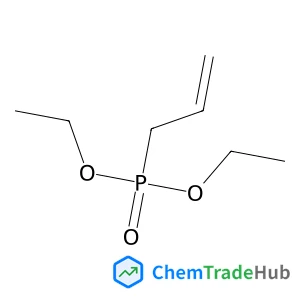
![5-Bromoimidazo[1,2-a]pyridine structure](https://static.chemtradehub.com/structs/692/69214-09-1-d8e2.webp "5-Bromoimidazo[1,2-a]pyridine structure")
Recommended Suppliers






Disclaimer
This page provides academic journal information for reference and research purposes only. We are not affiliated with any journal publishers and do not handle publication submissions. For publication-related inquiries, please contact the respective journal publishers directly.
If you notice any inaccuracies in the information displayed, please contact us at support@chemtradehub.com. We will promptly review and address your concerns.