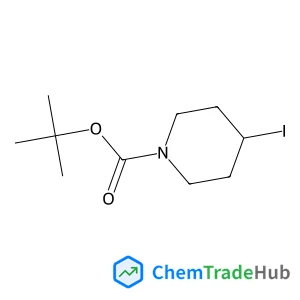
2-Methyl-2-propanyl 4-iodo-1-piperidinecarboxylate
CAS Number:
301673-14-3
Molecular Formula:
C10H18INO2
Dragan Nikolić, Karen A. Moffat, Valerie M. Farrugia, Alexander E. Kobryn, Sergey Gusarov, Jordan H. Wosnick
Simulations of microphase separation are carried out using the dissipative particle dynamics (DPD). By varying the concentration and temperature of resin solutions we explore mesomorphologies supported by the all-atom models. We found that for a low degree of functionalization the homogeneously distributed ionomers self-assemble into spherical micelles at solid loads below 31 wt%, subject to the activation energy barrier for the gradual growth of pre-micellar aggregates. Computed optimum aggregation numbers exhibit sensitivity to both the temperature-dependent interfacial tension and the ionic content and compare well with the experimental observations.
Vincent Linder
DOI: 10.1039/B706347D
Victoria J. Hammond, Jonathan W. Aylott, Gillian M. Greenway, Paul Watts, Abigail Webster, Charlotte Wiles
DOI: 10.1039/B711995J
Dohyun Kim, Ira Barry Goldberg, Jack William Judy
DOI: 10.1039/B614854A
Jaromir Ruzicka, Andrea D. Carroll, Ilkka Lähdesmäki
DOI: 10.1039/B603768B
Konstantinos C. Makris, Pravin Punamiya, Dibyendu Sarkar, Rupali Datta
DOI: 10.1039/B714389C
Gustav Liljegren, Niklas Forsgard, Camilla Zettersten, Jean Pettersson, Malin Svedberg, Merja Herranen, Leif Nyholm
DOI: 10.1039/B508388E
Yoshimasa Takabayashi, Michihisa Uemoto, Kenjiro Aoki, Tamao Odake, Takashi Korenaga
DOI: 10.1039/B513999F
Hongying Zhu, Ian M. White, Jonathan D. Suter, Mohammed Zourob, Xudong Fan
DOI: 10.1039/B716834A
Zhaoyang He, Zifeng Yan
DOI: 10.1039/C2AN36446H
Waste containing (6-Bromo-2-naphthyl)oxy](dimethyl)(2-methyl-2-propanyl)silane (...
7-Fluoro-4-isoquinolinecarboxylic acid can be synthesized via a multi-step proce...
2,3,5,6-Tetrabromothieno[3,2-b]thiophene is a crystalline compound with a high m...
1-[4-(Benzylamino)-7,8-dihydro-5H-pyrano[4,3-d]pyrimidin-2-yl]-2-methyl-1H-indol...
The market for imidazo[5,1-d]-1,2,3,5-tetrazine-8-carboxylic acid, 3,4-dihydro-3...
3-(Triisopropylsilyl)propiolaldehyde is a synthetic organic compound with the CA...
6-Nitro-2H-1,4-benzoxazin-3(4H)-one (CAS: 81721-87-1) is subject to various regu...
Waste containing (3-Fluorophenyl)(4-{[(2-methyl-2-propanyl)oxy]carbonyl}-1-piper...
N,N'-4,4'-Biphenyldiyldiisonicotinamide is a white crystalline solid with a mole...
6-Bromo-8-fluoro-2-quinazolinol is primarily used in the pharmaceutical industry...

Physical Chemistry Chemical Physics (PCCP) is an international journal co-owned by 19 physical chemistry and physics societies from around the world. This journal publishes original, cutting-edge research in physical chemistry, chemical physics and biophysical chemistry. To be suitable for publication in PCCP, articles must include significant innovation and/or insight into physical chemistry; this is the most important criterion that reviewers and Editors will judge against when evaluating submissions. The journal has a broad scope and welcomes contributions spanning experiment, theory, computation and data science. Topical coverage includes spectroscopy, dynamics, kinetics, statistical mechanics, thermodynamics, electrochemistry, catalysis, surface science, quantum mechanics, quantum computing and machine learning. Interdisciplinary research areas such as polymers and soft matter, materials, nanoscience, energy, surfaces/interfaces, and biophysical chemistry are welcomed if they demonstrate significant innovation and/or insight into physical chemistry. Joined experimental/theoretical studies are particularly appreciated when complementary and based on up-to-date approaches.