












Conformation of the neurotransmitter γ-aminobutyric acid in liquid water
Literature Information
Publication Date
2014-04-10
DOI
10.1039/C4CP00671B
Impact Factor
3.676
Authors
N. Ottosson, M. Pastorczak, Sietse T. van der Post, Huib J. Bakker
View Original
Abstract
We study the conformation and reorientation dynamics of the inhibitory neurotransmitter γ-aminobutyric acid (GABA) under neutral and acidic conditions using a combination of broadband dielectric relaxation spectroscopy and polarization-resolved femtosecond mid-infrared pump–probe spectroscopy. We find that both zwitterionic and cationic GABA adopt nearly linear conformations in aqueous solution, meaning that the two charged functional groups of the GABA zwitterion are hydrated separately.
Related Literature
Sortase A-mediated on-resin peptide cleavage and in situ ligation: an efficient one-pot strategy for the synthesis of functional peptides and proteins
Xiaozhong Cheng, Tao Zhu, Haofei Hong, Zhifang Zhou, Zhimeng Wu
2017-07-17
Research Article
DOI: 10.1039/C7QO00481H
The phosphorescence properties of a series of diarylethene-containing platinum complexes: the effect of ligand photoisomerization
Zhi-Xiang Zhang, Wei Wei, Fu-Quan Bai, Shamsa Bibi, Hong-Xing Zhang
2017-07-28
Research Article
DOI: 10.1039/C7QO00476A
tert-Butyl peroxybenzoate mediated formation of 3-alkylated quinolines from N-propargylamines via a cascade radical addition/cyclization reaction
Wei Chen, Pinhua Li
2017-12-01
Research Article
DOI: 10.1039/C7QO01052D
Palladium catalyzed C(sp3)–H acetoxylation of aliphatic primary amines to γ-amino alcohol derivatives
Kang Chen, Ding Wang, Zhao-Wei Li, Zheng Liu, Fei Pan, Yun-Fei Zhang
2017-07-27
Research Article
DOI: 10.1039/C7QO00432J
Sodium nitrite-promoted aerobic oxidative coupling of aryl methyl ketones with ammonium under metal-free conditions: a facile access to polysubstitution imidazoles
Cheng-Kou Liu, Zhao Yang, Yu Zeng, Zheng Fang, Bo Li
2017-05-02
Research Article
DOI: 10.1039/C7QO00247E
Selective cross-dehydrogenative C–O coupling of N-hydroxy compounds with pyrazolones. Introduction of the diacetyliminoxyl radical into the practice of organic synthesis
Igor B. Krylov, Stanislav A. Paveliev, Boris N. Shelimov, Boris V. Lokshin, Irina A. Garbuzova, Viktor A. Tafeenko, Gennady I. Nikishin, Alexander O. Terent'ev
2017-07-18
Research Article
DOI: 10.1039/C7QO00447H
A redox-responsive supramolecular amphiphile fabricated by selenium-containing pillar[5]arene-based host–guest recognition
Yujuan Zhou, Kecheng Jie, Feihe Huang
2017-09-05
Research Article
DOI: 10.1039/C7QO00736A
Synthesis of dibromo- and tetrabromo-bipyrrolines and their corresponding 2,6-diazasemibullvalene derivatives
Zhe Huang, Ming Zhan, Shaoguang Zhang, Qian Luo, Wen-Xiong Zhang
2017-06-12
Research Article
DOI: 10.1039/C7QO00287D
You might also like
Compound Q&A
What precautions should be taken when handling 4-Methyl-6-(trifluoromethyl)quinoline (CAS: 40716-16-3)?
When handling 4-Methyl-6-(trifluoromethyl)quinoline (CAS: 40716-16-3), safety go...
40716-16-34-Methyl-6-(trifluor...
Compound Q&A
What is 4-(3,5-Difluorophenyl)aniline (CAS: 405058-00-6)?
4-(3,5-Difluorophenyl)aniline is an aromatic organic compound with the CAS numbe...
405058-00-64-(3,5-Difluoropheny...
Compound Q&A
How is 5-{[4-(Trifluoromethyl)phenyl]sulfanyl}-1,2,3-thiadiazole-4-carboxylic acid (CAS: 338982-07-3) typically synthesized?
5-{[4-(Trifluoromethyl)phenyl]sulfanyl}-1,2,3-thiadiazole-4-carboxylic acid can ...
338982-07-35-{[4-(Trifluorometh...
Compound Q&A
What is the market or research trend for 4-Benzylaniline hydrochloride (CAS: 6317-57-3)?
The market for 4-Benzylaniline hydrochloride (CAS: 6317-57-3) is steadily growin...
6317-57-34-Benzylaniline hydr...
Compound Q&A
Is [3-(Diethylsulfamoyl)phenyl]boronic acid (CAS: 871329-58-7) safe?
[3-(Diethylsulfamoyl)phenyl]boronic acid is generally considered safe when handl...
871329-58-7[3-(Diethylsulfamoyl...
Compound Q&A
What are the main uses of 3-Bromo-2,5-dimethoxyaniline (CAS: 115929-62-9)?
3-Bromo-2,5-dimethoxyaniline is mainly used in the pharmaceutical and chemical i...
115929-62-93-Bromo-2,5-dimethox...
Compound Q&A
What regulatory guidelines apply to N-Methyl-1-(5-methyl-1H-indol-3-yl)methanamine (CAS: 915922-67-7)?
N-Methyl-1-(5-methyl-1H-indol-3-yl)methanamine (CAS: 915922-67-7) is subject to ...
915922-67-7N-Methyl-1-(5-methyl...
Compound Q&A
What industries use Carbamic acid, N-[(5S)-5,6-diamino-6-oxohexyl]-, 1,1-dimethylethyl ester (CAS: 24828-96-4)?
This compound is primarily used in the pharmaceutical industry for the synthesis...
24828-96-4Carbamic acid, N-[(5...
Compound Q&A
How should 2-Methyl-2-propanyl [(1S,3R)-3-aminocyclohexyl]carbamate (CAS: 1298101-47-9) be stored?
2-Methyl-2-propanyl [(1S,3R)-3-aminocyclohexyl]carbamate (CAS: 1298101-47-9) sho...
1298101-47-92-Methyl-2-propanyl ...
Compound Q&A
What industries use Ethyl 2-bromo-4,4,4-trifluorobutanoate (CAS: 367-33-9)?
Ethyl 2-bromo-4,4,4-trifluorobutanoate (CAS: 367-33-9) is utilized in the pharma...
367-33-9Ethyl 2-bromo-4,4,4-...
Source Journal
Physical Chemistry Chemical Physics

CiteScore:
5.5
Self-citation Rate:
10.3%
Articles per Year:
3036
Physical Chemistry Chemical Physics (PCCP) is an international journal co-owned by 19 physical chemistry and physics societies from around the world. This journal publishes original, cutting-edge research in physical chemistry, chemical physics and biophysical chemistry. To be suitable for publication in PCCP, articles must include significant innovation and/or insight into physical chemistry; this is the most important criterion that reviewers and Editors will judge against when evaluating submissions. The journal has a broad scope and welcomes contributions spanning experiment, theory, computation and data science. Topical coverage includes spectroscopy, dynamics, kinetics, statistical mechanics, thermodynamics, electrochemistry, catalysis, surface science, quantum mechanics, quantum computing and machine learning. Interdisciplinary research areas such as polymers and soft matter, materials, nanoscience, energy, surfaces/interfaces, and biophysical chemistry are welcomed if they demonstrate significant innovation and/or insight into physical chemistry. Joined experimental/theoretical studies are particularly appreciated when complementary and based on up-to-date approaches.
Recommended Compounds

6-Bromo-3,4-dihydro-2H-1,4-benzoxazine hydrochloride (1:1)
CAS Number:
1260803-10-8
Molecular Formula:
C8H9BrClNO

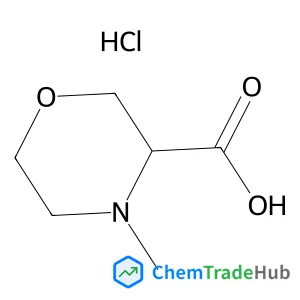
4-Methyl-3-morpholinecarboxylic acid hydrochloride (1:1)
CAS Number:
1240518-90-4
Molecular Formula:
C6H12ClNO3
Recommended Suppliers






Disclaimer
This page provides academic journal information for reference and research purposes only. We are not affiliated with any journal publishers and do not handle publication submissions. For publication-related inquiries, please contact the respective journal publishers directly.
If you notice any inaccuracies in the information displayed, please contact us at support@chemtradehub.com. We will promptly review and address your concerns.