












Wavepacket basis for time-dependent processes and its application to relaxation in resonant electronic transport
Literature Information
Publication Date
2009-04-01
DOI
10.1039/B902501D
Impact Factor
3.676
Authors
View Original
Abstract
Stroboscopic wavepacket basis sets [P. Bokes, F. Corsetti, R. W. Godby, Phys. Rev. Lett., 2008, 101, 046402] are specifically tailored for a description of time-dependent processes in extended systems, such as non-periodic geometries of various contacts consisting of solids and molecules. The explanation of the construction of such a basis for two simple finite systems is followed by a review of the general theory for extended systems with continuous spectrum. The latter is further elaborated with the introduction of the interaction representation which takes full advantage of the time-dynamics built into the basis. The formalism is applied to a semi-analytical example of electronic transport through resonant tunnelling barrier in 1D. Through the time-dependent generalisation of the Landauer formula given in terms of the Fourier expansion of the transmission amplitude we analyze the temporal character of the onset of the steady-state. Various time-scales in this process are shown to be directly related to the energetic structure of the resonant barrier.
Recommended Journals
Related Literature
Mechanistic insight into light-driven molecular rotors: a conformational search in chiral overcrowded alkenes by a pseudo-random approach
Guillermo Pérez-Hernández, Leticia González
2010-08-16
Paper
DOI: 10.1039/C0CP00324G
The reduced [2Fe-2S] clusters in adrenodoxin and Arthrospira platensisferredoxin share spin density with proteinnitrogens, probed using 2D ESEEM
Sergei A. Dikanov, Rimma I. Samoilova, Reinhard Kappl, Antony R. Crofts, Jürgen Hüttermann
2009-07-01
Paper
DOI: 10.1039/B904597J
Structure and bonding of [VIVO(acac)2] on the surface of AlF3 as studied by pulsed electron nuclear double resonance and hyperfine sublevel correlation spectroscopy
Vijayasarathi Nagarajan, Barbara Müller, Oksana Storcheva, Klaus Köhler, Andreas Pöppl
2009-06-10
Paper
DOI: 10.1039/B903826B
Growth of CdS nanoparticles on the aligned carbon nanotubes
A. V. Okotrub, I. P. Asanov, S. V. Larionov, T. G. Leonova, L. G. Bulusheva
2010-07-07
Paper
DOI: 10.1039/C000189A
Kinetics and mechanism of the atmospheric reactions of atomic chlorine with 1-penten-3-ol and (Z)-2-penten-1-ol: an experimental and theoretical study
Ana Rodríguez, Diana Rodríguez, Andrés Garzón, Amparo Soto, Alfonso Aranda, Alberto Notario
2010-08-16
Paper
DOI: 10.1039/C0CP00625D
Activated carbon immersed in water—the origin of linear correlation between enthalpy of immersion and oxygen content studied by molecular dynamics simulation
Artur P. Terzyk, Piotr A. Gauden, Sylwester Furmaniak, Radosław P. Wesołowski, Piotr Kowalczyk
2010-07-29
Paper
DOI: 10.1039/C003894F
Fluorescence of sanguinarine: spectral changes on interaction with amino acids
Marika Janovská, Martin Kubala, Vilím Šimánek, Jitka Ulrichová
2010-08-03
Paper
DOI: 10.1039/B925828K
Density functional theory calculations on magnetic properties of actinide compounds
Eugene Heifets, David Sedmidubsky
2010-08-16
Paper
DOI: 10.1039/C0CP00372G
A kinetic study of the decomposition of the cubic perovskite-type oxide BaxSr1−xCo0.8Fe0.2O3−δ (BSCF) (x = 0.1 and 0.5)
David N. Mueller, Roger A. De Souza, Daniel Roehrens, Joachim Mayer, Manfred Martin
2010-06-24
Paper
DOI: 10.1039/C0CP00004C
You might also like
Compound Q&A
What precautions should be taken when handling 2-Chloro-1,2-bis(4-methylphenyl)ethanone (CAS: 71193-32-3)?
When handling 2-Chloro-1,2-bis(4-methylphenyl)ethanone (CAS: 71193-32-3), it is ...
71193-32-32-Chloro-1,2-bis(4-m...
Compound Q&A
What industries use 4-Ethoxy-3-(5-methyl-4-oxo-7-propyl-1,4-dihydroimidazo[5,1-f][1,2,4]triazin-2-yl)benzenesulfonyl chloride (CAS: 224789-26-8)?
4-Ethoxy-3-(5-methyl-4-oxo-7-propyl-1,4-dihydroimidazo[5,1-f][1,2,4]triazin-2-yl...
224789-26-84-Ethoxy-3-(5-methyl...
Compound Q&A
How should Methyl 3-Oxo-4-Androsten-17-Carboxylate (CAS: 2681-55-2) be stored?
Methyl 3-Oxo-4-Androsten-17-Carboxylate (CAS: 2681-55-2) should be stored in a c...
2681-55-2Methyl 3-Oxo-4-Andro...
Compound Q&A
What are the main uses of (R)-3-Amino-4-(3-hexylphenylamino)-4-oxobutylphosphonic acid (CAS: 909725-61-7)?
(R)-3-Amino-4-(3-hexylphenylamino)-4-oxobutylphosphonic acid is primarily used i...
909725-61-7(R)-3-Amino-4-(3-hex...
Compound Q&A
What regulatory guidelines apply to 2-Methyl-2-propanyl 3-amino-3-carbamoyl-1-azetidinecarboxylate (CAS: 1254120-14-3)?
2-Methyl-2-propanyl 3-amino-3-carbamoyl-1-azetidinecarboxylate (CAS: 1254120-14-...
1254120-14-32-Methyl-2-propanyl ...
Compound Q&A
Are there alternatives to (E)-4-(tert-Butoxy)-4-oxobut-2-enoic acid (CAS: 135355-96-3) in synthesis?
There are alternative reagents that can be used in synthesis instead of (E)-4-(t...
135355-96-3(E)-4-(tert-Butoxy)-...
Compound Q&A
What are the physical and chemical properties of [2-(3-Chlorophenyl)-1,3-thiazol-4-yl]methanol (CAS: 121202-20-8)?
[2-(3-Chlorophenyl)-1,3-thiazol-4-yl]methanol (CAS: 121202-20-8) is a crystallin...
121202-20-8[2-(3-Chlorophenyl)-...
Compound Q&A
What is the market or research trend for Methyl (2S)-[(4S)-2,2-dimethyl-1,3-dioxolan-4-yl]{[(4-methylphenyl)sulfonyl]oxy}acetate (CAS: 166249-17-8)?
The market and research trends for Methyl (2S)-[(4S)-2,2-dimethyl-1,3-dioxolan-4...
166249-17-8Methyl (2S)-[(4S)-2,...
Compound Q&A
What is the market or research trend for 1-Bromo-2-isocyanatoethane (CAS: 42865-19-0)?
The market for 1-Bromo-2-isocyanatoethane (CAS: 42865-19-0) is driven by its use...
42865-19-01-Bromo-2-isocyanato...
Compound Q&A
What are the main uses of 4-Nitro-D-phenylalanine hydrochloride (CAS: 147065-06-3)?
4-Nitro-D-phenylalanine hydrochloride (CAS: 147065-06-3) is primarily used in re...
147065-06-34-Nitro-D-phenylalan...
Source Journal
Physical Chemistry Chemical Physics

CiteScore:
5.5
Self-citation Rate:
10.3%
Articles per Year:
3036
Physical Chemistry Chemical Physics (PCCP) is an international journal co-owned by 19 physical chemistry and physics societies from around the world. This journal publishes original, cutting-edge research in physical chemistry, chemical physics and biophysical chemistry. To be suitable for publication in PCCP, articles must include significant innovation and/or insight into physical chemistry; this is the most important criterion that reviewers and Editors will judge against when evaluating submissions. The journal has a broad scope and welcomes contributions spanning experiment, theory, computation and data science. Topical coverage includes spectroscopy, dynamics, kinetics, statistical mechanics, thermodynamics, electrochemistry, catalysis, surface science, quantum mechanics, quantum computing and machine learning. Interdisciplinary research areas such as polymers and soft matter, materials, nanoscience, energy, surfaces/interfaces, and biophysical chemistry are welcomed if they demonstrate significant innovation and/or insight into physical chemistry. Joined experimental/theoretical studies are particularly appreciated when complementary and based on up-to-date approaches.
Recommended Compounds
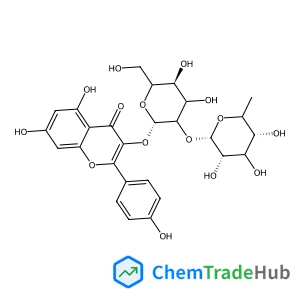
5,7-Dihydroxy-2-(4-hydroxyphenyl)-4-oxo-4H-chromen-3-yl 2-O-(6-deoxy-alpha-L-mannopyranosyl)-beta-D-glucopyranoside
CAS Number:
32602-81-6
Molecular Formula:
C27H30O15
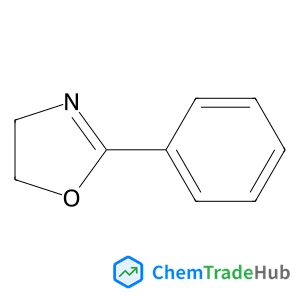

![4-[2-(Trichlorosilyl)ethyl]benzenesulfonyl chloride structure](https://static.chemtradehub.com/structs/797/79793-00-3-de16.webp "4-[2-(Trichlorosilyl)ethyl]benzenesulfonyl chloride structure")
4-[2-(Trichlorosilyl)ethyl]benzenesulfonyl chloride
CAS Number:
79793-00-3
Molecular Formula:
C8H8Cl4O2SSi
Recommended Suppliers







Disclaimer
This page provides academic journal information for reference and research purposes only. We are not affiliated with any journal publishers and do not handle publication submissions. For publication-related inquiries, please contact the respective journal publishers directly.
If you notice any inaccuracies in the information displayed, please contact us at support@chemtradehub.com. We will promptly review and address your concerns.