












Mechanistic insight into light-driven molecular rotors: a conformational search in chiral overcrowded alkenes by a pseudo-random approach
Literature Information
Publication Date
2010-08-16
DOI
10.1039/C0CP00324G
Impact Factor
3.676
Authors
Guillermo Pérez-Hernández, Leticia González
View Original
Abstract
Chiral overcrowded alkenes are capable of unidirectional rotation via a series of cis-trans photochemical and helix-inversion thermal steps. Using a pseudo-random conformational search we have located different ground state minima belonging to the potential energy surface of two different overcrowded alkenes that function as molecular rotors. The transition states connecting the minima allow identifying different reaction pathways which are possible in the thermal helix-inversion steps. The mechanisms found for the two studied molecular rotors are different and provide a valuable insight into the conformational dynamics of the rotary cycle. While in one case the thermal step occurs via a single transition state, in the other, several intermediates are accessible. The associated energy barriers are in agreement with the experimental values, supporting the proposed mechanisms.
Recommended Journals
Related Literature
Enhanced electrochemiluminescence sensor for detecting dopamine based on gold nanoflower@graphitic carbon nitride polymer nanosheet–polyaniline hybrids
Qiyi Lu, Juanjuan Zhang, Xiaofang Liu, Yuanya Wu, Ruo Yuan, Shihong Chen
2014-10-14
Paper
DOI: 10.1039/C4AN01595A
Application of yeast imprinting in biotechnology and process control
Karin Seidler, Peter A. Lieberzeit, Franz L. Dickert
2008-10-30
Paper
DOI: 10.1039/B809130G
A naphthalimide based PET probe with Fe3+ selective detection ability: theoretical and experimental study
Narendra Reddy Chereddy, M. V. Niladri Raju, Peethani Nagaraju, Venkat Raghavan Krishnaswamy, Purna Sai Korrapati, Prakriti Ranjan Bangal, Vaidya Jayathirtha Rao
2014-10-01
Communication
DOI: 10.1039/C4AN01528B
Biomolecular analysis and cancer diagnostics by negative mode probe electrospray ionization
Mridul Kanti Mandal, Subhrakanti Saha, Kentaro Yoshimura, Yasuo Shida, Sen Takeda, Hiroshi Nonami, Kenzo Hiraoka
2013-01-10
Paper
DOI: 10.1039/C3AN36554A
Electrogenerated chemiluminescence detection of trace level pentachlorophenol using carbon quantum dots
Jiezhen Li, Niya Wang, Chen'an Huang, Lan Chen, Lijuan Yuan, Liping Zhou, Rui Shen, Qingyun Cai
2013-01-11
Paper
DOI: 10.1039/C3AN36653G
Plasmon-enhanced optical sensors: a review
Ming Li, Nianqiang Wu
2014-10-06
Critical Review
DOI: 10.1039/C4AN01079E
Fiber Bragg grating photoacoustic detector for liquid chromatography
Qingxin Yang, Hans-Peter Loock, Igor Kozin, David Pedersen
2008-09-11
Paper
DOI: 10.1039/B806068A
Near-infrared photochromic behavior in a donor–acceptor type diarylethene modulated by the cyanide anion
Jiayu Jin, Junji Zhang, Lei Zou, He Tian
2013-01-23
Communication
DOI: 10.1039/C3AN36388K
Utilization of spectral vector properties in multivariate chemometrics analysis of hyperspectral infrared imaging data for cellular studies
Suat-Teng Tan, Kejia Chen, Suyun Ong, Wee Chew
2008-06-19
Paper
DOI: 10.1039/B718458A
You might also like
Compound Q&A
What precautions should be taken when handling 2-Chloro-1,2-bis(4-methylphenyl)ethanone (CAS: 71193-32-3)?
When handling 2-Chloro-1,2-bis(4-methylphenyl)ethanone (CAS: 71193-32-3), it is ...
71193-32-32-Chloro-1,2-bis(4-m...
Compound Q&A
What industries use 4-Ethoxy-3-(5-methyl-4-oxo-7-propyl-1,4-dihydroimidazo[5,1-f][1,2,4]triazin-2-yl)benzenesulfonyl chloride (CAS: 224789-26-8)?
4-Ethoxy-3-(5-methyl-4-oxo-7-propyl-1,4-dihydroimidazo[5,1-f][1,2,4]triazin-2-yl...
224789-26-84-Ethoxy-3-(5-methyl...
Compound Q&A
How should Methyl 3-Oxo-4-Androsten-17-Carboxylate (CAS: 2681-55-2) be stored?
Methyl 3-Oxo-4-Androsten-17-Carboxylate (CAS: 2681-55-2) should be stored in a c...
2681-55-2Methyl 3-Oxo-4-Andro...
Compound Q&A
What are the main uses of (R)-3-Amino-4-(3-hexylphenylamino)-4-oxobutylphosphonic acid (CAS: 909725-61-7)?
(R)-3-Amino-4-(3-hexylphenylamino)-4-oxobutylphosphonic acid is primarily used i...
909725-61-7(R)-3-Amino-4-(3-hex...
Compound Q&A
What regulatory guidelines apply to 2-Methyl-2-propanyl 3-amino-3-carbamoyl-1-azetidinecarboxylate (CAS: 1254120-14-3)?
2-Methyl-2-propanyl 3-amino-3-carbamoyl-1-azetidinecarboxylate (CAS: 1254120-14-...
1254120-14-32-Methyl-2-propanyl ...
Compound Q&A
Are there alternatives to (E)-4-(tert-Butoxy)-4-oxobut-2-enoic acid (CAS: 135355-96-3) in synthesis?
There are alternative reagents that can be used in synthesis instead of (E)-4-(t...
135355-96-3(E)-4-(tert-Butoxy)-...
Compound Q&A
What are the physical and chemical properties of [2-(3-Chlorophenyl)-1,3-thiazol-4-yl]methanol (CAS: 121202-20-8)?
[2-(3-Chlorophenyl)-1,3-thiazol-4-yl]methanol (CAS: 121202-20-8) is a crystallin...
121202-20-8[2-(3-Chlorophenyl)-...
Compound Q&A
What is the market or research trend for Methyl (2S)-[(4S)-2,2-dimethyl-1,3-dioxolan-4-yl]{[(4-methylphenyl)sulfonyl]oxy}acetate (CAS: 166249-17-8)?
The market and research trends for Methyl (2S)-[(4S)-2,2-dimethyl-1,3-dioxolan-4...
166249-17-8Methyl (2S)-[(4S)-2,...
Compound Q&A
What is the market or research trend for 1-Bromo-2-isocyanatoethane (CAS: 42865-19-0)?
The market for 1-Bromo-2-isocyanatoethane (CAS: 42865-19-0) is driven by its use...
42865-19-01-Bromo-2-isocyanato...
Compound Q&A
What are the main uses of 4-Nitro-D-phenylalanine hydrochloride (CAS: 147065-06-3)?
4-Nitro-D-phenylalanine hydrochloride (CAS: 147065-06-3) is primarily used in re...
147065-06-34-Nitro-D-phenylalan...
Source Journal
Physical Chemistry Chemical Physics

CiteScore:
5.5
Self-citation Rate:
10.3%
Articles per Year:
3036
Physical Chemistry Chemical Physics (PCCP) is an international journal co-owned by 19 physical chemistry and physics societies from around the world. This journal publishes original, cutting-edge research in physical chemistry, chemical physics and biophysical chemistry. To be suitable for publication in PCCP, articles must include significant innovation and/or insight into physical chemistry; this is the most important criterion that reviewers and Editors will judge against when evaluating submissions. The journal has a broad scope and welcomes contributions spanning experiment, theory, computation and data science. Topical coverage includes spectroscopy, dynamics, kinetics, statistical mechanics, thermodynamics, electrochemistry, catalysis, surface science, quantum mechanics, quantum computing and machine learning. Interdisciplinary research areas such as polymers and soft matter, materials, nanoscience, energy, surfaces/interfaces, and biophysical chemistry are welcomed if they demonstrate significant innovation and/or insight into physical chemistry. Joined experimental/theoretical studies are particularly appreciated when complementary and based on up-to-date approaches.
Recommended Compounds
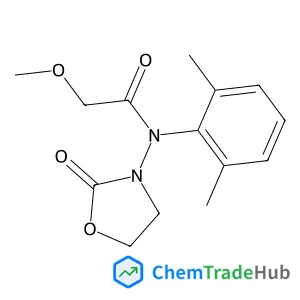
N-(2,6-Dimethylphenyl)-2-methoxy-N-(2-oxo-1,3-oxazolidin-3-yl)acetamide
CAS Number:
77732-09-3
Molecular Formula:
C14H18N2O4


2-Chloro-4-nitrophenyl 6-deoxy-alpha-L-galactopyranoside
CAS Number:
157843-41-9
Molecular Formula:
C12H14ClNO7

Recommended Suppliers






Disclaimer
This page provides academic journal information for reference and research purposes only. We are not affiliated with any journal publishers and do not handle publication submissions. For publication-related inquiries, please contact the respective journal publishers directly.
If you notice any inaccuracies in the information displayed, please contact us at support@chemtradehub.com. We will promptly review and address your concerns.