











Two-dimensional electronic spectra of an aggregating dye: simultaneous measurement of monomeric and dimeric line-shapes
Literature Information
Publication Date
2009-05-18
DOI
10.1039/B902477H
Impact Factor
3.676
Authors
Alexandra Nemeth, Vladimír Lukeš, Jaroslaw Sperling, Franz Milota, Tomáš Mančal
View Original
Abstract
We present a sequence of two-dimensional electronic spectra of a prototypical cyanine dye, whose spectral properties in aqueous solution are determined by the formation of a monomer–dimer equilibrium. Quantum-chemical methods are utilized to calculate the structure and absorption properties of the two species involved. Our spectroscopic results simultaneously characterize the spectral line-shapes of the two species in terms of underlying dynamic and static disorder, and demonstrate how the two-dimensional technique allows the exploitation of high spectral and temporal resolution in one and the same experiment. The distinctly different spectral relaxation dynamics are quantified in a two-dimensional line-shape analysis, by extracting the time dependent ratios of the diagonal and anti-diagonal peak-widths. Our findings are in line with theoretical considerations, that predict the fluctuational dynamics of an excitonic dimer state to be exchange-narrowed by excitation delocalization.
Recommended Journals
Related Literature
Controlling the reactivity of phthalonitriles for the efficient synthesis of chiral phthalocyanines with self-assembly abilities
Irene Paramio
2023-11-09
Research Article
DOI: 10.1039/D3QO01630G
Isatin-based spiro indolenine alkaloids from Isatis indigotica Fortune with anti-neuroinflammatory and acetylcholinesterase inhibitory effects
Ming Bai, Yu-Fei Xi, Si-Hui Mi, Pei-Yuan Yang, Li-Li Lou, Tian-Ming Lv, Xin Zhang, Guo-Dong Yao, Bin Lin, Shao-Jiang Song
2023-11-21
Research Article
DOI: 10.1039/D3QO01769A
One-pot ipso-hydroxylation and ortho-/para-halogenation of (hetero)arylboronic acids under tungsten catalysis
Jiao Kang
2023-12-11
Research Article
DOI: 10.1039/D3QO01455J
Light promoted metal-free regio- and stereoselective isoperfluoropropylation of unactivated alkenes with an i-C3F7-iodine(iii) reagent
Yaxing Wu, Yunchen Jiang, Fei Wang, Bin Wang, Chao Chen
2023-11-24
Research Article
DOI: 10.1039/D3QO01804K
Serine-mediated hydrazone ligation displaying insulin-like peptides on M13 phage pIII
Nan Zheng, Danny Hung-Chieh Chou
2023-10-24
Paper
DOI: 10.1039/D3OB01487H
Atroposelective synthesis of N–N axially chiral pyrrolyl(aza)-quinolinone by de novo ring formation
Qiwen Huang, Yanze Li, Cun Yang, Wendan Wu, Jingjie Hai, Xinyao Li
2023-12-04
Research Article
DOI: 10.1039/D3QO01877F
Nascent developments in main group element-catalyzed hydrosilylation and dehydrogenative silylation of alkenes and alkynes
Jiahao Liu, Zhuofeng Ke
2023-12-13
Review Article
DOI: 10.1039/D3QO01777J
Photocatalytic decarboxylative phosphorylation of N-aryl glycines
Jiangwei Wen, Xue Sun, Kelu Yan, Tingtao Yan, Zhen Liu, Yang Li, Jianjing Yang
2023-12-05
Research Article
DOI: 10.1039/D3QO01577G
You might also like
Compound Q&A
What precautions should be taken when handling 2-Methyl-2-propanyl 5-amino-2-thiophenecarboxylate (CAS: 1498311-57-1)?
When handling 2-Methyl-2-propanyl 5-amino-2-thiophenecarboxylate (CAS: 1498311-5...
1498311-57-12-Methyl-2-propanyl ...
Compound Q&A
What are the physical and chemical properties of 5-Bromo-1,2-dichloro-3-fluorobenzene (CAS: 1000572-93-9)?
5-Bromo-1,2-dichloro-3-fluorobenzene (CAS: 1000572-93-9) is a crystalline solid ...
1000572-93-95-Bromo-1,2-dichloro...
Compound Q&A
How should (2R)-2-Amino-2-(4-bromophenyl)ethanol (CAS: 354153-64-3) be stored?
(2R)-2-Amino-2-(4-bromophenyl)ethanol (CAS: 354153-64-3) should be stored in a c...
354153-64-3(2R)-2-Amino-2-(4-br...
Compound Q&A
What regulatory guidelines apply to Methyl 4-(aminomethyl)tetrahydro-2H-pyran-4-carboxylate hydrochloride (CAS: 362707-24-2)?
Methyl 4-(aminomethyl)tetrahydro-2H-pyran-4-carboxylate hydrochloride (CAS: 3627...
362707-24-2Methyl 4-(aminomethy...
Compound Q&A
What are the main uses of 1,4-dimethyl-1H-pyrazole-5-sulfonyl chloride (CAS: 1174834-52-6)?
1,4-Dimethyl-1H-pyrazole-5-sulfonyl chloride is primarily used as an intermediat...
1174834-52-61,4-dimethyl-1H-pyra...
Compound Q&A
Is Dinaphtho[1,2-b:2',1'-d]furan (CAS: 239-69-0) safe?
Dinaphtho[1,2-b:2',1'-d]furan is generally safe when handled with appropriate pe...
239-69-0Dinaphtho[1,2-b:2',1...
Compound Q&A
What is the market or research trend for 7-Methyl-7,9-dihydro-1H-purine-2,6,8(3H)-trione (CAS: 612-37-3)?
The market for 7-Methyl-7,9-dihydro-1H-purine-2,6,8(3H)-trione (CAS: 612-37-3) i...
612-37-37-Methyl-7,9-dihydro...
Compound Q&A
What are the physical and chemical properties of 2-(4-Chlorophenyl)malonaldehyde (CAS: 205676-17-1)?
2-(4-Chlorophenyl)malonaldehyde (CAS: 205676-17-1) is a colorless or light yello...
205676-17-12-(4-Chlorophenyl)ma...
Compound Q&A
How is 2-Methylchrysene (CAS: 3351-32-4) typically synthesized?
2-Methylchrysene (CAS: 3351-32-4) is typically synthesized via the reaction of c...
3351-32-42-Methylchrysene
Compound Q&A
Is N-(6-aminopyrimidin-4-yl)acetamide (CAS: 89533-23-3) safe?
N-(6-aminopyrimidin-4-yl)acetamide (CAS: 89533-23-3) is generally considered saf...
89533-23-3N-(6-aminopyrimidin-...
Source Journal
Physical Chemistry Chemical Physics

CiteScore:
5.5
Self-citation Rate:
10.3%
Articles per Year:
3036
Physical Chemistry Chemical Physics (PCCP) is an international journal co-owned by 19 physical chemistry and physics societies from around the world. This journal publishes original, cutting-edge research in physical chemistry, chemical physics and biophysical chemistry. To be suitable for publication in PCCP, articles must include significant innovation and/or insight into physical chemistry; this is the most important criterion that reviewers and Editors will judge against when evaluating submissions. The journal has a broad scope and welcomes contributions spanning experiment, theory, computation and data science. Topical coverage includes spectroscopy, dynamics, kinetics, statistical mechanics, thermodynamics, electrochemistry, catalysis, surface science, quantum mechanics, quantum computing and machine learning. Interdisciplinary research areas such as polymers and soft matter, materials, nanoscience, energy, surfaces/interfaces, and biophysical chemistry are welcomed if they demonstrate significant innovation and/or insight into physical chemistry. Joined experimental/theoretical studies are particularly appreciated when complementary and based on up-to-date approaches.
Recommended Compounds

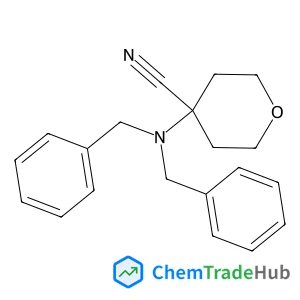
4-(Dibenzylamino)tetrahydro-2H-pyran-4-carbonitrile
CAS Number:
1630906-81-8
Molecular Formula:
C20H22N2O
Recommended Suppliers






Disclaimer
This page provides academic journal information for reference and research purposes only. We are not affiliated with any journal publishers and do not handle publication submissions. For publication-related inquiries, please contact the respective journal publishers directly.
If you notice any inaccuracies in the information displayed, please contact us at support@chemtradehub.com. We will promptly review and address your concerns.