












Asymmetric tandem Michael addition–ylide olefination reaction for the synthesis of optically active cyclohexa-1,3-diene derivatives
Literature Information
Publication Date
2009-04-15
DOI
10.1039/B900048H
Impact Factor
6.222
Authors
Long-Wu Ye, Shou-Bing Wang, Qing-Gang Wang, Xiu-Li Sun, Yong Tang, Yong-Gui Zhou
View Original
Abstract
The reaction of a crotonate-derived chiral phosphonium salt with α,β-unsaturated carbonyl compounds in the presence of Cs2CO3 affords optically active cyclohexa-1,3-diene derivatives with up to 90% ee in good yields.
Related Literature
Mass partitioning effects in diffusion transport
Miljan Milosevic, Suhong Wu, Elvin Blanco, Mauro Ferrari, Arturas Ziemys
2015-07-07
Paper
DOI: 10.1039/C5CP02720A
Monitoring the intramolecular charge transfer process in the Z907 solar cell sensitizer: a transient Vis and IR spectroscopy and ab initio investigation
Nicolò Azzaroli, Maria Grazia Lobello, Laura Bussotti, Giuseppe Calogero, Mariachiara Pastore, Filippo De Angelis
2015-07-13
Paper
DOI: 10.1039/C5CP03314D
The catalyzed hydrogen sorption mechanism in alkali alanates
Züleyha Özlem Kocabas Atakli, Shin-Ichi Orimo
2015-07-13
Paper
DOI: 10.1039/C5CP01684C
A cocatalyst-free Eosin Y-sensitized p-type of Co3O4 quantum dot for highly efficient and stable visible-light-driven water reduction and hydrogen production
Ning Zhang, Jinwen Shi, Fujun Niu, Jian Wang, Liejin Guo
2015-07-20
Communication
DOI: 10.1039/C5CP02983J
Why LiFePO4 is a safe battery electrode: Coulomb repulsion induced electron-state reshuffling upon lithiation
Bernardo Barbiellini, Hasnain Hafiz, Susmita Basak, Jun Liu, Thomas Richardson, Guojiun Shu, Fangcheng Chou, Tsu-Chien Weng, Dennis Nordlund, Dimosthenis Sokaras, Brian Moritz, Thomas P. Devereaux, Ruimin Qiao, Yi-De Chuang, Arun Bansil, Zahid Hussain, Wanli Yang
2015-09-03
Paper
DOI: 10.1039/C5CP04739K
Surface enhanced Raman scattering of a single molecular junction
Ryuji Matsushita, Manabu Kiguchi
2015-01-15
Paper
DOI: 10.1039/C4CP04906C
Diastereo-specific conformational properties of neutral, protonated and radical cation forms of (1R,2S)-cis- and (1R,2R)-trans-amino-indanol by gas phase spectroscopy
Aude Bouchet, Johanna Klyne, Otto Dopfer
2015-04-09
Paper
DOI: 10.1039/C5CP00576K
Polypeptide A9K at nanoscale carbon: a simulation study
Vitaly V. Chaban, Andre Arruda, Eudes Eterno Fileti
2015-09-08
Paper
DOI: 10.1039/C5CP04565G
The adsorption of thiophenol on gold – a spectroelectrochemical study
2015-03-05
Paper
DOI: 10.1039/C5CP00884K
You might also like
Compound Q&A
Is 6-(3-Fluorophenyl)picolinic acid (CAS: 887982-40-3) safe?
6-(3-Fluorophenyl)picolinic acid is generally considered safe for laboratory use...
887982-40-36-(3-Fluorophenyl)pi...
Compound Q&A
What industries use (3R)-3-Pyrrolidinol (CAS: 2799-21-5)?
(3R)-3-Pyrrolidinol is used in the pharmaceutical industry as a precursor for dr...
2799-21-5(3R)-3-Pyrrolidinol
Compound Q&A
What precautions should be taken when handling (4R,5R)-4,5-Diethoxycarbonyl-2,2-dimethyldioxolane (CAS: 59779-75-8)?
When handling (4R,5R)-4,5-Diethoxycarbonyl-2,2-dimethyldioxolane (CAS: 59779-75-...
59779-75-8(4R,5R)-4,5-Diethoxy...
Compound Q&A
How is 1-(6-Chloroimidazo[1,2-b]pyridazin-3-yl)ethanone (CAS: 90734-71-7) typically synthesized?
1-(6-Chloroimidazo[1,2-b]pyridazin-3-yl)ethanone is often synthesized via a mult...
90734-71-71-(6-Chloroimidazo[1...
Compound Q&A
What is the market or research trend for N-Ethyl-3,4-dimethylbenzylamine (CAS: 39180-83-1)?
The market for N-Ethyl-3,4-dimethylbenzylamine (CAS: 39180-83-1) remains steady,...
39180-83-1N-Ethyl-3,4-dimethyl...
Compound Q&A
What is Tert-butyl 3-(pyrrolidin-1-yl)azetidine-1-carboxylate (CAS: 1019008-21-9)?
Tert-butyl 3-(pyrrolidin-1-yl)azetidine-1-carboxylate is a chemical compound wit...
1019008-21-9Tert-butyl 3-(pyrrol...
Compound Q&A
What regulatory guidelines apply to 1-Bromo-3-chloro-2,4-dimethoxybenzene (CAS: 1228956-93-1)?
1-Bromo-3-chloro-2,4-dimethoxybenzene (CAS: 1228956-93-1) falls under the classi...
1228956-93-11-Bromo-3-chloro-2,4...
Compound Q&A
Is 8-Bromo-2-methyl-3,4-dihydroisoquinolin-1(2H)-one (CAS: 1368622-07-4) safe?
The safety of 8-Bromo-2-methyl-3,4-dihydroisoquinolin-1(2H)-one (CAS: 1368622-07...
1368622-07-48-Bromo-2-methyl-3,4...
Compound Q&A
Is Benzyl [(3S)-2,6-dioxo-3-piperidinyl]carbamate (CAS: 22785-43-9) safe?
Benzyl [(3S)-2,6-dioxo-3-piperidinyl]carbamate is generally safe when handled wi...
22785-43-9Benzyl [(3S)-2,6-dio...
Compound Q&A
How should 1-{[4-(4,4,5,5-Tetramethyl-1,3,2-dioxaborolan-2-yl)phenyl]sulfonyl}pyrrolidine (CAS: 928657-21-0) be stored?
1-{[4-(4,4,5,5-Tetramethyl-1,3,2-dioxaborolan-2-yl)phenyl]sulfonyl}pyrrolidine s...
928657-21-01-{[4-(4,4,5,5-Tetra...
Source Journal
Chemical Communications

CiteScore:
8.6
Self-citation Rate:
4.7%
Articles per Year:
2458
ChemComm publishes urgent research which is of outstanding significance and interest to experts in the field, while also appealing to the journal’s broad chemistry readership. Our communication format is ideally suited to short, urgent studies that are of such importance that they require accelerated publication. Our scope covers all topics in chemistry, and research at the interface of chemistry and other disciplines (such as materials science, nanoscience, physics, engineering and biology) where there is a significant novelty in the chemistry aspects. Major topic areas covered include: Analytical Chemistry Catalysis Chemical Biology and medicinal chemistry Computational Chemistry and Machine Learning Energy and sustainable chemistry Environmental Chemistry Green Chemistry Inorganic Chemistry Materials Chemistry Nanoscience Organic Chemistry Physical Chemistry Polymer Chemistry Supramolecular Chemistry
Recommended Compounds
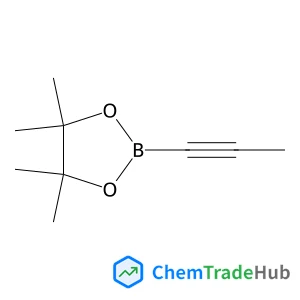
4,4,5,5-Tetramethyl-2-(1-propyn-1-YL)-1,3,2-dioxaborolane
CAS Number:
347389-75-7
Molecular Formula:
C9H15BO2
Recommended Suppliers





Disclaimer
This page provides academic journal information for reference and research purposes only. We are not affiliated with any journal publishers and do not handle publication submissions. For publication-related inquiries, please contact the respective journal publishers directly.
If you notice any inaccuracies in the information displayed, please contact us at support@chemtradehub.com. We will promptly review and address your concerns.