


A methodology for quantitation and characterization of oligonucleotides in albumin microspheres
Literature Information
Publication Date
2009-04-17
DOI
10.1039/B823554F
Impact Factor
4.616
Authors
Mohammad N. Uddin, Duc P. Do, S. Balakrishna Pai, Sanjay Gayakwad, Carl W. Oettinger, Martin J. D'Souza
View Original
Abstract
A fluorescence assay was developed to quantify oligonucleotides (ODNs) encapsulated in bovine serum albumin (BSA) microspheres using antisense to Nuclear Factor-κB (NF-κB) as a model ODN and employing Oligreen® as the fluorescent dye. Methodologies were optimized for the suspension of the microspheres as well as release of the encapsulated ODN using protease digestion. This was followed by the detection and quantitation of the ODN using the Oligreen dye. The Oligreen fluorescence assay gave a concentration-dependent fluorescent interaction with the ODN. Further characterization of the ODN with respect to their structural integrity in non-irradiated and gamma-irradiated antisense encapsulated in BSA microspheres was performed using HPLC, infrared spectroscopy and polyacrylamide gel electrophoresis. Results showed no structural modification of antisense in the BSA microspheres as determined by HPLC retention times for the pure antisense and microsphere-encapsulated ODN. The migration pattern of the antisense in polyacrylamide gels confirmed the absence of significant alterations as a result of the encapsulation process or due to gamma-irradiation. The infrared spectra of non-irradiated and gamma-irradiated antisense to NF-κB microspheres also displayed peaks characteristic of the functional groups. The fluorescence assay could also detect NF-κB antisense in the serum of rats administered with encapsulated antisense by oral and intravenous routes. This methodology should be valuable for the analysis of BSA-encapsulated antisense ODN and for pharmacokinetic studies during antisense therapy.
Recommended Journals

Russian Chemical Bulletin

Journal of Natural Medicines

Saudi Pharmaceutical Journal

Chemistry Education Research and Practice

Acta Materialia

Russian Journal of Organic Chemistry

Crystallography Reports

Current Opinion in Solid State & Materials Science

Russian Journal of Applied Chemistry

Chemical Communications
Related Literature
Large electric-field-induced strain in centrosymmetric crystals of a dipolar ruthenium alkynyl complex
K. Lau, A. Barlow, G. J. Moxey, Q. Li, Y. Liu, M. G. Humphrey, M. P. Cifuentes, T. J. Frankcombe, R. Stranger
2015-03-18
Paper
DOI: 10.1039/C5CP00528K
Design of PAMAM-COO dendron-grafted surfaces to promote Pb(ii) ion adsorption
Leebyn Chong, Meenakshi Dutt
2015-03-17
Paper
DOI: 10.1039/C5CP00309A
Radical-induced, proton-transfer-driven fragmentations in [b5 − H]˙+ ions derived from pentaalanyl tryptophan
Declan Williams, Junfang Zhao, Stefanie Mädler, Yating Wang, Irine S. Saminathan, Alan C. Hopkinson
2015-03-10
Paper
DOI: 10.1039/C5CP00178A
XPS of guanidinium ionic liquids: a comparison of charge distribution in nitrogenous cations
Ana R. Santos, Rebecca K. Blundell, Peter Licence
2015-04-02
Paper
DOI: 10.1039/C5CP01069A
Imprints of function on the folding landscape: functional role for an intermediate in a conserved eukaryotic binding protein
Sneha Munshi, Athi N. Naganathan
2015-03-24
Paper
DOI: 10.1039/C4CP06102K
Parallel mechanisms of polypyrrole self-discharge in aqueous media
H. Olsson, Z. Qiu, M. Strømme, M. Sjödin
2015-03-25
Paper
DOI: 10.1039/C4CP05355A
Organic nanoparticles of malachite green with enhanced far-red emission: size-dependence of particle rigidity
Tomohito Funada, Takuya Hirose, Naoto Tamai, Hiroshi Yao
2015-03-23
Paper
DOI: 10.1039/C5CP00031A
Enhancing electrochemical performance by control of transport properties in buffer layers – solid oxide fuel/electrolyser cells
Devaraj Ramasamy, Narendar Nasani, Ana D. Brandão, Domingo Pérez Coll, Duncan P. Fagg
2015-04-02
Paper
DOI: 10.1039/C5CP00778J
On the role of gold nanoparticles in the selective photooxidation of 2-propanol over Au/TiO2
Alexander Lüken, Martin Muhler, Jennifer Strunk
2015-03-13
Paper
DOI: 10.1039/C4CP05423G
Are intramolecular frustrated Lewis pairs also intramolecular catalysts? A theoretical study on H2 activation
Lei Liu Zeonjuk, Petko St. Petkov, Thomas Heine, Gerd-Volker Röschenthaler, Johannes Eicher, Nina Vankova
2015-03-06
Paper
DOI: 10.1039/C5CP00368G
You might also like
Compound Q&A
Is 2-(2-chloroacetamido)-3-phenylpropanoic acid (CAS: 7765-11-9) safe?
2-(2-Chloroacetamido)-3-phenylpropanoic acid (CAS: 7765-11-9) is generally consi...
7765-11-92-(2-chloroacetamido...
Compound Q&A
Is 2-(Benzyloxy)-5-bromobenzoic acid (CAS: 62176-31-2) safe?
2-(Benzyloxy)-5-bromobenzoic acid can be handled safely if appropriate precautio...
62176-31-22-(Benzyloxy)-5-brom...
Compound Q&A
What is (4-Methyl-1,2,5-oxadiazol-3-yl)methanamine hydrochloride (CAS: 1159825-48-5)?
(4-Methyl-1,2,5-oxadiazol-3-yl)methanamine hydrochloride is a chemical compound ...
1159825-48-5(4-Methyl-1,2,5-oxad...
Compound Q&A
What is 2-(5-Hexylthiophen-2-yl)-4,4,5,5-tetramethyl-1,3,2-dioxaborolane (CAS: 917985-54-7)?
2-(5-Hexylthiophen-2-yl)-4,4,5,5-tetramethyl-1,3,2-dioxaborolane (CAS: 917985-54...
917985-54-72-(5-Hexylthiophen-2...
Compound Q&A
Are there alternatives to 4-(8-Methyl-9H-1,3-dioxolo[4,5-h][2,3]benzodiazepin-5-yl)benzenamine (CAS: 102771-26-6) in synthesis?
While 4-(8-Methyl-9H-1,3-dioxolo[4,5-h][2,3]benzodiazepin-5-yl)benzenamine (CAS:...
102771-26-64-(8-Methyl-9H-1,3-d...
Compound Q&A
What is the market or research trend for tert-butyl 3-hydroxy-4,5,7,8-tetrahydro-2H-pyrazolo[3,4-d]azepine-6-carboxylate (CAS: 851376-80-2)?
The market for tert-butyl 3-hydroxy-4,5,7,8-tetrahydro-2H-pyrazolo[3,4-d]azepine...
851376-80-2tert-butyl 3-hydroxy...
Compound Q&A
How should waste containing 3,5-Diamino-1H-pyrazole-4-carbonitrile (CAS: 6844-58-2) be handled?
Waste containing 3,5-Diamino-1H-pyrazole-4-carbonitrile (CAS: 6844-58-2) should ...
6844-58-23,5-Diamino-1H-pyraz...
Compound Q&A
How is (6-Fluoro-3-pyridinyl)boronic acid (CAS: 351019-18-6) typically synthesized?
(6-Fluoro-3-pyridinyl)boronic acid can be synthesized through the reaction of 6-...
351019-18-6(6-Fluoro-3-pyridiny...
Compound Q&A
What industries use Dibenzyl carbonimidoylbiscarbamate (CAS: 10065-79-9)?
Dibenzyl carbonimidoylbiscarbamate (CAS: 10065-79-9) finds applications in vario...
10065-79-9Dibenzyl carbonimido...
Compound Q&A
What is the market or research trend for (beta,beta,2,3,4,5,6-~2~H_7_)Phenylalanine (CAS: 74228-83-4)?
The market for (beta,beta,2,3,4,5,6-~2~H_7_)Phenylalanine (CAS: 74228-83-4) is g...
74228-83-4(beta,beta,2,3,4,5,6...
Source Journal
Analyst

CiteScore:
7.8
Self-citation Rate:
5.6%
Articles per Year:
653
Analyst publishes analytical and bioanalytical research that reports premier fundamental discoveries and inventions, and the applications of those discoveries, unconfined by traditional discipline barriers.
Recommended Compounds

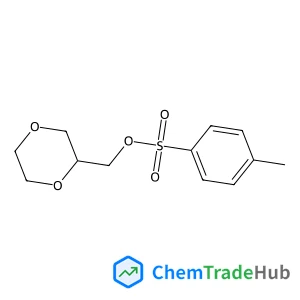
(S)-(1,4-Dioxan-2-yl)methyl 4-methylbenzenesulfonate
CAS Number:
917882-64-5
Molecular Formula:
C12H16O5S
![(1R)-N-((1R)-1-Phenylethyl)-1-[4-(tert-butyldimethylsilyloxymethyl)cyclohexyl]ethan-1-amine structure](https://static.chemtradehub.com/structs/672/672314-45-3-47ef.webp "(1R)-N-((1R)-1-Phenylethyl)-1-[4-(tert-butyldimethylsilyloxymethyl)cyclohexyl]ethan-1-amine structure")
(1R)-N-((1R)-1-Phenylethyl)-1-[4-(tert-butyldimethylsilyloxymethyl)cyclohexyl]ethan-1-amine
CAS Number:
672314-45-3
Molecular Formula:
C23H41NOSi
Recommended Suppliers





Disclaimer
This page provides academic journal information for reference and research purposes only. We are not affiliated with any journal publishers and do not handle publication submissions. For publication-related inquiries, please contact the respective journal publishers directly.
If you notice any inaccuracies in the information displayed, please contact us at support@chemtradehub.com. We will promptly review and address your concerns.