












The photoionisation of two phenylcarbenes and their diazirine precursors investigated using synchrotron radiation
Literature Information
Publication Date
2009-04-22
DOI
10.1039/B823269E
Impact Factor
3.676
Authors
Bastian Noller, Patrick Hemberger, Ingo Fischer, Christian Alcaraz, Gustavo A. Garcia, Héloïse Soldi-Lose
View Original
Abstract
Two phenylcarbenes, chlorophenylcarbene (CPC) and trifluoromethylphenylcarbene (TFPC), were generated by jet flash pyrolysis of diazirine precursors. Their photoionisation was studied by photoelectron–photoion coincidence spectroscopy using synchrotron radiation. For CPC we determined an adiabatic ionisation energy (IE) of 8.15 eV and a vertical IE of 9.3 eV. For TFPC we obtained an adiabatic IE of 8.47 eV and a vertical IE of 8.95 eV. The photoelectron spectra are broad and unstructured due to a large increase in the angle between the phenyl group, carbene centre and the substituent (Cl or CF3). The geometry change upon ionisation is more pronounced for CPC. Being a singlet arylcarbene, CPC is more strongly bent in the neutral ground state than the triplet TFPC. In addition, the bond between the carbenic centre and the chlorine atom shortens upon ionisation, because the radical cation is stabilised by the non-bonding electrons of the Cl through a mesomeric effect. The photoionisation and dissociative photoionisation of the diazirine precursors are also explored. The CPC precursor, 3-chloro-3-phenyldiazirine, undergoes complete dissociative photoionisation and only the CPC+ fragment is observed above 8.8 eV. For 3-trifluoromethyl-3-phenyldiazirine some molecular ions can be observed above 9.05 eV. However, dissociative photoionisation also sets in right at the ionisation threshold. A fit to the data yields an appearance energy of AE (0 K) ≈ 9.27 eV.
Recommended Journals
Related Literature
Interplay between the ionic and electronic transport and its effects on the reaction pattern during the electrochemical conversion in an FeF2 nanoparticle
Ying Ma, Stephen H. Garofalini
2014-05-09
Paper
DOI: 10.1039/C4CP00481G
Improving BiVO4 photoanodes for solar water splitting through surface passivation
Yongqi Liang, Johannes Messinger
2014-05-01
Paper
DOI: 10.1039/C4CP00674G
A first-principle investigation of double-side CVD catalyst metal/graphene contacts
Xiang Ji, Yan Wang, Zhiping Yu
2014-03-25
Paper
DOI: 10.1039/C4CP00960F
Effect of chromophore encapsulation on linear and nonlinear optical properties: the case of “miniSOG”, a protein-encased flavin
Nanna H. List, Frederico M. Pimenta, Lotte Holmegaard, Rasmus L. Jensen, Michael Etzerodt, Tobias Schwabe, Jacob Kongsted, Peter R. Ogilby, Ove Christiansen
2014-01-07
Paper
DOI: 10.1039/C3CP54470B
Carbon dioxide interaction with isolated imidazole or attached on gold clusters and surface: competition between σ H-bond and π stacking interaction
Muthuramalingam Prakash, Kévin Mathivon, David M. Benoit, Gilberte Chambaud, Majdi Hochlaf
2014-05-07
Paper
DOI: 10.1039/C4CP01292E
A conformation-selective IR-UV study of the dipeptides Ac-Phe-Ser-NH2 and Ac-Phe-Cys-NH2: probing the SH⋯O and OH⋯O hydrogen bond interactions
Bin Yan, Sander Jaeqx, Wim J. van der Zande, Anouk M. Rijs
2014-04-23
Paper
DOI: 10.1039/C4CP00810C
Introducing manganese complexes as redox mediators for dye-sensitized solar cells
Ishanie Rangeeka Perera, Wanchun Xiang, Torben Daeneke, Richard A. Evans, C. André Ohlin, Leone Spiccia
2013-12-06
Paper
DOI: 10.1039/C3CP54894E
Graphene mechanics: II. Atomic stress distribution during indentation until rupture
Bogdan I. Costescu
2014-04-15
Paper
DOI: 10.1039/C3CP55341H
Characterisation of the electronic structure of some stable nitroxyl radicals using variable energy photoelectron spectroscopy
Branka Kovač, Ivan Ljubić, Antti Kivimäki, Marcello Coreno, Igor Novak
2014-04-02
Paper
DOI: 10.1039/C4CP00867G
Self-healing mechanism of metallopolymers investigated by QM/MM simulations and Raman spectroscopy
Julien Guthmuller
2014-05-15
Paper
DOI: 10.1039/C4CP00562G
You might also like
Compound Q&A
What precautions should be taken when handling 2-Chloro-1,2-bis(4-methylphenyl)ethanone (CAS: 71193-32-3)?
When handling 2-Chloro-1,2-bis(4-methylphenyl)ethanone (CAS: 71193-32-3), it is ...
71193-32-32-Chloro-1,2-bis(4-m...
Compound Q&A
What industries use 4-Ethoxy-3-(5-methyl-4-oxo-7-propyl-1,4-dihydroimidazo[5,1-f][1,2,4]triazin-2-yl)benzenesulfonyl chloride (CAS: 224789-26-8)?
4-Ethoxy-3-(5-methyl-4-oxo-7-propyl-1,4-dihydroimidazo[5,1-f][1,2,4]triazin-2-yl...
224789-26-84-Ethoxy-3-(5-methyl...
Compound Q&A
How should Methyl 3-Oxo-4-Androsten-17-Carboxylate (CAS: 2681-55-2) be stored?
Methyl 3-Oxo-4-Androsten-17-Carboxylate (CAS: 2681-55-2) should be stored in a c...
2681-55-2Methyl 3-Oxo-4-Andro...
Compound Q&A
What are the main uses of (R)-3-Amino-4-(3-hexylphenylamino)-4-oxobutylphosphonic acid (CAS: 909725-61-7)?
(R)-3-Amino-4-(3-hexylphenylamino)-4-oxobutylphosphonic acid is primarily used i...
909725-61-7(R)-3-Amino-4-(3-hex...
Compound Q&A
What regulatory guidelines apply to 2-Methyl-2-propanyl 3-amino-3-carbamoyl-1-azetidinecarboxylate (CAS: 1254120-14-3)?
2-Methyl-2-propanyl 3-amino-3-carbamoyl-1-azetidinecarboxylate (CAS: 1254120-14-...
1254120-14-32-Methyl-2-propanyl ...
Compound Q&A
Are there alternatives to (E)-4-(tert-Butoxy)-4-oxobut-2-enoic acid (CAS: 135355-96-3) in synthesis?
There are alternative reagents that can be used in synthesis instead of (E)-4-(t...
135355-96-3(E)-4-(tert-Butoxy)-...
Compound Q&A
What are the physical and chemical properties of [2-(3-Chlorophenyl)-1,3-thiazol-4-yl]methanol (CAS: 121202-20-8)?
[2-(3-Chlorophenyl)-1,3-thiazol-4-yl]methanol (CAS: 121202-20-8) is a crystallin...
121202-20-8[2-(3-Chlorophenyl)-...
Compound Q&A
What is the market or research trend for Methyl (2S)-[(4S)-2,2-dimethyl-1,3-dioxolan-4-yl]{[(4-methylphenyl)sulfonyl]oxy}acetate (CAS: 166249-17-8)?
The market and research trends for Methyl (2S)-[(4S)-2,2-dimethyl-1,3-dioxolan-4...
166249-17-8Methyl (2S)-[(4S)-2,...
Compound Q&A
What is the market or research trend for 1-Bromo-2-isocyanatoethane (CAS: 42865-19-0)?
The market for 1-Bromo-2-isocyanatoethane (CAS: 42865-19-0) is driven by its use...
42865-19-01-Bromo-2-isocyanato...
Compound Q&A
What are the main uses of 4-Nitro-D-phenylalanine hydrochloride (CAS: 147065-06-3)?
4-Nitro-D-phenylalanine hydrochloride (CAS: 147065-06-3) is primarily used in re...
147065-06-34-Nitro-D-phenylalan...
Source Journal
Physical Chemistry Chemical Physics

CiteScore:
5.5
Self-citation Rate:
10.3%
Articles per Year:
3036
Physical Chemistry Chemical Physics (PCCP) is an international journal co-owned by 19 physical chemistry and physics societies from around the world. This journal publishes original, cutting-edge research in physical chemistry, chemical physics and biophysical chemistry. To be suitable for publication in PCCP, articles must include significant innovation and/or insight into physical chemistry; this is the most important criterion that reviewers and Editors will judge against when evaluating submissions. The journal has a broad scope and welcomes contributions spanning experiment, theory, computation and data science. Topical coverage includes spectroscopy, dynamics, kinetics, statistical mechanics, thermodynamics, electrochemistry, catalysis, surface science, quantum mechanics, quantum computing and machine learning. Interdisciplinary research areas such as polymers and soft matter, materials, nanoscience, energy, surfaces/interfaces, and biophysical chemistry are welcomed if they demonstrate significant innovation and/or insight into physical chemistry. Joined experimental/theoretical studies are particularly appreciated when complementary and based on up-to-date approaches.
Recommended Compounds
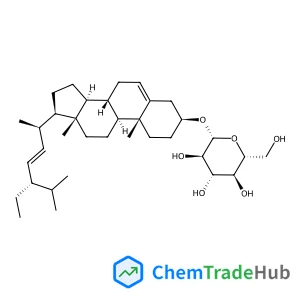
(3beta,22E)-Stigmasta-5,22-dien-3-yl beta-D-glucopyranoside
CAS Number:
19716-26-8
Molecular Formula:
C35H58O6


3,5-Dihydroxy-4-(3-methylbutanoyl)-2,6,6-tris(3-methyl-2-buten-1-yl)-2,4-cyclohexadien-1-one
CAS Number:
468-28-0
Molecular Formula:
C26H38O4
![(1R)-3-Bromo-1,7,7-trimethylbicyclo[2.2.1]heptan-2-one structure](https://static.chemtradehub.com/structs/102/10293-06-8-dd8a.webp "(1R)-3-Bromo-1,7,7-trimethylbicyclo[2.2.1]heptan-2-one structure")
(1R)-3-Bromo-1,7,7-trimethylbicyclo[2.2.1]heptan-2-one
CAS Number:
10293-06-8
Molecular Formula:
C10H15BrO
Recommended Suppliers





Disclaimer
This page provides academic journal information for reference and research purposes only. We are not affiliated with any journal publishers and do not handle publication submissions. For publication-related inquiries, please contact the respective journal publishers directly.
If you notice any inaccuracies in the information displayed, please contact us at support@chemtradehub.com. We will promptly review and address your concerns.