


Characterisation of the electronic structure of some stable nitroxyl radicals using variable energy photoelectron spectroscopy
Literature Information
Publication Date
2014-04-02
DOI
10.1039/C4CP00867G
Impact Factor
3.676
Authors
Branka Kovač, Ivan Ljubić, Antti Kivimäki, Marcello Coreno, Igor Novak
View Original
Abstract
The photoionization of three stable nitroxyl radicals has been studied in the valence and core regions using synchrotron radiation. We observed different variations of the relative band intensities with the photon energy for two pyrrolidine nitroxyls (nitroxyl8 and nitroxyl9) in the valence ionization region. This is due to strong intramolecular interactions between the amide substituent and the ring π-orbital when present. In the core ionization region we observed chemical shifts which were consistent with the relative electron affinities of different atoms. We also observed the multiplet splitting of core level binding energies in the final ionic states. The core electron binding energies calculated via the restricted open shell Hartree–Fock based ΔSCF method exhibit good agreement with the experimental core ionization bands and with the assignment of the spectra by empirical analysis.
Recommended Journals

Journal of the Indian Institute of Science

Polycyclic Aromatic Compounds

Critical Reviews in Solid State and Materials Sciences

Journal of Chemical Sciences

Bioorganic & Medicinal Chemistry Letters

Bioorganic & Medicinal Chemistry

Herald of the Russian Academy of Sciences

Heteroatom Chemistry

Colloid Journal

Medicinal Chemistry Research
Related Literature
Synthesis of pyrazolo[5,1-a]isoquinolines through copper-catalyzed regioselective bicyclization of N-propargylic sulfonylhydrazones
Hai-Tao Tang, Jia-Hao Zeng, Jun-Jia Chen, Yun-Bing Zhou, Ren-Hao Li, Zhuang-Ping Zhan
2017-04-27
Research Article
DOI: 10.1039/C7QO00249A
A redox-responsive supramolecular amphiphile fabricated by selenium-containing pillar[5]arene-based host–guest recognition
Yujuan Zhou, Kecheng Jie, Feihe Huang
2017-09-05
Research Article
DOI: 10.1039/C7QO00736A
Phosphinodifluoroalkylation of alkynes using P(O)H compounds and ethyl difluoroiodoacetate
Pengbo Zhang, Jianxi Ying, Guo Tang
2017-07-17
Research Article
DOI: 10.1039/C7QO00466D
Copper(ii) catalyzed domino synthesis of quinoline derivatives from arylamines and alkynes
Huimin Dai, Chun-Xiao Li, Chao Yu, Zihao Wang, Hong Yan, Changsheng Lu
2017-07-04
Research Article
DOI: 10.1039/C7QO00333A
Racemic trinorsesquiterpenoids from the Beihai sponge Spongia officinalis: structure and biomimetic total synthesis
Na-Na Yang, Le-Fu Lan, Xu-Wen Li
2018-01-08
Research Article
DOI: 10.1039/C7QO01091E
Efficient access to chiral 1,2-amino alcohols via Ir/f-amphox-catalyzed asymmetric hydrogenation of α-amino ketones
Yang Hu, Weilong Wu, Xiu-Qin Dong
2017-04-24
Research Article
DOI: 10.1039/C7QO00237H
Palladium catalyzed C(sp3)–H acetoxylation of aliphatic primary amines to γ-amino alcohol derivatives
Kang Chen, Ding Wang, Zhao-Wei Li, Zheng Liu, Fei Pan, Yun-Fei Zhang
2017-07-27
Research Article
DOI: 10.1039/C7QO00432J
Ag(i)-Catalyzed one-pot synthesis of 4-fluorobenzo[b][1,6] naphthyridines and 4-fluoroisoquinolines via iminofluorination of alkynes with Selectfluor
Kalpana Mishra, Jay Bahadur Singh, Tanu Gupta, Radhey M. Singh
2017-06-19
Research Article
DOI: 10.1039/C7QO00346C
Efficient synthesis of 2-substituted azoles: radical C–H alkylation of azoles with dicumyl peroxide, methylarenes and cycloalkanes under metal-free condition
Ze-lin Li, Li-kun Jin, Chun Cai
2017-07-05
Research Article
DOI: 10.1039/C7QO00396J
You might also like
Compound Q&A
What precautions should be taken when handling 4-Methyl-6-(trifluoromethyl)quinoline (CAS: 40716-16-3)?
When handling 4-Methyl-6-(trifluoromethyl)quinoline (CAS: 40716-16-3), safety go...
40716-16-34-Methyl-6-(trifluor...
Compound Q&A
What is 4-(3,5-Difluorophenyl)aniline (CAS: 405058-00-6)?
4-(3,5-Difluorophenyl)aniline is an aromatic organic compound with the CAS numbe...
405058-00-64-(3,5-Difluoropheny...
Compound Q&A
How is 5-{[4-(Trifluoromethyl)phenyl]sulfanyl}-1,2,3-thiadiazole-4-carboxylic acid (CAS: 338982-07-3) typically synthesized?
5-{[4-(Trifluoromethyl)phenyl]sulfanyl}-1,2,3-thiadiazole-4-carboxylic acid can ...
338982-07-35-{[4-(Trifluorometh...
Compound Q&A
What is the market or research trend for 4-Benzylaniline hydrochloride (CAS: 6317-57-3)?
The market for 4-Benzylaniline hydrochloride (CAS: 6317-57-3) is steadily growin...
6317-57-34-Benzylaniline hydr...
Compound Q&A
Is [3-(Diethylsulfamoyl)phenyl]boronic acid (CAS: 871329-58-7) safe?
[3-(Diethylsulfamoyl)phenyl]boronic acid is generally considered safe when handl...
871329-58-7[3-(Diethylsulfamoyl...
Compound Q&A
What are the main uses of 3-Bromo-2,5-dimethoxyaniline (CAS: 115929-62-9)?
3-Bromo-2,5-dimethoxyaniline is mainly used in the pharmaceutical and chemical i...
115929-62-93-Bromo-2,5-dimethox...
Compound Q&A
What regulatory guidelines apply to N-Methyl-1-(5-methyl-1H-indol-3-yl)methanamine (CAS: 915922-67-7)?
N-Methyl-1-(5-methyl-1H-indol-3-yl)methanamine (CAS: 915922-67-7) is subject to ...
915922-67-7N-Methyl-1-(5-methyl...
Compound Q&A
What industries use Carbamic acid, N-[(5S)-5,6-diamino-6-oxohexyl]-, 1,1-dimethylethyl ester (CAS: 24828-96-4)?
This compound is primarily used in the pharmaceutical industry for the synthesis...
24828-96-4Carbamic acid, N-[(5...
Compound Q&A
How should 2-Methyl-2-propanyl [(1S,3R)-3-aminocyclohexyl]carbamate (CAS: 1298101-47-9) be stored?
2-Methyl-2-propanyl [(1S,3R)-3-aminocyclohexyl]carbamate (CAS: 1298101-47-9) sho...
1298101-47-92-Methyl-2-propanyl ...
Compound Q&A
What industries use Ethyl 2-bromo-4,4,4-trifluorobutanoate (CAS: 367-33-9)?
Ethyl 2-bromo-4,4,4-trifluorobutanoate (CAS: 367-33-9) is utilized in the pharma...
367-33-9Ethyl 2-bromo-4,4,4-...
Source Journal
Physical Chemistry Chemical Physics

CiteScore:
5.5
Self-citation Rate:
10.3%
Articles per Year:
3036
Physical Chemistry Chemical Physics (PCCP) is an international journal co-owned by 19 physical chemistry and physics societies from around the world. This journal publishes original, cutting-edge research in physical chemistry, chemical physics and biophysical chemistry. To be suitable for publication in PCCP, articles must include significant innovation and/or insight into physical chemistry; this is the most important criterion that reviewers and Editors will judge against when evaluating submissions. The journal has a broad scope and welcomes contributions spanning experiment, theory, computation and data science. Topical coverage includes spectroscopy, dynamics, kinetics, statistical mechanics, thermodynamics, electrochemistry, catalysis, surface science, quantum mechanics, quantum computing and machine learning. Interdisciplinary research areas such as polymers and soft matter, materials, nanoscience, energy, surfaces/interfaces, and biophysical chemistry are welcomed if they demonstrate significant innovation and/or insight into physical chemistry. Joined experimental/theoretical studies are particularly appreciated when complementary and based on up-to-date approaches.
Recommended Compounds
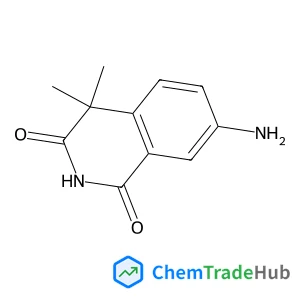
1,3(2H,4H)-Isoquinolinedione, 7-amino-4,4-dimethyl-
CAS Number:
14576-22-8
Molecular Formula:
C11H12N2O2
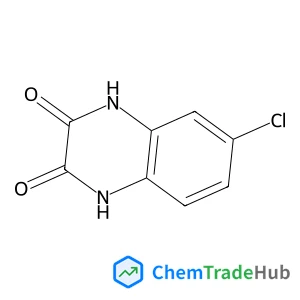
6-CHLORO-2,3-DIOXO-1,2,3,4-TETRAHYDROQUINOXALINE, 97
CAS Number:
169-14-2
Molecular Formula:
C8H5ClN2O2
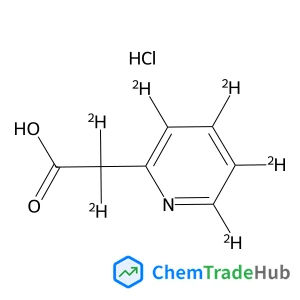
2,2-dideuterio-2-(3,4,5,6-tetradeuterio-2-pyridyl)acetic acid;hydrochloride
CAS Number:
1329799-67-8
Molecular Formula:
C7H2ClD6NO2
Recommended Suppliers




Disclaimer
This page provides academic journal information for reference and research purposes only. We are not affiliated with any journal publishers and do not handle publication submissions. For publication-related inquiries, please contact the respective journal publishers directly.
If you notice any inaccuracies in the information displayed, please contact us at support@chemtradehub.com. We will promptly review and address your concerns.