


A first-principle investigation of double-side CVD catalyst metal/graphene contacts
Literature Information
Publication Date
2014-03-25
DOI
10.1039/C4CP00960F
Impact Factor
3.676
Authors
Xiang Ji, Yan Wang, Zhiping Yu
View Original
Abstract
In this paper, the double-side contact (DSC) properties of CVD catalyst metals and graphene (Gr) are studied by first-principle methods. Our calculation shows that two special catalyst metals Pt and Ir would have extremely small contact resistances in DSC and the physical origination of such phenomenon is explicitly analyzed. Different from the common physisorption metal which would keep Gr's intrinsic conical dispersion, the simulation results of Pt and Ir in DSC show chemisorption characters due to the charge redistribution triggered exchange-transfer mechanism. The symmetry Pauli-exclusion and charge transfer effects in DSC complexes are found to play an important role in the intriguing transition. These results may bring new information to seek a suitable lead structure for 2D materials.
Recommended Journals

Biocatalysis and Biotransformation

Herald of the Russian Academy of Sciences

Journal of Asian Natural Products Research

Critical Reviews in Solid State and Materials Sciences

Bioorganic & Medicinal Chemistry Letters

Medicinal Chemistry Research

Main Group Chemistry

Bioorganic & Medicinal Chemistry

Journal of Chemical Sciences

Cellulose
Related Literature
Harnessing the potential diversity of resinic diterpenes through visible light-induced sensitized oxygenation coupled to Kornblum–DeLaMare and Hock reactions
Benjamin Laroche
2017-08-31
Research Article
DOI: 10.1039/C7QO00633K
Copper-catalyzed oxidative dehydrogenative coupling of carboxylic acids with H-phosphonates: an efficient and practical approach to acyl phosphate esters
Hong Fu, Tao Yang, Jia-Qi Shang, Jia-Li Zhou, Meng Sun, Ya-Min Li
2017-06-05
Research Article
DOI: 10.1039/C7QO00298J
Ir(iii)-Catalyzed site-selective amidation of azoxybenzenes and late-stage transformation
Wenge Zhang, Hong Deng, Hongji Li
2017-08-11
Research Article
DOI: 10.1039/C7QO00542C
Post-synthetic diversification of pyrrole-fused benzosultams via trans-sulfonylations and reactions on the periphery of pyrrole
Joydev K. Laha, Rohan A. Bhimpuria, Aitha Manoj Kumar
2017-07-28
Research Article
DOI: 10.1039/C7QO00440K
Iron-catalyzed boration of allylic esters: an efficient approach to allylic boronates
Yuhan Zhou, Huan Wang, Yang Liu, Yilong Zhao, Chunxia Zhang, Jingping Qu
2017-05-10
Research Article
DOI: 10.1039/C7QO00228A
Iridium-catalyzed direct asymmetric reductive amination of aromatic ketones
Haizhou Huang, Zitong Wu, Guorui Gao, Le Zhou, Mingxin Chang
2017-06-28
Research Article
DOI: 10.1039/C7QO00400A
Transition-metal-free radical fluoroalkylation of isocyanides for the synthesis of tri-/di-/monofluoromethylated phenanthridines
Jing Fang, Wei-Guo Shen, Gui-Zhen Ao
2017-07-17
Research Article
DOI: 10.1039/C7QO00473G
Photoredox catalytic intramolecular imine C–H bond functionalization using ligand free Cu(ii) salts
Xuhong Ren, Qiyang Wang, Wenjia Yu, Xiaoyu Zhan, Yishan Yao, Bingjie Qin, Mingxin Dong, Xinhua He
2017-07-06
Research Article
DOI: 10.1039/C7QO00348J
Metal-free phosphonation of benzoxazoles and benzothiazoles under oxidative conditions
Jiuhan Gong, Ling Huang, Qidu Deng, Kun Jie, Yufeng Wang, Shengmei Guo, Hu Cai
2017-06-05
Research Article
DOI: 10.1039/C7QO00318H
Sortase A-mediated on-resin peptide cleavage and in situ ligation: an efficient one-pot strategy for the synthesis of functional peptides and proteins
Xiaozhong Cheng, Tao Zhu, Haofei Hong, Zhifang Zhou, Zhimeng Wu
2017-07-17
Research Article
DOI: 10.1039/C7QO00481H
You might also like
Compound Q&A
What precautions should be taken when handling 4-Methyl-6-(trifluoromethyl)quinoline (CAS: 40716-16-3)?
When handling 4-Methyl-6-(trifluoromethyl)quinoline (CAS: 40716-16-3), safety go...
40716-16-34-Methyl-6-(trifluor...
Compound Q&A
What is 4-(3,5-Difluorophenyl)aniline (CAS: 405058-00-6)?
4-(3,5-Difluorophenyl)aniline is an aromatic organic compound with the CAS numbe...
405058-00-64-(3,5-Difluoropheny...
Compound Q&A
How is 5-{[4-(Trifluoromethyl)phenyl]sulfanyl}-1,2,3-thiadiazole-4-carboxylic acid (CAS: 338982-07-3) typically synthesized?
5-{[4-(Trifluoromethyl)phenyl]sulfanyl}-1,2,3-thiadiazole-4-carboxylic acid can ...
338982-07-35-{[4-(Trifluorometh...
Compound Q&A
What is the market or research trend for 4-Benzylaniline hydrochloride (CAS: 6317-57-3)?
The market for 4-Benzylaniline hydrochloride (CAS: 6317-57-3) is steadily growin...
6317-57-34-Benzylaniline hydr...
Compound Q&A
Is [3-(Diethylsulfamoyl)phenyl]boronic acid (CAS: 871329-58-7) safe?
[3-(Diethylsulfamoyl)phenyl]boronic acid is generally considered safe when handl...
871329-58-7[3-(Diethylsulfamoyl...
Compound Q&A
What are the main uses of 3-Bromo-2,5-dimethoxyaniline (CAS: 115929-62-9)?
3-Bromo-2,5-dimethoxyaniline is mainly used in the pharmaceutical and chemical i...
115929-62-93-Bromo-2,5-dimethox...
Compound Q&A
What regulatory guidelines apply to N-Methyl-1-(5-methyl-1H-indol-3-yl)methanamine (CAS: 915922-67-7)?
N-Methyl-1-(5-methyl-1H-indol-3-yl)methanamine (CAS: 915922-67-7) is subject to ...
915922-67-7N-Methyl-1-(5-methyl...
Compound Q&A
What industries use Carbamic acid, N-[(5S)-5,6-diamino-6-oxohexyl]-, 1,1-dimethylethyl ester (CAS: 24828-96-4)?
This compound is primarily used in the pharmaceutical industry for the synthesis...
24828-96-4Carbamic acid, N-[(5...
Compound Q&A
How should 2-Methyl-2-propanyl [(1S,3R)-3-aminocyclohexyl]carbamate (CAS: 1298101-47-9) be stored?
2-Methyl-2-propanyl [(1S,3R)-3-aminocyclohexyl]carbamate (CAS: 1298101-47-9) sho...
1298101-47-92-Methyl-2-propanyl ...
Compound Q&A
What industries use Ethyl 2-bromo-4,4,4-trifluorobutanoate (CAS: 367-33-9)?
Ethyl 2-bromo-4,4,4-trifluorobutanoate (CAS: 367-33-9) is utilized in the pharma...
367-33-9Ethyl 2-bromo-4,4,4-...
Source Journal
Physical Chemistry Chemical Physics

CiteScore:
5.5
Self-citation Rate:
10.3%
Articles per Year:
3036
Physical Chemistry Chemical Physics (PCCP) is an international journal co-owned by 19 physical chemistry and physics societies from around the world. This journal publishes original, cutting-edge research in physical chemistry, chemical physics and biophysical chemistry. To be suitable for publication in PCCP, articles must include significant innovation and/or insight into physical chemistry; this is the most important criterion that reviewers and Editors will judge against when evaluating submissions. The journal has a broad scope and welcomes contributions spanning experiment, theory, computation and data science. Topical coverage includes spectroscopy, dynamics, kinetics, statistical mechanics, thermodynamics, electrochemistry, catalysis, surface science, quantum mechanics, quantum computing and machine learning. Interdisciplinary research areas such as polymers and soft matter, materials, nanoscience, energy, surfaces/interfaces, and biophysical chemistry are welcomed if they demonstrate significant innovation and/or insight into physical chemistry. Joined experimental/theoretical studies are particularly appreciated when complementary and based on up-to-date approaches.
Recommended Compounds
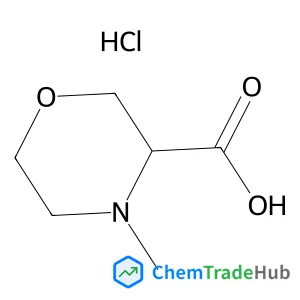
4-Methyl-3-morpholinecarboxylic acid hydrochloride (1:1)
CAS Number:
1240518-90-4
Molecular Formula:
C6H12ClNO3
Recommended Suppliers




Disclaimer
This page provides academic journal information for reference and research purposes only. We are not affiliated with any journal publishers and do not handle publication submissions. For publication-related inquiries, please contact the respective journal publishers directly.
If you notice any inaccuracies in the information displayed, please contact us at support@chemtradehub.com. We will promptly review and address your concerns.