












Ultrathin oxide films and heterojunctions: CaO layers on BaO and SrO
Literature Information
Publication Date
2009-03-17
DOI
10.1039/B822588E
Impact Factor
3.676
Authors
Neil L. Allan, John H. Harding
View Original
Abstract
We examine the form of the islands formed by CaO on BaO and SrO substrates using both periodic density functional theory and atomistic simulation techniques. (100) edges dominate the island morphology and we examine how the CaO adjusts to the substrate in small and medium sized islands and at much larger coverages. There is no direct overlay of CaO ion pairs over OBa or OSr pairs in the top substrate layer. Rather, island bond lengths are all much shorter than those even in bulk CaO, even in the interior of the islands, and more similar to those in CaO clusters and isolated thin films. Corner atoms are associated with particularly short Ca–O bond lengths and the low coordination numbers at such positions. The islands show a marked deviation from planarity which can be broadly rationalized in terms of different preferential bond lengths for Ca and O with substrate O and Ba (Sr), respectively. The marked preferences for particular bond lengths lead to the formation of loops or gaps in non-square islands, areas where islands interact and along the mid-edges of large islands. Exchange with the much larger cations in the substrate is surprisingly facile. Our results indicate the difficulties of preparing sharp, ordered thin oxide films even at low temperatures.
Related Literature
Rigidified and expanded N-annulated perylenes as efficient donors in organic sensitizers for application in solar cells
Ping Li, Zhixiang Wang, Houyu Zhang
2019-04-23
Paper
DOI: 10.1039/C9CP00779B
Lithium ion diffusion mechanism in covalent organic framework based solid state electrolyte
Kecheng Zhang, Bingkai Zhang, Mouyi Weng, Jiaxin Zheng, Shunning Li, Feng Pan
2019-04-23
Paper
DOI: 10.1039/C9CP02117E
Covalent capture of supramolecular species in an aqueous solution of water-miscible small organic molecules
Yongchao Yao, Chuanqi Li, Fangqin Liu, Pengxiang Zhao
2019-04-23
Paper
DOI: 10.1039/C9CP01427F
The effect of methylation on the intrinsic photophysical properties of simple rhodamines
Jocky C. K. Kung, Adam Forman, Rebecca A. Jockusch
2019-04-22
Paper
DOI: 10.1039/C9CP00730J
Feasible structure-modification strategy for inhibiting aggregation-caused quenching effect and constructing exciton conversion channels in acridone-based emitters
Qing Wan, Bing Zhang, Jialin Tong, Yin Li, Haozhong Wu, Han Zhang, Yuyu Pan
2019-04-19
Paper
DOI: 10.1039/C9CP01706B
Synergy of orientational relaxation between bound water and confined water in ice cold-crystallization
Qiang Wang, Xiao Huang, Wei Guo
2019-04-18
Paper
DOI: 10.1039/C9CP01600G
Determination of element–deuterium bond lengths in Zintl phase deuterides by 2H-NMR
Henry Auer, Holger Kohlmann, Jürgen Haase, Marko Bertmer
2019-05-03
Paper
DOI: 10.1039/C9CP00292H
On the interaction of hyaluronic acid with synovial fluid lipid membranes
Paul Smith, Robert M. Ziolek, Elena Gazzarrini, Dylan M. Owen, Christian D. Lorenz
2019-04-17
Paper
DOI: 10.1039/C9CP01532A
Cooperativity and coverage dependent molecular desorption in self-assembled monolayers: computational case study with coronene on Au(111) and HOPG
Bhaskar Chilukuri, Ursula Mazur, K. W. Hipps
2019-05-09
Paper
DOI: 10.1039/C9CP01774G
Tuning the electronic structure properties of MoS2 monolayers with carbon doping
Wiliam Ferreira da Cunha, Ramiro Marcelo dos Santos, Rafael Timóteo de Sousa Júnior, Renato Batista Santos, Geraldo Magela e Silva, Luiz Antônio Ribeiro Júnior
2019-05-08
Paper
DOI: 10.1039/C9CP00980A
You might also like
Compound Q&A
What precautions should be taken when handling 2-Chloro-1,2-bis(4-methylphenyl)ethanone (CAS: 71193-32-3)?
When handling 2-Chloro-1,2-bis(4-methylphenyl)ethanone (CAS: 71193-32-3), it is ...
71193-32-32-Chloro-1,2-bis(4-m...
Compound Q&A
What industries use 4-Ethoxy-3-(5-methyl-4-oxo-7-propyl-1,4-dihydroimidazo[5,1-f][1,2,4]triazin-2-yl)benzenesulfonyl chloride (CAS: 224789-26-8)?
4-Ethoxy-3-(5-methyl-4-oxo-7-propyl-1,4-dihydroimidazo[5,1-f][1,2,4]triazin-2-yl...
224789-26-84-Ethoxy-3-(5-methyl...
Compound Q&A
How should Methyl 3-Oxo-4-Androsten-17-Carboxylate (CAS: 2681-55-2) be stored?
Methyl 3-Oxo-4-Androsten-17-Carboxylate (CAS: 2681-55-2) should be stored in a c...
2681-55-2Methyl 3-Oxo-4-Andro...
Compound Q&A
What are the main uses of (R)-3-Amino-4-(3-hexylphenylamino)-4-oxobutylphosphonic acid (CAS: 909725-61-7)?
(R)-3-Amino-4-(3-hexylphenylamino)-4-oxobutylphosphonic acid is primarily used i...
909725-61-7(R)-3-Amino-4-(3-hex...
Compound Q&A
What regulatory guidelines apply to 2-Methyl-2-propanyl 3-amino-3-carbamoyl-1-azetidinecarboxylate (CAS: 1254120-14-3)?
2-Methyl-2-propanyl 3-amino-3-carbamoyl-1-azetidinecarboxylate (CAS: 1254120-14-...
1254120-14-32-Methyl-2-propanyl ...
Compound Q&A
Are there alternatives to (E)-4-(tert-Butoxy)-4-oxobut-2-enoic acid (CAS: 135355-96-3) in synthesis?
There are alternative reagents that can be used in synthesis instead of (E)-4-(t...
135355-96-3(E)-4-(tert-Butoxy)-...
Compound Q&A
What are the physical and chemical properties of [2-(3-Chlorophenyl)-1,3-thiazol-4-yl]methanol (CAS: 121202-20-8)?
[2-(3-Chlorophenyl)-1,3-thiazol-4-yl]methanol (CAS: 121202-20-8) is a crystallin...
121202-20-8[2-(3-Chlorophenyl)-...
Compound Q&A
What is the market or research trend for Methyl (2S)-[(4S)-2,2-dimethyl-1,3-dioxolan-4-yl]{[(4-methylphenyl)sulfonyl]oxy}acetate (CAS: 166249-17-8)?
The market and research trends for Methyl (2S)-[(4S)-2,2-dimethyl-1,3-dioxolan-4...
166249-17-8Methyl (2S)-[(4S)-2,...
Compound Q&A
What is the market or research trend for 1-Bromo-2-isocyanatoethane (CAS: 42865-19-0)?
The market for 1-Bromo-2-isocyanatoethane (CAS: 42865-19-0) is driven by its use...
42865-19-01-Bromo-2-isocyanato...
Compound Q&A
What are the main uses of 4-Nitro-D-phenylalanine hydrochloride (CAS: 147065-06-3)?
4-Nitro-D-phenylalanine hydrochloride (CAS: 147065-06-3) is primarily used in re...
147065-06-34-Nitro-D-phenylalan...
Source Journal
Physical Chemistry Chemical Physics

CiteScore:
5.5
Self-citation Rate:
10.3%
Articles per Year:
3036
Physical Chemistry Chemical Physics (PCCP) is an international journal co-owned by 19 physical chemistry and physics societies from around the world. This journal publishes original, cutting-edge research in physical chemistry, chemical physics and biophysical chemistry. To be suitable for publication in PCCP, articles must include significant innovation and/or insight into physical chemistry; this is the most important criterion that reviewers and Editors will judge against when evaluating submissions. The journal has a broad scope and welcomes contributions spanning experiment, theory, computation and data science. Topical coverage includes spectroscopy, dynamics, kinetics, statistical mechanics, thermodynamics, electrochemistry, catalysis, surface science, quantum mechanics, quantum computing and machine learning. Interdisciplinary research areas such as polymers and soft matter, materials, nanoscience, energy, surfaces/interfaces, and biophysical chemistry are welcomed if they demonstrate significant innovation and/or insight into physical chemistry. Joined experimental/theoretical studies are particularly appreciated when complementary and based on up-to-date approaches.
Recommended Compounds
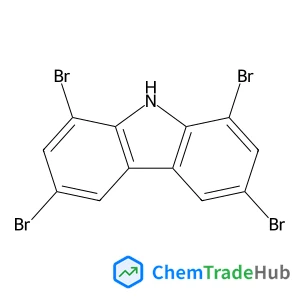

3,5-Dihydroxy-4-(3-methylbutanoyl)-2,6,6-tris(3-methyl-2-buten-1-yl)-2,4-cyclohexadien-1-one
CAS Number:
468-28-0
Molecular Formula:
C26H38O4
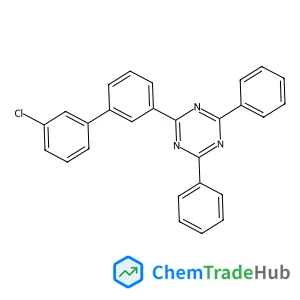
2-(3'-Chlorobiphenyl-3-yl)-4,6-diphenyl-1,3,5-triazine
CAS Number:
1443049-83-9
Molecular Formula:
C27H18ClN3
Recommended Suppliers





Disclaimer
This page provides academic journal information for reference and research purposes only. We are not affiliated with any journal publishers and do not handle publication submissions. For publication-related inquiries, please contact the respective journal publishers directly.
If you notice any inaccuracies in the information displayed, please contact us at support@chemtradehub.com. We will promptly review and address your concerns.