


Direct CO oxidation by lattice oxygen on the SnO2(110) surface: a DFT study
Literature Information
Publication Date
2014-04-28
DOI
10.1039/C4CP00540F
Impact Factor
3.676
Authors
Zhansheng Lu, Dongwei Ma, Lin Yang, Xiaobing Wang, Guoliang Xu, Zongxian Yang
View Original
Abstract
As a noble-metal-free catalyst for CO oxidation, SnO2 has sparked worldwide interest owing to its highly reactive lattice oxygen atoms and low cost. The current density functional theory (DFT) results demonstrate the process of CO oxidation by lattice oxygen on the SnO2(110) surface and the recovery of the reduced surface by O2. It is found that CO can be easily oxidized on the SnO2(110) surface following the Mars–van Krevelen mechanism. The adsorbed oxygen turns into various oxygen species by transferring electron(s) to the chemisorbed oxygen, which is only found on the partially reduced SnO2−x surface, but not on the perfect SnO2(110) surface: O2(gas) ↔ O2(ad) ↔ O2−(ad) ↔ O22−(ad) ↔ O2−(lattice) + O−(ad). The calculated stretching frequencies would help to distinguish the various adsorbed species observed in experiment and of course help in the assignment of vibrational modes in the experimental spectra.
Recommended Journals

Electroanalysis

Biocatalysis and Biotransformation

Critical Reviews in Solid State and Materials Sciences

Main Group Chemistry

Heteroatom Chemistry

Bioorganic & Medicinal Chemistry

Herald of the Russian Academy of Sciences

Journal of Asian Natural Products Research

Journal of the Indian Institute of Science

Journal of Chemical Sciences
Related Literature
Manganese-mediated/-catalyzed oxidative carboazidation of acrylamides
Danwei Zhao, Kai Kang, Haizhen Jiang, Hongmei Deng, Yunrong Chen
2017-05-04
Research Article
DOI: 10.1039/C7QO00217C
Synthesis of dibromo- and tetrabromo-bipyrrolines and their corresponding 2,6-diazasemibullvalene derivatives
Zhe Huang, Ming Zhan, Shaoguang Zhang, Qian Luo, Wen-Xiong Zhang
2017-06-12
Research Article
DOI: 10.1039/C7QO00287D
Harnessing the potential diversity of resinic diterpenes through visible light-induced sensitized oxygenation coupled to Kornblum–DeLaMare and Hock reactions
Benjamin Laroche
2017-08-31
Research Article
DOI: 10.1039/C7QO00633K
Practical synthesis of enantiopure benzylamines by catalytic hydrogenation or transfer hydrogenation reactions in isopropanol using a Ru-pybox catalyst
E. de Julián, E. Menéndez-Pedregal, M. Claros, M. Vaquero, J. Díez, E. Lastra, P. Gamasa, A. Pizzano
2017-12-01
Research Article
DOI: 10.1039/C7QO00908A
l-Phenylalanine potassium catalyzed asymmetric formal [3 + 3] annulation of 2-enoyl-pyridine N-oxides with acetone
Youguo Xu, Sheng Zhang, Lijun Li, Yukang Wang, Zhenggen Zha, Zhiyong Wang
2017-10-09
Research Article
DOI: 10.1039/C7QO00796E
Multiple noncovalent interaction constructed polymeric supramolecular crystals: recognition of butyl viologen by para-dicyclohexanocucurbit[6]uril and α,α′,δ,δ′-tetramethylcucurbit[6]uril
Zhi-You Xiao, Rui-Lian Lin, Zhu Tao, Qing-Yun Liu, Jing-Xin Liu, Xin Xiao
2017-09-05
Research Article
DOI: 10.1039/C7QO00708F
Tunable regiodivergent phosphine-catalyzed [3 + 2] cycloaddition of alkynones and trifluoroacetyl phenylamides
Yao-Liang Sun, Yin Wei
2017-08-29
Research Article
DOI: 10.1039/C7QO00512A
Ir(iii)-Catalyzed site-selective amidation of azoxybenzenes and late-stage transformation
Wenge Zhang, Hong Deng, Hongji Li
2017-08-11
Research Article
DOI: 10.1039/C7QO00542C
Palladium catalyzed C(sp3)–H acetoxylation of aliphatic primary amines to γ-amino alcohol derivatives
Kang Chen, Ding Wang, Zhao-Wei Li, Zheng Liu, Fei Pan, Yun-Fei Zhang
2017-07-27
Research Article
DOI: 10.1039/C7QO00432J
You might also like
Compound Q&A
What precautions should be taken when handling 4-Methyl-6-(trifluoromethyl)quinoline (CAS: 40716-16-3)?
When handling 4-Methyl-6-(trifluoromethyl)quinoline (CAS: 40716-16-3), safety go...
40716-16-34-Methyl-6-(trifluor...
Compound Q&A
What is 4-(3,5-Difluorophenyl)aniline (CAS: 405058-00-6)?
4-(3,5-Difluorophenyl)aniline is an aromatic organic compound with the CAS numbe...
405058-00-64-(3,5-Difluoropheny...
Compound Q&A
How is 5-{[4-(Trifluoromethyl)phenyl]sulfanyl}-1,2,3-thiadiazole-4-carboxylic acid (CAS: 338982-07-3) typically synthesized?
5-{[4-(Trifluoromethyl)phenyl]sulfanyl}-1,2,3-thiadiazole-4-carboxylic acid can ...
338982-07-35-{[4-(Trifluorometh...
Compound Q&A
What is the market or research trend for 4-Benzylaniline hydrochloride (CAS: 6317-57-3)?
The market for 4-Benzylaniline hydrochloride (CAS: 6317-57-3) is steadily growin...
6317-57-34-Benzylaniline hydr...
Compound Q&A
Is [3-(Diethylsulfamoyl)phenyl]boronic acid (CAS: 871329-58-7) safe?
[3-(Diethylsulfamoyl)phenyl]boronic acid is generally considered safe when handl...
871329-58-7[3-(Diethylsulfamoyl...
Compound Q&A
What are the main uses of 3-Bromo-2,5-dimethoxyaniline (CAS: 115929-62-9)?
3-Bromo-2,5-dimethoxyaniline is mainly used in the pharmaceutical and chemical i...
115929-62-93-Bromo-2,5-dimethox...
Compound Q&A
What regulatory guidelines apply to N-Methyl-1-(5-methyl-1H-indol-3-yl)methanamine (CAS: 915922-67-7)?
N-Methyl-1-(5-methyl-1H-indol-3-yl)methanamine (CAS: 915922-67-7) is subject to ...
915922-67-7N-Methyl-1-(5-methyl...
Compound Q&A
What industries use Carbamic acid, N-[(5S)-5,6-diamino-6-oxohexyl]-, 1,1-dimethylethyl ester (CAS: 24828-96-4)?
This compound is primarily used in the pharmaceutical industry for the synthesis...
24828-96-4Carbamic acid, N-[(5...
Compound Q&A
How should 2-Methyl-2-propanyl [(1S,3R)-3-aminocyclohexyl]carbamate (CAS: 1298101-47-9) be stored?
2-Methyl-2-propanyl [(1S,3R)-3-aminocyclohexyl]carbamate (CAS: 1298101-47-9) sho...
1298101-47-92-Methyl-2-propanyl ...
Compound Q&A
What industries use Ethyl 2-bromo-4,4,4-trifluorobutanoate (CAS: 367-33-9)?
Ethyl 2-bromo-4,4,4-trifluorobutanoate (CAS: 367-33-9) is utilized in the pharma...
367-33-9Ethyl 2-bromo-4,4,4-...
Source Journal
Physical Chemistry Chemical Physics

CiteScore:
5.5
Self-citation Rate:
10.3%
Articles per Year:
3036
Physical Chemistry Chemical Physics (PCCP) is an international journal co-owned by 19 physical chemistry and physics societies from around the world. This journal publishes original, cutting-edge research in physical chemistry, chemical physics and biophysical chemistry. To be suitable for publication in PCCP, articles must include significant innovation and/or insight into physical chemistry; this is the most important criterion that reviewers and Editors will judge against when evaluating submissions. The journal has a broad scope and welcomes contributions spanning experiment, theory, computation and data science. Topical coverage includes spectroscopy, dynamics, kinetics, statistical mechanics, thermodynamics, electrochemistry, catalysis, surface science, quantum mechanics, quantum computing and machine learning. Interdisciplinary research areas such as polymers and soft matter, materials, nanoscience, energy, surfaces/interfaces, and biophysical chemistry are welcomed if they demonstrate significant innovation and/or insight into physical chemistry. Joined experimental/theoretical studies are particularly appreciated when complementary and based on up-to-date approaches.
Recommended Compounds
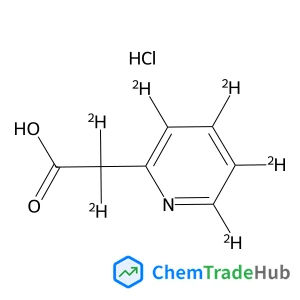
2,2-dideuterio-2-(3,4,5,6-tetradeuterio-2-pyridyl)acetic acid;hydrochloride
CAS Number:
1329799-67-8
Molecular Formula:
C7H2ClD6NO2
phosphoryl}methyl 4-methylbenzenesulfonate structure](https://static.chemtradehub.com/structs/864/864068-45-1-ba7c.webp "{[3-(Hexadecyloxy)propoxy](hydroxy)phosphoryl}methyl 4-methylbenzenesulfonate structure")
{[3-(Hexadecyloxy)propoxy](hydroxy)phosphoryl}methyl 4-methylbenzenesulfonate
CAS Number:
864068-45-1
Molecular Formula:
C27H49O7PS
Recommended Suppliers



Disclaimer
This page provides academic journal information for reference and research purposes only. We are not affiliated with any journal publishers and do not handle publication submissions. For publication-related inquiries, please contact the respective journal publishers directly.
If you notice any inaccuracies in the information displayed, please contact us at support@chemtradehub.com. We will promptly review and address your concerns.