












Parallel ultrafast E–C ring closure and E–Z isomerisation in a photochromic furylfulgide studied by femtosecond time-resolved spectroscopy
Literature Information
Publication Date
2009-05-28
DOI
10.1039/B821344E
Impact Factor
3.676
Authors
Ron Siewertsen, Falk Renth, Friedrich Temps, Frank Sönnichsen
View Original
Abstract
The photo-induced parallel E→C ring closure and E→Z isomerisation reactions of the (E) isomer of the photochromic furylfulgide 2-[1-(2,5-dimethyl-3-furyl)-ethylidene]-3-isopropylidene succinic anhydride (1) in n-hexane have been studied using femtosecond time-resolved spectroscopy. Broadband transient absorption data after femtosecond laser excitation at λpump = 335 nm provide time constants of 100 fs and 250 fs that belong to the formation of the (C) and the (Z) isomers, respectively, to yield a (C):(Z) product ratio of about 2:1. The results are consistent with a conformer-specific photoreaction of the (E)-isomer of 1, where one conformer (α) undergoes predominantly E→C ring closure and the other (β) E→Z isomerisation, or alternatively with an ultrafast branching of the excited wavepacket of the α-conformer within Δt < 250 fs after the pump pulse. The observed isomerisation times suggest that the ensuing transformations proceed via distinctive conical intersections between the respective potential energy hypersurfaces. Oscillations of the transient absorption with frequencies of ≈64 and 114 cm−1 are found and interpreted as excited-state vibrations induced during the E→Z isomerisation reaction. Slower spectral dynamics at delay times up to ≈10 ps reflect the cooling of the vibrationally hot reactant and product molecules after their return to their electronic ground states. Time-dependent DFT calculations were performed to shed light on the reaction coordinates involved. The emerging picture for the dynamics of 1 obtained in this work is of interest in the broader context for our understanding of conformer-specific photochemistry and competing ultrafast reactions in polyatomic molecules.
Recommended Journals
Related Literature
Selective oxidation of alcohols in aqueous suspensions of rhodium ion-modified TiO2 photocatalysts under irradiation of visible light
Sho Kitano, Atsuhiro Tanaka, Keiji Hashimoto, Hiroshi Kominami
2014-05-08
Paper
DOI: 10.1039/C4CP00863D
Theoretical study of thermoelectric properties of few-layer MoS2 and WSe2
Wen Huang, Chee Kwan Gan, Gengchiau Liang
2014-04-14
Paper
DOI: 10.1039/C4CP00487F
Selective adsorption of bismuth telluride nanoplatelets through electrostatic attraction
2014-04-23
Paper
DOI: 10.1039/C4CP00690A
Constructing a mixed π-conjugated bridge to effectively enhance the nonlinear optical response in the Möbius cyclacene-based systems
Liwei Chen, Guangtao Yu, Wei Chen, Chunyun Tu, Xingang Zhao, Xuri Huang
2014-04-04
Paper
DOI: 10.1039/C4CP00733F
Adsorption of linear aliphatic α,ω-dithiols on plasmonic metal nanoparticles: a structural study based on surface-enhanced Raman spectra
I. Izquierdo-Lorenzo, S. Sanchez-Cortes
2014-04-15
Paper
DOI: 10.1039/C4CP00424H
Pressure dependent OH yields in the reactions of CH3CO and HOCH2CO with O2
C. B. M. Groß, T. J. Dillon, J. N. Crowley
2014-04-28
Paper
DOI: 10.1039/C4CP01108B
Molecular self-assembly at nanometer scale modulated surfaces: trimesic acid on Ag(111), Cu(111) and Ag/Cu(111)
Mahdi Sadeghzadeh Baviloliaei, Lars Diekhöner
2014-04-24
Paper
DOI: 10.1039/C4CP01429D
Optical response of quantum-sized Ag and Au clusters – cage vs. compact structures and the remarkable insensitivity to compression
Robert L. Whetten, Xóchitl López-Lozano
2014-05-07
Paper
DOI: 10.1039/C4CP01277A
A quasi-classical trajectory study of the OH + SO reaction: the role of ro-vibrational energy
W. A. D. Pires, J. D. Garrido, M. A. C. Nascimento, M. Y. Ballester
2014-05-02
Paper
DOI: 10.1039/C4CP01363H
Steric matching and the concentration induced self-assembled structural variety of 2,7-bis(n-alkoxy)-9-fluorenone at the aliphatic solvent/graphite interface
Xinrui Miao, Li Xu, Lihua Cui, Wenli Deng
2014-05-01
Paper
DOI: 10.1039/C4CP00871E
You might also like
Compound Q&A
What precautions should be taken when handling 2-Chloro-1,2-bis(4-methylphenyl)ethanone (CAS: 71193-32-3)?
When handling 2-Chloro-1,2-bis(4-methylphenyl)ethanone (CAS: 71193-32-3), it is ...
71193-32-32-Chloro-1,2-bis(4-m...
Compound Q&A
What industries use 4-Ethoxy-3-(5-methyl-4-oxo-7-propyl-1,4-dihydroimidazo[5,1-f][1,2,4]triazin-2-yl)benzenesulfonyl chloride (CAS: 224789-26-8)?
4-Ethoxy-3-(5-methyl-4-oxo-7-propyl-1,4-dihydroimidazo[5,1-f][1,2,4]triazin-2-yl...
224789-26-84-Ethoxy-3-(5-methyl...
Compound Q&A
How should Methyl 3-Oxo-4-Androsten-17-Carboxylate (CAS: 2681-55-2) be stored?
Methyl 3-Oxo-4-Androsten-17-Carboxylate (CAS: 2681-55-2) should be stored in a c...
2681-55-2Methyl 3-Oxo-4-Andro...
Compound Q&A
What are the main uses of (R)-3-Amino-4-(3-hexylphenylamino)-4-oxobutylphosphonic acid (CAS: 909725-61-7)?
(R)-3-Amino-4-(3-hexylphenylamino)-4-oxobutylphosphonic acid is primarily used i...
909725-61-7(R)-3-Amino-4-(3-hex...
Compound Q&A
What regulatory guidelines apply to 2-Methyl-2-propanyl 3-amino-3-carbamoyl-1-azetidinecarboxylate (CAS: 1254120-14-3)?
2-Methyl-2-propanyl 3-amino-3-carbamoyl-1-azetidinecarboxylate (CAS: 1254120-14-...
1254120-14-32-Methyl-2-propanyl ...
Compound Q&A
Are there alternatives to (E)-4-(tert-Butoxy)-4-oxobut-2-enoic acid (CAS: 135355-96-3) in synthesis?
There are alternative reagents that can be used in synthesis instead of (E)-4-(t...
135355-96-3(E)-4-(tert-Butoxy)-...
Compound Q&A
What are the physical and chemical properties of [2-(3-Chlorophenyl)-1,3-thiazol-4-yl]methanol (CAS: 121202-20-8)?
[2-(3-Chlorophenyl)-1,3-thiazol-4-yl]methanol (CAS: 121202-20-8) is a crystallin...
121202-20-8[2-(3-Chlorophenyl)-...
Compound Q&A
What is the market or research trend for Methyl (2S)-[(4S)-2,2-dimethyl-1,3-dioxolan-4-yl]{[(4-methylphenyl)sulfonyl]oxy}acetate (CAS: 166249-17-8)?
The market and research trends for Methyl (2S)-[(4S)-2,2-dimethyl-1,3-dioxolan-4...
166249-17-8Methyl (2S)-[(4S)-2,...
Compound Q&A
What is the market or research trend for 1-Bromo-2-isocyanatoethane (CAS: 42865-19-0)?
The market for 1-Bromo-2-isocyanatoethane (CAS: 42865-19-0) is driven by its use...
42865-19-01-Bromo-2-isocyanato...
Compound Q&A
What are the main uses of 4-Nitro-D-phenylalanine hydrochloride (CAS: 147065-06-3)?
4-Nitro-D-phenylalanine hydrochloride (CAS: 147065-06-3) is primarily used in re...
147065-06-34-Nitro-D-phenylalan...
Source Journal
Physical Chemistry Chemical Physics

CiteScore:
5.5
Self-citation Rate:
10.3%
Articles per Year:
3036
Physical Chemistry Chemical Physics (PCCP) is an international journal co-owned by 19 physical chemistry and physics societies from around the world. This journal publishes original, cutting-edge research in physical chemistry, chemical physics and biophysical chemistry. To be suitable for publication in PCCP, articles must include significant innovation and/or insight into physical chemistry; this is the most important criterion that reviewers and Editors will judge against when evaluating submissions. The journal has a broad scope and welcomes contributions spanning experiment, theory, computation and data science. Topical coverage includes spectroscopy, dynamics, kinetics, statistical mechanics, thermodynamics, electrochemistry, catalysis, surface science, quantum mechanics, quantum computing and machine learning. Interdisciplinary research areas such as polymers and soft matter, materials, nanoscience, energy, surfaces/interfaces, and biophysical chemistry are welcomed if they demonstrate significant innovation and/or insight into physical chemistry. Joined experimental/theoretical studies are particularly appreciated when complementary and based on up-to-date approaches.
Recommended Compounds
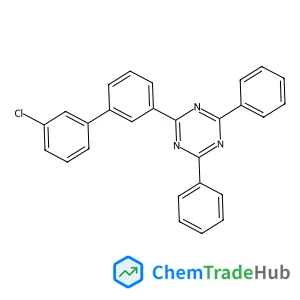
2-(3'-Chlorobiphenyl-3-yl)-4,6-diphenyl-1,3,5-triazine
CAS Number:
1443049-83-9
Molecular Formula:
C27H18ClN3
Recommended Suppliers



Disclaimer
This page provides academic journal information for reference and research purposes only. We are not affiliated with any journal publishers and do not handle publication submissions. For publication-related inquiries, please contact the respective journal publishers directly.
If you notice any inaccuracies in the information displayed, please contact us at support@chemtradehub.com. We will promptly review and address your concerns.