












Surface-enhanced IR–visible sum frequency generation vibrational spectroscopy
Literature Information
Publication Date
2009-02-25
DOI
10.1039/B821045D
Impact Factor
3.676
Authors
Qifeng Li, Chiung Wen Kuo, Zheng Yang, Peilin Chen, Keng C. Chou
View Original
Abstract
Surface-enhanced IR–visible sum frequency generation (SFG) was studied using Ag and Au films over nanospheres (AgFON and AuFON), which provided large area of reproducible nanoscale structures with well-defined morphology. SFG vibrational spectra for a self-assembled monolayer of octadecanethiol were investigated on spheres with diameters ranging from 300 nm to 620 nm. With an input wavelength of 532 nm, a sphere diameter near 360 nm produced the maximum enhancement, which was consistent with the localized surface-plasmon resonant wavelength identified by minimum reflectivity. The measured second-order susceptibility for the asymmetric CH3 stretch mode of octadecanethiol was enhanced by up to 27 times on AgFON, which corresponded to an SFG enhancement factor of ∼730. The SFG enhancement factor for AuFON was a quarter of that from AgFON. The SFG enhancement factor for the symmetric CH3 mode was about 10 times smaller than that for the asymmetric CH3 mode. This difference can be explained by the highly directional electrical-field parallel to the surface, created at the junction between nanospheres. Polarization-dependent studies also indicated that excitations with the electrical field parallel to the surface was the main contribution to the observed surface enhancements, and the electrical field perpendicular to the surface offered little enhancement.
Related Literature
Spectroscopic diagnostic for the ring-size of carbohydrates in the gas phase: furanose and pyranose forms of GalNAc
Baptiste Schindler, Laurent Legentil, Abdul-Rhaman Allouche, Vincent Ferrières
2019-05-23
Paper
DOI: 10.1039/C8CP04082F
Mixtures of LiTFSI and urea: ideal thermodynamic behavior as key to the formation of deep eutectic solvents?
2019-05-23
Paper
DOI: 10.1039/C9CP01440C
Molecular mechanisms of pore formation and membrane disruption by the antimicrobial lantibiotic peptide Mutacin 1140
Rudramani Pokhrel, Nisha Bhattarai, Prabin Baral, Jae H. Park, Martin Handfield
2019-05-24
Paper
DOI: 10.1039/C9CP01558B
Infrared multiple photon dissociation action spectroscopy of protonated glycine, histidine, lysine, and arginine complexed with 18-crown-6 ether
Christopher P. McNary, Y.-W. Nei, Philippe Maitre, M. T. Rodgers, P. B. Armentrout
2019-05-20
Paper
DOI: 10.1039/C9CP02265A
The catalytic mechanism of S-acyltransferases: acylation is triggered on by a loose transition state and deacylation is turned off by a tight transition state
Xia Wang, Grace Mercure Bakanina Kissanga, E. Li, Qiang Li, Jianzhuang Yao
2019-05-17
Paper
DOI: 10.1039/C9CP02248A
On the ligand–core interaction in ligand-protected gold superatoms. Insights from Au25(XR)18 (X = S, Se, Te) via relativistic DFT calculations
2019-05-24
Paper
DOI: 10.1039/C9CP02077B
Single Pt atom supported on penta-graphene as an efficient catalyst for CO oxidation
Ranganathan Krishnan, Shiuan-Yau Wu, Hsin-Tsung Chen
2019-05-20
Paper
DOI: 10.1039/C9CP02306B
Strategies for the analysis of the elemental metal fraction of Ir and Ru oxides via XRD, XANES, and EXAFS
Anita Hamar Reksten, Andrea E. Russell, Peter W. Richardson, Stephen J. Thompson, Karina Mathisen, Frode Seland, Svein Sunde
2019-05-25
Paper
DOI: 10.1039/C9CP01758E
You might also like
Compound Q&A
How should waste containing 2-Ethyl-4-Methyl-1H-Imidazole-5-Carbaldehyde (CAS: 88634-80-4) be handled?
Waste containing 2-Ethyl-4-Methyl-1H-Imidazole-5-Carbaldehyde (CAS: 88634-80-4) ...
88634-80-42-Ethyl-4-Methyl-1H-...
Compound Q&A
What industries use Triethoxy(octyl)silane (CAS: 1385031-14-0)?
Triethoxy(octyl)silane (CAS: 1385031-14-0) is widely used in the pharmaceuticals...
1385031-14-0Triethoxy(octyl)sila...
Compound Q&A
Are there alternatives to 3-iodo-7-nitro-1H-indazole (CAS: 864724-64-1) in synthesis?
Several alternatives to 3-iodo-7-nitro-1H-indazole (CAS: 864724-64-1) exist in t...
864724-64-13-iodo-7-nitro-1H-in...
Compound Q&A
Are there alternatives to Benzene, bis[(trimethoxysilyl)ethyl] (CAS: 266317-71-9) in synthesis?
Yes, there are alternatives to Benzene, bis[(trimethoxysilyl)ethyl] (CAS: 266317...
266317-71-9Benzene, bis[(trimet...
Compound Q&A
Is Isothiazole-3-carbonitrile (CAS: 1452-17-1) safe?
Isothiazole-3-carbonitrile (CAS: 1452-17-1) is generally considered safe when us...
1452-17-1Isothiazole-3-carbon...
Compound Q&A
Is (3-Chlorophenyl)methanol (CAS: 873-63-2) safe?
(3-Chlorophenyl)methanol (CAS: 873-63-2) is considered low to moderately toxic. ...
873-63-2(3-Chlorophenyl)meth...
Compound Q&A
How is (2S,3S)-2-Hydroxy-3-({[(2-methyl-2-propanyl)oxy]carbonyl}amino)-3-(2-naphthyl)propanoic acid (CAS: 959583-98-3) typically synthesized?
(2S,3S)-2-Hydroxy-3-({[(2-methyl-2-propanyl)oxy]carbonyl}amino)-3-(2-naphthyl)pr...
959583-98-3(2S,3S)-2-Hydroxy-3-...
Compound Q&A
What precautions should be taken when handling Methyl 2-(bromomethyl)-5-methoxybenzoate (CAS: 788081-99-2)?
Proper handling of methyl 2-(bromomethyl)-5-methoxybenzoate requires the use of ...
788081-99-2Methyl 2-(bromomethy...
Compound Q&A
What is 6,8-Dibromoimidazo[1,2-a]pyridine-2-carboxylic acid (CAS: 904805-36-3)?
6,8-Dibromoimidazo[1,2-a]pyridine-2-carboxylic acid (CAS: 904805-36-3) is an aro...
904805-36-36,8-Dibromoimidazo[1...
Compound Q&A
Is 3-Amino-5-bromo-2-pyridinecarbonitrile (CAS: 573675-27-1) safe?
3-Amino-5-bromo-2-pyridinecarbonitrile is considered safe when handled under pro...
573675-27-13-Amino-5-bromo-2-py...
Source Journal
Physical Chemistry Chemical Physics

CiteScore:
5.5
Self-citation Rate:
10.3%
Articles per Year:
3036
Physical Chemistry Chemical Physics (PCCP) is an international journal co-owned by 19 physical chemistry and physics societies from around the world. This journal publishes original, cutting-edge research in physical chemistry, chemical physics and biophysical chemistry. To be suitable for publication in PCCP, articles must include significant innovation and/or insight into physical chemistry; this is the most important criterion that reviewers and Editors will judge against when evaluating submissions. The journal has a broad scope and welcomes contributions spanning experiment, theory, computation and data science. Topical coverage includes spectroscopy, dynamics, kinetics, statistical mechanics, thermodynamics, electrochemistry, catalysis, surface science, quantum mechanics, quantum computing and machine learning. Interdisciplinary research areas such as polymers and soft matter, materials, nanoscience, energy, surfaces/interfaces, and biophysical chemistry are welcomed if they demonstrate significant innovation and/or insight into physical chemistry. Joined experimental/theoretical studies are particularly appreciated when complementary and based on up-to-date approaches.
Recommended Compounds
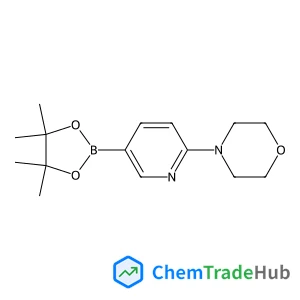
4-(5-(4,4,5,5-tetramethyl-1,3,2-dioxaborolan-2-yl)pyridin-2-yl)morpholine
CAS Number:
485799-04-0
Molecular Formula:
C15H23BN2O3
Recommended Suppliers






Disclaimer
This page provides academic journal information for reference and research purposes only. We are not affiliated with any journal publishers and do not handle publication submissions. For publication-related inquiries, please contact the respective journal publishers directly.
If you notice any inaccuracies in the information displayed, please contact us at support@chemtradehub.com. We will promptly review and address your concerns.