












On the ligand–core interaction in ligand-protected gold superatoms. Insights from Au25(XR)18 (X = S, Se, Te) via relativistic DFT calculations
Literature Information
Publication Date
2019-05-24
DOI
10.1039/C9CP02077B
Impact Factor
3.676
Authors
View Original
Abstract
The stabilization of gold nanoparticles by using thiolate-based ligands is a relevant issue in the design of functional nanostructures. Superatomic clusters, through the prominent Au25(SR)18 aggregate, offer a prototypical template to deepen the understanding of the different behaviors gained by the inclusion of different chalcogen atoms at the ligand layer. Through the study of [Au25(XMe)18]− (X = S, Se and Te), our results revealed that the bonding between the formally [Au13]5+ core and the protecting layer (PL), further involves the unoccupied 1D-, 1F- and 2S-[Au13] superatomic shells, acting as a charge acceptor in the PL → Au13 charge transfer upon formation of the cluster. In addition, the optical properties showed an increase in the Stokes shift between the S0 → S1 excitation, and S0 ← S1 emission, going from –SMe to –TeMe, owing to a more distorted core in the excited state for the heavier counterpart. The approach here employed expands the bonding picture between the [Au13]5+ and the protecting layer between different anchor atoms, in addition to the formal ionic description of an isolated core. These findings seek to enhance our understanding of bonding, and the optical characteristic resulting from the use of heavier chalcogen atoms in the protecting layer, which can be employed as design guidelines to incorporate or modify the molecular properties towards the synthesis of ligand-protected gold clusters.
Recommended Journals
Related Literature
Correction: Synthesis and properties of block copolymers composed of norbornene/higher α-olefin gradient segments using ansa-fluorenylamidodimethyltitanium-[Ph3C][B(C6F5)4] catalyst system
Haobo Yuan, Takumitsu Kida, Ryo Tanaka, Zhengguo Cai, Yuushou Nakayama, Takeshi Shiono
2021-01-21
Correction
DOI: 10.1039/D1PY90010B
Stimuli-responsive non-ionic Gemini amphiphiles for drug delivery applications
Rashmi, Abhishek K. Singh, Katharina Achazi, Christoph Böttcher, Rainer Haag, Sunil K. Sharma
2020-09-29
Paper
DOI: 10.1039/D0PY01040E
One-step synthesis of well-dispersed polypyrrole copolymers under gamma-ray irradiation
Yuqing Qiao, Yusen Meng, Ming Yu, Bowu Zhang
2021-01-21
Communication
DOI: 10.1039/D0PY01566K
Polymerization-induced self-assembly via RAFT in emulsion: effect of Z-group on the nucleation step
Thiago R. Guimarães, Y. Loong Bong, Steven W. Thompson, Graeme Moad, Per B. Zetterlund
2020-10-16
Paper
DOI: 10.1039/D0PY01311K
Biobased thermosensitive polyrotaxanes constructed by polymerization of cyclodextrin-triterpenoid inclusion complexes
Jiawei Li, Xia Yu, Yiran Zhao, Hao Zhang, Jun Hu
2020-09-09
Paper
DOI: 10.1039/D0PY00966K
Syntheses, characterization, multi-acid fluorescence sensing and electroluminescence properties of Cr(ii)-based metallopolymers
Anil Kumar, Shubham Bawa, Kapil Ganorkar, Sujit Kumar Ghosh, Anasuya Bandyopadhyay
2020-09-09
Paper
DOI: 10.1039/D0PY00953A
Ultra-thin patchy polymer-coated graphene oxide as a novel anticancer drug carrier
Pramith Priyananda
2020-07-22
Paper
DOI: 10.1039/D0PY00769B
Substituted glycolides from natural sources: preparation, alcoholysis and polymerization
Andrey V. Shlyakhtin, Vladimir V. Bagrov, Pavel D. Komarov, Andrei V. Churakov
2020-10-12
Paper
DOI: 10.1039/D0PY01297A
You might also like
Compound Q&A
What are the main uses of 1H-Indazole-6-carbonitrile (CAS: 141290-59-7)?
1H-Indazole-6-carbonitrile finds applications in pharmaceuticals, where it serve...
141290-59-71H-Indazole-6-carbon...
Compound Q&A
How should waste containing Dioctyl (2E)-2-butenedioate (CAS: 2997-85-5) be handled?
Waste containing Dioctyl (2E)-2-butenedioate (CAS: 2997-85-5) should be collecte...
2997-85-5Dioctyl (2E)-2-buten...
Compound Q&A
What industries use Sodium [(1,2-benzoxazol-3-ylmethyl)sulfonyl]azanide (CAS: 68291-98-5)?
Sodium [(1,2-benzoxazol-3-ylmethyl)sulfonyl]azanide is primarily used in pharmac...
68291-98-5Sodium [(1,2-benzoxa...
Compound Q&A
Are there alternatives to Dimethyl 4-(4,4,5,5-tetramethyl-1,3,2-dioxaborolan-2-yl)-2,6-pyridinedicarboxylate (CAS: 741709-66-0) in synthesis?
Dimethyl 4-(4,4,5,5-tetramethyl-1,3,2-dioxaborolan-2-yl)-2,6-pyridinedicarboxyla...
741709-66-0Dimethyl 4-(4,4,5,5-...
Compound Q&A
How should waste containing 2-Fluoro-6-hydrazinopyridine (CAS: 80714-39-2) be handled?
Waste containing 2-Fluoro-6-hydrazinopyridine (CAS: 80714-39-2) should be manage...
80714-39-22-Fluoro-6-hydrazino...
Compound Q&A
What is 6-Formyl-2-pyridinecarboxylic acid (CAS: 499214-11-8)?
6-Formyl-2-pyridinecarboxylic acid is an organic compound with the molecular for...
499214-11-86-Formyl-2-pyridinec...
Compound Q&A
What is the market or research trend for 3-(3,4-dimethoxyphenyl)-2,5-dimethyl-N-(2-morpholin-4-ylethyl)pyrazolo[1,5-a]pyrimidin-7-amine (CAS: 900874-91-1)?
Research trends for this compound indicate a focus on its potential applications...
900874-91-13-(3,4-dimethoxyphen...
Compound Q&A
How is 9H-Tribenzo[b,d,f]azepine (CAS: 29875-73-8) typically synthesized?
9H-Tribenzo[b,d,f]azepine is typically synthesized via a multi-step process invo...
29875-73-89H-Tribenzo[b,d,f]az...
Compound Q&A
How is 1-Cyclopropyl-7-ethoxy-6-fluoro-8-methoxy-4-oxo-1,4-dihydro-3-quinolinecarboxylic acid (CAS: 1797982-51-4) typically synthesized?
1-Cyclopropyl-7-ethoxy-6-fluoro-8-methoxy-4-oxo-1,4-dihydro-3-quinolinecarboxyli...
1797982-51-41-Cyclopropyl-7-etho...
Compound Q&A
How should waste containing Methyl 3-oxo-1,2,3,4-tetrahydro-6-quinoxalinecarboxylate (CAS: 671820-52-3) be handled?
Waste containing Methyl 3-oxo-1,2,3,4-tetrahydro-6-quinoxalinecarboxylate (CAS: ...
671820-52-3Methyl 3-oxo-1,2,3,4...
Source Journal
Physical Chemistry Chemical Physics

CiteScore:
5.5
Self-citation Rate:
10.3%
Articles per Year:
3036
Physical Chemistry Chemical Physics (PCCP) is an international journal co-owned by 19 physical chemistry and physics societies from around the world. This journal publishes original, cutting-edge research in physical chemistry, chemical physics and biophysical chemistry. To be suitable for publication in PCCP, articles must include significant innovation and/or insight into physical chemistry; this is the most important criterion that reviewers and Editors will judge against when evaluating submissions. The journal has a broad scope and welcomes contributions spanning experiment, theory, computation and data science. Topical coverage includes spectroscopy, dynamics, kinetics, statistical mechanics, thermodynamics, electrochemistry, catalysis, surface science, quantum mechanics, quantum computing and machine learning. Interdisciplinary research areas such as polymers and soft matter, materials, nanoscience, energy, surfaces/interfaces, and biophysical chemistry are welcomed if they demonstrate significant innovation and/or insight into physical chemistry. Joined experimental/theoretical studies are particularly appreciated when complementary and based on up-to-date approaches.
Recommended Compounds
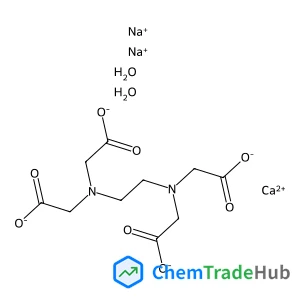
EthylenediaminetetraaceticacidcalciumDisodiumsalthydrate
CAS Number:
23411-34-9
Molecular Formula:
C10H16CaN2Na2O10
Recommended Suppliers







Disclaimer
This page provides academic journal information for reference and research purposes only. We are not affiliated with any journal publishers and do not handle publication submissions. For publication-related inquiries, please contact the respective journal publishers directly.
If you notice any inaccuracies in the information displayed, please contact us at support@chemtradehub.com. We will promptly review and address your concerns.