


High throughput single molecule detection for monitoring biochemical reactions
Literature Information
Publication Date
2008-11-24
DOI
10.1039/B816383A
Impact Factor
4.616
Authors
Paul I. Okagbare
View Original
Abstract
The design, performance and application of a novel optical system for high throughput single molecule detection (SMD) configured in a continuous flow format using microfluidics is reported. The system consisted of a microfabricated polymer-based multi-channel fluidic network situated within the optical path of a laser source (λex = 660 nm) with photon transduction accomplished using an electron-multiplying charge coupled device (EMCCD) operated in a frame transfer mode that allowed tracking single molecules as they passed through a large field-of-view (FoV) illumination zone. The microfluidic device consisted of 30 microchannels possessing dimensions of 30 µm (width) × 20 µm (depth) with a 25 µm pitch. Individual molecules were electrokinetically driven through the fluidic network and excited within the wide-field illumination area with the resulting fluorescence collected via an objective and imaged onto the EMCCD camera. The detection system demonstrated sufficient sensitivity to detect single DNA molecules labeled with a fluorescent tag (AlexaFluor 660) identified through their characteristic emission wavelength and the burst of photons produced during their transit through the excitation volume. In its present configuration and fluidic architecture, the sample processing throughput was ∼4.02 × 10⁵ molecules s−1, but could be increased dramatically through the use of narrower channels and a smaller pitch. The system was further evaluated using a single molecule-based fluorescence quenching assay for measuring the population differences between duplexed and single-stranded DNA molecules as a function of temperature for determining the duplex melting temperature, Tm.
Recommended Journals

Drug Discovery Today

Acta Materialia

Russian Journal of Organic Chemistry

Journal of Peptide Science

Russian Journal of General Chemistry

Chemistry Education Research and Practice

Current Opinion in Solid State & Materials Science

Russian Chemical Bulletin

Current Opinion in Colloid & Interface Science

Journal of Saudi Chemical Society
Related Literature
Temperature driven p–n–p type conduction switching materials: current trends and future directions
Satya N. Guin, Kanishka Biswas
2015-03-19
Perspective
DOI: 10.1039/C4CP06088A
Rydberg and valence state excitation dynamics: a velocity map imaging study involving the E–V state interaction in HBr
Dimitris Zaouris, Andreas Kartakoullis, Pavle Glodic, Peter C. Samartzis, Helgi Rafn Hróðmarsson, Ágúst Kvaran
2015-03-16
Paper
DOI: 10.1039/C5CP00748H
Interactions of CO2 with various functional molecules
Han Myoung Lee, Il Seung Youn, Muhammad Saleh, Jung Woo Lee, Kwang S. Kim
2015-03-20
Paper
DOI: 10.1039/C5CP00673B
Preparation of Ni@C–Cd0.8Zn0.2S nanocomposites with highly efficient and stable photocatalytic hydrogen production activity
Jinyan Liu, Chuansheng Zhuang, Kan Li, Tianyou Peng
2015-03-12
Paper
DOI: 10.1039/C5CP00565E
A computational mechanistic investigation of hydrogen production in water using the [RhIII(dmbpy)2Cl2]+/[RuII(bpy)3]2+/ascorbic acid photocatalytic system
Megumi Kayanuma, Chantal Daniel, Fabrice Odobel
2015-03-12
Paper
DOI: 10.1039/C4CP04949G
A fluorescent receptor for halide recognition: clues for the design of anion chemosensors
Andrea Bencini, Claudia Giorgi, Vito Lippolis, Pier Remigio Salvi
2015-03-16
Paper
DOI: 10.1039/C5CP00131E
Electron capture dissociation and drift tube ion mobility-mass spectrometry coupled with site directed mutations provide insights into the conformational diversity of a metamorphic protein
Sophie R. Harvey, Massimiliano Porrini, Robert C. Tyler, Cait E. MacPhee, Brian F. Volkman, Perdita E. Barran
2015-03-12
Paper
DOI: 10.1039/C4CP05136J
Structure-dependent water transport across nanopores of carbon nanotubes: toward selective gating upon temperature regulation
Kuiwen Zhao, Huiying Wu
2015-03-17
Communication
DOI: 10.1039/C4CP06054G
Energy flow between spectral components in 2D broadband stimulated Raman spectroscopy
G. Fumero, S. Mukamel
2015-03-12
Paper
DOI: 10.1039/C4CP05361C
Tuning the reactivity of a dissociative force field: proton transfer properties of aqueous H3O+ and their dependence on the three-body interaction
Martin J. Wiedemair, Manuel Hitzenberger, Thomas S. Hofer
2015-03-20
Paper
DOI: 10.1039/C4CP05607H
You might also like
Compound Q&A
Is 2-(2-chloroacetamido)-3-phenylpropanoic acid (CAS: 7765-11-9) safe?
2-(2-Chloroacetamido)-3-phenylpropanoic acid (CAS: 7765-11-9) is generally consi...
7765-11-92-(2-chloroacetamido...
Compound Q&A
Is 2-(Benzyloxy)-5-bromobenzoic acid (CAS: 62176-31-2) safe?
2-(Benzyloxy)-5-bromobenzoic acid can be handled safely if appropriate precautio...
62176-31-22-(Benzyloxy)-5-brom...
Compound Q&A
What is (4-Methyl-1,2,5-oxadiazol-3-yl)methanamine hydrochloride (CAS: 1159825-48-5)?
(4-Methyl-1,2,5-oxadiazol-3-yl)methanamine hydrochloride is a chemical compound ...
1159825-48-5(4-Methyl-1,2,5-oxad...
Compound Q&A
What is 2-(5-Hexylthiophen-2-yl)-4,4,5,5-tetramethyl-1,3,2-dioxaborolane (CAS: 917985-54-7)?
2-(5-Hexylthiophen-2-yl)-4,4,5,5-tetramethyl-1,3,2-dioxaborolane (CAS: 917985-54...
917985-54-72-(5-Hexylthiophen-2...
Compound Q&A
Are there alternatives to 4-(8-Methyl-9H-1,3-dioxolo[4,5-h][2,3]benzodiazepin-5-yl)benzenamine (CAS: 102771-26-6) in synthesis?
While 4-(8-Methyl-9H-1,3-dioxolo[4,5-h][2,3]benzodiazepin-5-yl)benzenamine (CAS:...
102771-26-64-(8-Methyl-9H-1,3-d...
Compound Q&A
What is the market or research trend for tert-butyl 3-hydroxy-4,5,7,8-tetrahydro-2H-pyrazolo[3,4-d]azepine-6-carboxylate (CAS: 851376-80-2)?
The market for tert-butyl 3-hydroxy-4,5,7,8-tetrahydro-2H-pyrazolo[3,4-d]azepine...
851376-80-2tert-butyl 3-hydroxy...
Compound Q&A
How should waste containing 3,5-Diamino-1H-pyrazole-4-carbonitrile (CAS: 6844-58-2) be handled?
Waste containing 3,5-Diamino-1H-pyrazole-4-carbonitrile (CAS: 6844-58-2) should ...
6844-58-23,5-Diamino-1H-pyraz...
Compound Q&A
How is (6-Fluoro-3-pyridinyl)boronic acid (CAS: 351019-18-6) typically synthesized?
(6-Fluoro-3-pyridinyl)boronic acid can be synthesized through the reaction of 6-...
351019-18-6(6-Fluoro-3-pyridiny...
Compound Q&A
What industries use Dibenzyl carbonimidoylbiscarbamate (CAS: 10065-79-9)?
Dibenzyl carbonimidoylbiscarbamate (CAS: 10065-79-9) finds applications in vario...
10065-79-9Dibenzyl carbonimido...
Compound Q&A
What is the market or research trend for (beta,beta,2,3,4,5,6-~2~H_7_)Phenylalanine (CAS: 74228-83-4)?
The market for (beta,beta,2,3,4,5,6-~2~H_7_)Phenylalanine (CAS: 74228-83-4) is g...
74228-83-4(beta,beta,2,3,4,5,6...
Source Journal
Analyst

CiteScore:
7.8
Self-citation Rate:
5.6%
Articles per Year:
653
Analyst publishes analytical and bioanalytical research that reports premier fundamental discoveries and inventions, and the applications of those discoveries, unconfined by traditional discipline barriers.
Recommended Compounds
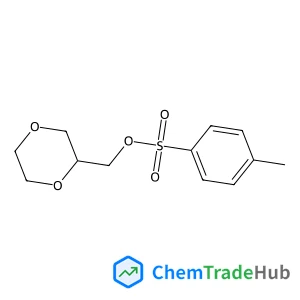
(S)-(1,4-Dioxan-2-yl)methyl 4-methylbenzenesulfonate
CAS Number:
917882-64-5
Molecular Formula:
C12H16O5S
Recommended Suppliers





Disclaimer
This page provides academic journal information for reference and research purposes only. We are not affiliated with any journal publishers and do not handle publication submissions. For publication-related inquiries, please contact the respective journal publishers directly.
If you notice any inaccuracies in the information displayed, please contact us at support@chemtradehub.com. We will promptly review and address your concerns.