


Molecular imaging of polyimide formation
Literature Information
Publication Date
2009-01-15
DOI
10.1039/B815544P
Impact Factor
3.676
Authors
Matthias Treier, Roman Fasel, Neil R. Champness, Stephen Argent, Neville V. Richardson
View Original
Abstract
The reactions of 3,4,9,10-perylenetetracarboxylic dianhydride with 4,4′-diamino-p-terphenyl and with 2,4,6-tris(4-aminophenyl)-1,3,5-triazine on an Au(111) surface have been followed by low-temperature UHV-STM in the range of 300 to 700 K at coverages of up to one monolayer. Well-ordered, H-bonded structures are observed even after annealing at temperatures up to 470 K, while above 550 K reaction is initiated with evidence of amic acid intermediates. At higher temperatures, full imidisation leads to a covalently linked, surface polyimide networks. There is evidence of gold reconstruction playing a role in the early stages of imidisation and signs of limited order in the final polyimide. With the diamine as precursor, 1D-interconnectivity results, while with the triamine as partner, full 2D-connectivity is possible. In contrast to the situation in the bulk, the intermediate amic acid seems to be less stable and iso-imides are common in the final networks, as witnessed by the conformation of the product and the prevalence of triangular features in the case of the polyimide formed from the triamine precursor.
Recommended Journals

Nature

Pure and Applied Chemistry

Journal of Medicinal Chemistry

Helvetica Chimica Acta

Israel Journal of Chemistry

Proceedings of the National Academy of Sciences of the United States of America

Journal of Catalysis

Journal of Heterocyclic Chemistry

Journal of Organometallic Chemistry

Journal of Physics and Chemistry of Solids
Related Literature
From nucleobase to DNA templates for precision supramolecular assemblies and synthetic polymers
2016-05-27
Minireview
DOI: 10.1039/C6PY00480F
Nanopatterned L10-FePt nanoparticles from single-source metallopolymer precursors for potential application in ferromagnetic bit-patterned media magnetic recording
Zhengong Meng, Guijun Li, Sheung-Mei Ng, Hon-Fai Wong, Sze-Chun Yiu, Chi-Wah Leung
2016-06-01
Paper
DOI: 10.1039/C6PY00714G
Enhanced drug toxicity by conjugation of platinum drugs to polymers with guanidine containing zwitterionic functional groups that mimic cell-penetrating peptides
Robert H. Utama, Hongxu Lu, Martina H. Stenzel
2014-08-07
Paper
DOI: 10.1039/C4PY00802B
Chain-growth cationic polymerization of 2-halogenated thiophenes promoted by Brønsted acids
Arumugam Balasubramanian, Ting-Chia Ku, Hong-Pin Shih, Alishetty Suman, Huang-Jyun Lin, Ting-Wen Shih, Chien-Chung Han
2014-06-16
Paper
DOI: 10.1039/C4PY00521J
Synthesis of antimicrobial block copolymers bearing immobilized bacteriostatic groups
N. D. Koromilas, G. Vasilopoulos, A. Vantarakis
2016-04-25
Paper
DOI: 10.1039/C6PY00553E
Synthesis and properties of a well-defined copolymer of chlorotrifluoroethylene and N-vinylpyrrolidone by xanthate-mediated radical copolymerization under 60Co γ-ray irradiation
Pucheng Wang, Jingwen Dai, Lei Liu, Qibao Dong, Hu Wang, Ruke Bai
2014-07-24
Paper
DOI: 10.1039/C4PY00902A
Synthesis of poly(vinylidene fluoride-co-bromotrifluoroethylene) and effects of molecular defects on microstructure and dielectric properties
Matthew R. Gadinski, Chalatorn Chanthad, Kuo Han, Lijie Dong, Qing Wang
2014-06-26
Paper
DOI: 10.1039/C4PY00690A
Design, synthesis and photovoltaic properties of two π-bridged cyclopentadithiophene-based polymers
Manjun Xiao, Xichang Bao, Liangliang Han, Ning Wang, Shuguang Wen, Weiguo Zhu, Renqiang Yang
2014-07-29
Paper
DOI: 10.1039/C4PY00881B
Modular segmented hyperbranched copolymers
Patricia R. Bachler, Kaitlyn E. Forry, Chelsea A. Sparks, Michael D. Schulz, Kenneth B. Wagener, Brent S. Sumerlin
2016-06-06
Communication
DOI: 10.1039/C6PY00819D
You might also like
Compound Q&A
Are there alternatives to 1-(4-Chlorophenyl)-N-hydroxymethanimine (CAS: 3848-36-0) in synthesis?
When considering alternatives to 1-(4-Chlorophenyl)-N-hydroxymethanimine (CAS: 3...
3848-36-01-(4-Chlorophenyl)-N...
Compound Q&A
How should (1R,9S,10S,12S,14E,16S,19R,20R,21S,22R)-3,9,21-Trihydroxy-5,10,12,14,16,20,22-heptamethyl-23,24-dioxatetracyclo[17.3.1.1~6,9~.0~2,7~]tetracosa-2,5,7,14-tetraen-4-one (CAS: 183202-73-5) be stored?
This compound should be stored in a cool, dry place away from direct sunlight. I...
183202-73-5(1R,9S,10S,12S,14E,1...
Compound Q&A
How is 3-(4-Bromophenyl)-5-(2-fluorophenyl)-1,2,4-oxadiazole (CAS: 419553-16-5) typically synthesized?
3-(4-Bromophenyl)-5-(2-fluorophenyl)-1,2,4-oxadiazole is synthesized through a m...
419553-16-53-(4-Bromophenyl)-5-...
Compound Q&A
How is 5-Chloro-2-(4-chlorophenyl)-4-methyl-6-[3-(1-piperidinyl)propoxy]pyrimidine (CAS: 1639220-19-1) typically synthesized?
5-Chloro-2-(4-chlorophenyl)-4-methyl-6-[3-(1-piperidinyl)propoxy]pyrimidine (CAS...
1639220-19-15-Chloro-2-(4-chloro...
Compound Q&A
What industries use 2-Chloro-4-(difluoromethoxy)pyridine (CAS: 1206978-15-5)?
2-Chloro-4-(difluoromethoxy)pyridine is used in the pharmaceutical industry for ...
1206978-15-52-Chloro-4-(difluoro...
Compound Q&A
What regulatory guidelines apply to 3-Chloro-6-methylpyridazine (CAS: 1121-79-5)?
3-Chloro-6-methylpyridazine (CAS: 1121-79-5) is classified under the Globally Ha...
1121-79-53-Chloro-6-methylpyr...
Compound Q&A
Are there alternatives to Methyl 4,5-dimethyl-2-nitrobenzoate in synthesis?
Several alternatives can be used in the synthesis of Methyl 4,5-dimethyl-2-nitro...
90922-74-0Methyl 4,5-dimethyl-...
Compound Q&A
Are there alternatives to (2E,2'E)-3,3'-(1,4-Phenylene)bisacrylaldehyde in synthesis?
Alternatives to (2E,2'E)-3,3'-(1,4-Phenylene)bisacrylaldehyde include other acry...
63405-68-5(2E,2'E)-3,3'-(1,4-P...
Compound Q&A
What is 3-Amino-5-chloropyridin-2-ol hydrochloride (CAS: 1261906-29-9)?
3-Amino-5-chloropyridin-2-ol hydrochloride is an organic compound with the CAS n...
1261906-29-93-Amino-5-chloropyri...
Compound Q&A
What precautions should be taken when handling 6,7-Difluoro-2,3-dihydro-4H-chromen-4-one (CAS: 1092349-93-3)?
When handling 6,7-Difluoro-2,3-dihydro-4H-chromen-4-one, it is essential to wear...
1092349-93-36,7-Difluoro-2,3-dih...
Source Journal
Physical Chemistry Chemical Physics

CiteScore:
5.5
Self-citation Rate:
10.3%
Articles per Year:
3036
Physical Chemistry Chemical Physics (PCCP) is an international journal co-owned by 19 physical chemistry and physics societies from around the world. This journal publishes original, cutting-edge research in physical chemistry, chemical physics and biophysical chemistry. To be suitable for publication in PCCP, articles must include significant innovation and/or insight into physical chemistry; this is the most important criterion that reviewers and Editors will judge against when evaluating submissions. The journal has a broad scope and welcomes contributions spanning experiment, theory, computation and data science. Topical coverage includes spectroscopy, dynamics, kinetics, statistical mechanics, thermodynamics, electrochemistry, catalysis, surface science, quantum mechanics, quantum computing and machine learning. Interdisciplinary research areas such as polymers and soft matter, materials, nanoscience, energy, surfaces/interfaces, and biophysical chemistry are welcomed if they demonstrate significant innovation and/or insight into physical chemistry. Joined experimental/theoretical studies are particularly appreciated when complementary and based on up-to-date approaches.
Recommended Compounds
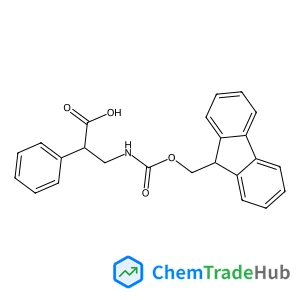
(S)-3-((((9H-Fluoren-9-yl)methoxy)carbonyl)amino)-2-phenylpropanoic acid
CAS Number:
1217663-60-9
Molecular Formula:
C24H21NO4
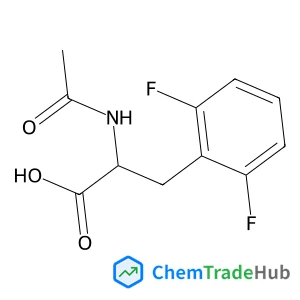
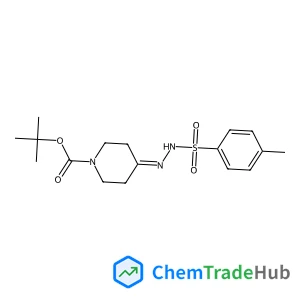
tert-Butyl 4-(2-(p-Tolylsulfonyl)hydrazono)piperidine-1-carboxylate
CAS Number:
1046478-89-0
Molecular Formula:
C17H25N3O4S
Recommended Suppliers





Disclaimer
This page provides academic journal information for reference and research purposes only. We are not affiliated with any journal publishers and do not handle publication submissions. For publication-related inquiries, please contact the respective journal publishers directly.
If you notice any inaccuracies in the information displayed, please contact us at support@chemtradehub.com. We will promptly review and address your concerns.