


Hydrides and dimers of C58 fullerenes: structures and stabilities
Literature Information
Publication Date
2008-12-17
DOI
10.1039/B814256D
Impact Factor
3.676
Authors
View Original
Abstract
A density functional theory (DFT) study of fullerene hydrides C58H2x (2x = 2,4,…,34) is presented. We consider two relevant isomers, the most stable classical isomer C58–C3v and the energetically close non-classical isomer C58–Cs, which contains a heptagonal ring. Iterative pairwise addition of hydrogen atoms to only the energetically favoured products of the previous iteration yields a set of low energy structures for each composition. From these, low energy pathways are extracted. Analysis of the C–H binding energies along the reaction pathways is performed to identify particularly stable hydride compositions. These are 2x = 6,18,28,34 for C58–Cs and 2x = 10,26,30 for C58–C3v. We therefore suggest that these hydrides are preferably formed in hydrogenation experiments and that it should be possible to distinguish between the two C58 isomers. We further investigate the dimer formation based on low energy C58H2 addition patterns. All dimers show binding energies of more than 1 eV whereby dispersion interactions play a significant role. Both C58 isomers can also undergo further aggregation. This leads us to the conclusion that in the absence of other reactant molecules C58 will form intercage bonds and cannot be isolated in molecular form, which is in accordance with experimental results.
Recommended Journals

Proceedings of the National Academy of Sciences of the United States of America

European Journal of Wood and Wood Products

Journal of Heterocyclic Chemistry

Russian Chemical Reviews

Organic Preparations and Procedures International

Journal of Medicinal Chemistry

Israel Journal of Chemistry

Journal of Catalysis

Journal of Physics and Chemistry of Solids

Helvetica Chimica Acta
Related Literature
Enhancing the melt stability of polylactide stereocomplexes using a solid-state cross-linking strategy during a melt-blending process
Huili Liu, Dongyu Bai, Qin Zhang, Ke Wang, Hua Deng, Feng Chen, Qiang Fu
2014-06-19
Paper
DOI: 10.1039/C4PY00700J
Bespoke cationic nano-objects via RAFT aqueous dispersion polymerisation
M. Williams, N. J. W. Penfold, J. R. Lovett, N. J. Warren, C. W. I. Douglas, N. Doroshenko, P. Verstraete, J. Smets, S. P. Armes
2016-05-12
Paper
DOI: 10.1039/C6PY00696E
Fabrication of honeycomb films from highly functional dendritic structures: electrostatic force driven immobilization of biomolecules
A. S. De León, S. Malhotra, M. Molina, A. Muñoz-Bonilla, J. Rodríguez-Hernández
2016-05-23
Paper
DOI: 10.1039/C6PY00601A
Synthesis and biomedical applications of functional poly(α-hydroxyl acid)s
Yun Yu, Jiong Zou, Chong Cheng
2014-07-10
Review Article
DOI: 10.1039/C4PY00667D
A multi-step template-assisted approach for the formation of conducting polymer nanotubes onto conducting polymer films
Aureli Calvet
2016-04-25
Paper
DOI: 10.1039/C6PY00437G
You might also like
Compound Q&A
Are there alternatives to 1-(4-Chlorophenyl)-N-hydroxymethanimine (CAS: 3848-36-0) in synthesis?
When considering alternatives to 1-(4-Chlorophenyl)-N-hydroxymethanimine (CAS: 3...
3848-36-01-(4-Chlorophenyl)-N...
Compound Q&A
How should (1R,9S,10S,12S,14E,16S,19R,20R,21S,22R)-3,9,21-Trihydroxy-5,10,12,14,16,20,22-heptamethyl-23,24-dioxatetracyclo[17.3.1.1~6,9~.0~2,7~]tetracosa-2,5,7,14-tetraen-4-one (CAS: 183202-73-5) be stored?
This compound should be stored in a cool, dry place away from direct sunlight. I...
183202-73-5(1R,9S,10S,12S,14E,1...
Compound Q&A
How is 3-(4-Bromophenyl)-5-(2-fluorophenyl)-1,2,4-oxadiazole (CAS: 419553-16-5) typically synthesized?
3-(4-Bromophenyl)-5-(2-fluorophenyl)-1,2,4-oxadiazole is synthesized through a m...
419553-16-53-(4-Bromophenyl)-5-...
Compound Q&A
How is 5-Chloro-2-(4-chlorophenyl)-4-methyl-6-[3-(1-piperidinyl)propoxy]pyrimidine (CAS: 1639220-19-1) typically synthesized?
5-Chloro-2-(4-chlorophenyl)-4-methyl-6-[3-(1-piperidinyl)propoxy]pyrimidine (CAS...
1639220-19-15-Chloro-2-(4-chloro...
Compound Q&A
What industries use 2-Chloro-4-(difluoromethoxy)pyridine (CAS: 1206978-15-5)?
2-Chloro-4-(difluoromethoxy)pyridine is used in the pharmaceutical industry for ...
1206978-15-52-Chloro-4-(difluoro...
Compound Q&A
What regulatory guidelines apply to 3-Chloro-6-methylpyridazine (CAS: 1121-79-5)?
3-Chloro-6-methylpyridazine (CAS: 1121-79-5) is classified under the Globally Ha...
1121-79-53-Chloro-6-methylpyr...
Compound Q&A
Are there alternatives to Methyl 4,5-dimethyl-2-nitrobenzoate in synthesis?
Several alternatives can be used in the synthesis of Methyl 4,5-dimethyl-2-nitro...
90922-74-0Methyl 4,5-dimethyl-...
Compound Q&A
Are there alternatives to (2E,2'E)-3,3'-(1,4-Phenylene)bisacrylaldehyde in synthesis?
Alternatives to (2E,2'E)-3,3'-(1,4-Phenylene)bisacrylaldehyde include other acry...
63405-68-5(2E,2'E)-3,3'-(1,4-P...
Compound Q&A
What is 3-Amino-5-chloropyridin-2-ol hydrochloride (CAS: 1261906-29-9)?
3-Amino-5-chloropyridin-2-ol hydrochloride is an organic compound with the CAS n...
1261906-29-93-Amino-5-chloropyri...
Compound Q&A
What precautions should be taken when handling 6,7-Difluoro-2,3-dihydro-4H-chromen-4-one (CAS: 1092349-93-3)?
When handling 6,7-Difluoro-2,3-dihydro-4H-chromen-4-one, it is essential to wear...
1092349-93-36,7-Difluoro-2,3-dih...
Source Journal
Physical Chemistry Chemical Physics

CiteScore:
5.5
Self-citation Rate:
10.3%
Articles per Year:
3036
Physical Chemistry Chemical Physics (PCCP) is an international journal co-owned by 19 physical chemistry and physics societies from around the world. This journal publishes original, cutting-edge research in physical chemistry, chemical physics and biophysical chemistry. To be suitable for publication in PCCP, articles must include significant innovation and/or insight into physical chemistry; this is the most important criterion that reviewers and Editors will judge against when evaluating submissions. The journal has a broad scope and welcomes contributions spanning experiment, theory, computation and data science. Topical coverage includes spectroscopy, dynamics, kinetics, statistical mechanics, thermodynamics, electrochemistry, catalysis, surface science, quantum mechanics, quantum computing and machine learning. Interdisciplinary research areas such as polymers and soft matter, materials, nanoscience, energy, surfaces/interfaces, and biophysical chemistry are welcomed if they demonstrate significant innovation and/or insight into physical chemistry. Joined experimental/theoretical studies are particularly appreciated when complementary and based on up-to-date approaches.
Recommended Compounds
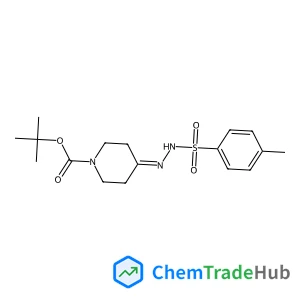
tert-Butyl 4-(2-(p-Tolylsulfonyl)hydrazono)piperidine-1-carboxylate
CAS Number:
1046478-89-0
Molecular Formula:
C17H25N3O4S
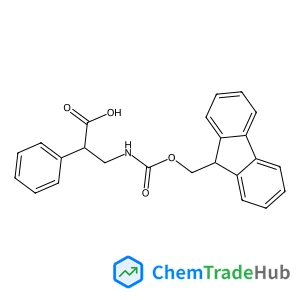
(S)-3-((((9H-Fluoren-9-yl)methoxy)carbonyl)amino)-2-phenylpropanoic acid
CAS Number:
1217663-60-9
Molecular Formula:
C24H21NO4
Recommended Suppliers





Disclaimer
This page provides academic journal information for reference and research purposes only. We are not affiliated with any journal publishers and do not handle publication submissions. For publication-related inquiries, please contact the respective journal publishers directly.
If you notice any inaccuracies in the information displayed, please contact us at support@chemtradehub.com. We will promptly review and address your concerns.