


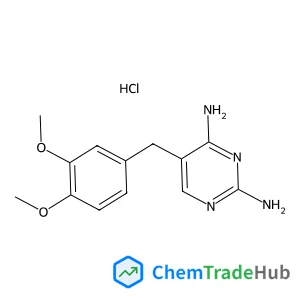
5-(3,4-Dimethoxybenzyl)-2,4-pyrimidinediamine hydrochloride (1:1)
CAS Number:
2507-23-5
Molecular Formula:
C13H17ClN4O2
Amiya Priyam, Subhash C. Bhattacharya, Abhijit Saha
In order to explore the feasibility of using quantum dots (QDs) as nanodiagnostic tools in cells under oxidative stress, the interaction of cysteine-functionalized CdTe QDs with peroxynitrite (PN), a powerful biological oxidant, was spectroscopically investigated. The photoluminescence (PL) of CdTe QDs was quenched to the extent of 85% at 86 µM concentration of peroxynitrite. In contrast, the loss of PL intensity was merely 7% for CdS QDs under identical conditions. The quenching pattern shows a positive deviation from Stern–Volmer equation, but obeys the Perrin equation for static quenching. The Perrin quenching constants increased with decreasing temperature. Size dependence was also prominently observed as quenching efficiency increased by 70% on moving from 4.0 nm sized CdTe QDs to 2.8 nm ones. Interestingly, the QDs exhibited a time-dependent auto-recovery of photoluminescence. At 25 and 15 °C, the recovery time was found to be 1.25 and 3.5 h, respectively, however, the extent of recovery remained nearly the same, about 22%. Peroxynitrite followed a first order decay kinetics with a half-life of 45.6 min, which got substantially reduced to 2.9 min in the presence of CdTe QDs. The over-all mechanism of the interaction has been explained as a two-pronged attack of peroxynitrite on (i) the cysteine-capping layer and (ii) the CdTe core, resulting in a reversible and irreversible loss of QD-photoluminescence.

Proceedings of the National Academy of Sciences of the United States of America

Israel Journal of Chemistry

European Journal of Wood and Wood Products

Fibre Chemistry

Helvetica Chimica Acta

Pharmacological Reviews

Pure and Applied Chemistry

Journal of Organometallic Chemistry

Molecular Pharmacology

Journal of Medicinal Chemistry
Xiaofu Wu, Hui Tong, Lixiang Wang
DOI: 10.1039/C4PY00592A
Yongjun Tang, Chao Chen, Yun Sheng Ye, Zhigang Xue, Xingping Zhou, Xiaolin Xie
DOI: 10.1039/C4PY00663A
Qiao Song, Fei Li, Xinxin Tan, Liulin Yang, Zhiqiang Wang, Xi Zhang
DOI: 10.1039/C4PY00942H
P. S. Kulkarni, M. K. Haldar, M. I. Confeld, C. J. Langaas, X. Yang, S. Y. Qian, S. Mallik
DOI: 10.1039/C6PY00623J
Mathieu Arseneault, Nelson L. C. Leung, Lai Tsz Fung, Rongrong Hu, Jean-François Morin
DOI: 10.1039/C4PY00817K
Xiaohang Han, Yangguang Hu, Miao Tang, Huagao Fang, Qianghua Wu, Zhigang Wang
DOI: 10.1039/C6PY00289G
Keisuke Iijima, Daisuke Aoki, Hiromitsu Sogawa, Shigeo Asai, Toshikazu Takata
DOI: 10.1039/C6PY00367B
Xiaodong Zhuang, Wuxue Zhao, Fan Zhang, Yu Cao, Feng Liu, Shuai Bi
DOI: 10.1039/C6PY00561F
DOI: 10.1039/C6PY00480F
When considering alternatives to 1-(4-Chlorophenyl)-N-hydroxymethanimine (CAS: 3...
This compound should be stored in a cool, dry place away from direct sunlight. I...
3-(4-Bromophenyl)-5-(2-fluorophenyl)-1,2,4-oxadiazole is synthesized through a m...
5-Chloro-2-(4-chlorophenyl)-4-methyl-6-[3-(1-piperidinyl)propoxy]pyrimidine (CAS...
2-Chloro-4-(difluoromethoxy)pyridine is used in the pharmaceutical industry for ...
3-Chloro-6-methylpyridazine (CAS: 1121-79-5) is classified under the Globally Ha...
Several alternatives can be used in the synthesis of Methyl 4,5-dimethyl-2-nitro...
Alternatives to (2E,2'E)-3,3'-(1,4-Phenylene)bisacrylaldehyde include other acry...
3-Amino-5-chloropyridin-2-ol hydrochloride is an organic compound with the CAS n...
When handling 6,7-Difluoro-2,3-dihydro-4H-chromen-4-one, it is essential to wear...

Physical Chemistry Chemical Physics (PCCP) is an international journal co-owned by 19 physical chemistry and physics societies from around the world. This journal publishes original, cutting-edge research in physical chemistry, chemical physics and biophysical chemistry. To be suitable for publication in PCCP, articles must include significant innovation and/or insight into physical chemistry; this is the most important criterion that reviewers and Editors will judge against when evaluating submissions. The journal has a broad scope and welcomes contributions spanning experiment, theory, computation and data science. Topical coverage includes spectroscopy, dynamics, kinetics, statistical mechanics, thermodynamics, electrochemistry, catalysis, surface science, quantum mechanics, quantum computing and machine learning. Interdisciplinary research areas such as polymers and soft matter, materials, nanoscience, energy, surfaces/interfaces, and biophysical chemistry are welcomed if they demonstrate significant innovation and/or insight into physical chemistry. Joined experimental/theoretical studies are particularly appreciated when complementary and based on up-to-date approaches.
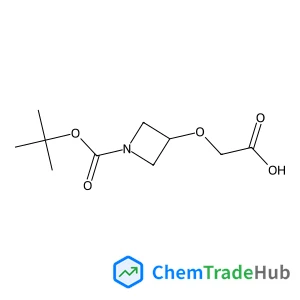
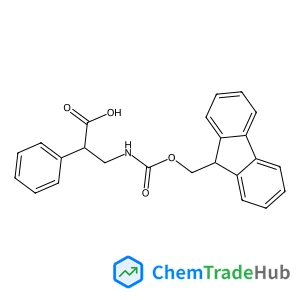
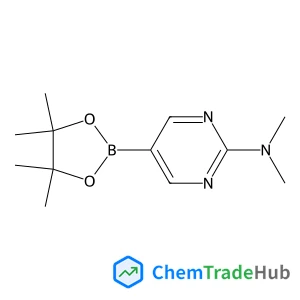
![(2S)-2-{[(9H-Fluoren-9-ylmethoxy)carbonyl]amino}-4-(methylselanyl)butanoic acid structure](https://static.chemtradehub.com/structs/121/1217852-49-7-f252.webp "(2S)-2-{[(9H-Fluoren-9-ylmethoxy)carbonyl]amino}-4-(methylselanyl)butanoic acid structure")






