


Rate constants and the H atom branching ratio of the reactions of the methylidyne CH(X2Π) radical with C2H2, C2H4, C3H4 (methylacetylene and allene), C3H6 (propene) and C4H8 (trans-butene)
Literature Information
Publication Date
2008-10-30
DOI
10.1039/B812810C
Impact Factor
3.676
Authors
View Original
Abstract
The reactions of the CH radical with several unsaturated hydrocarbons C2H2 (acetylene), C2H4 (ethylene), C3H4 (methyl-acetylene and allene), C3H6 (propene) and C4H8 (trans-butene) were studied at room temperature, in a low-pressure fast-flow reactor. CH(X2Π, v = 0) radicals were obtained from the reaction of CHBr3 with potassium atoms. The overall rate constants at 300 K are CH + C2H2: (3.6 ± 0.6) × 10−10, CH + C2H4: (3.1 ± 0.6) × 10−10, CH + C3H4 (methyl-acetylene): (3.4 ± 0.6) × 10−10, CH + C3H4 (allene): (3.6 ± 0.6) × 10−10, CH + C3H6 (propene): (4.2 ± 0.8) × 10−10 and CH + C4H8 (trans-butene): (4.0 ± 0.80) × 10−10 cm3 molecule−1 s−1 (errors are cited at the level of ±1σ). Absolute atomic hydrogen production was determined by vacuum ultra-violet (VUV) resonance fluorescence, H production from the CH + CH4 reaction being used as a reference. Observed H branching ratios for these CH reactions were: C2H2: 0.90 ± 0.08, C2H4: 0.94 ± 0.08, C3H4 (methyl-acetylene): 0.98 ± 0.08, C3H4 (allene): 0.97 ± 0.08, C3H6 (propene): 0.78 ± 0.10, C4H8 (trans-butene): 0.69 ± 0.12 (errors are cited at the level of ±1σ). A compilation of the available kinetic data on these reactions has been made in order to propose rate coefficients for each possible channel of the different reactions for astrochemical models.
Recommended Journals

Current Opinion in Solid State & Materials Science

Russian Journal of Bioorganic Chemistry

Russian Journal of Coordination Chemistry

Russian Chemical Bulletin

Russian Journal of Applied Chemistry

Organic Process Research & Development

Chemical Communications

Journal of Saudi Chemical Society

Crystallography Reports

Saudi Pharmaceutical Journal
Related Literature
A low-cost bio-inspired integrated carbon counter electrode for high conversion efficiency dye-sensitized solar cells
Chunlei Wang, Fanning Meng, Mingxing Wu, Xiao Lin, Tonghua Wang, Jieshan Qiu, Tingli Ma
2013-06-27
Communication
DOI: 10.1039/C3CP52525B
Propagation of nanopores during anodic etching of n-InP in KOH
Robert P. Lynch, Nathan Quill, Shohei Nakahara, D. Noel Buckley
2013-07-31
Paper
DOI: 10.1039/C3CP52253A
QM/MM surface-hopping dynamics of a bridged azobenzene derivative
2013-07-08
Paper
DOI: 10.1039/C3CP50606A
The molecular clusters in a supercritical fluid–solid system should be considered as a phase—thermodynamic principle and evidence
Minqiang Hou, Jianling Zhang, Buxing Han, Qingqing Mei, Hui Ning, Dezhong Yang
2013-04-09
Paper
DOI: 10.1039/C3CP44670K
Double-hybrid density functionals: merging wavefunction and density approaches to get the best of both worlds
2013-06-18
Perspective
DOI: 10.1039/C3CP50907A
Multiphoton photoelectron emission microscopy of single Au nanorods: combined experimental and theoretical study of rod morphology and dielectric environment on localized surface plasmon resonances
Andrej Grubisic, Volker Schweikhard, Thomas A. Baker, David J. Nesbitt
2013-01-31
Paper
DOI: 10.1039/C3CP44385J
Multidimensional local mode calculations for the vibrational spectra of OH−(H2O)2 and OH−(H2O)2·Ar
Masato Morita, Kaito Takahashi
2013-07-01
Paper
DOI: 10.1039/C3CP51903A
Strain driven enhancement of ferroelectricity and magnetoelectric effect in multiferroic tunnel junction
Dan Cao, Hai-bo Shu, Zhi-wei Jiao, Yun Zhou, Miao-gen Chen, Meng-qiu Cai, Wang-yu Hu
2013-08-02
Paper
DOI: 10.1039/C3CP51350E
You might also like
Compound Q&A
Are there alternatives to 1-(4-Chlorophenyl)-N-hydroxymethanimine (CAS: 3848-36-0) in synthesis?
When considering alternatives to 1-(4-Chlorophenyl)-N-hydroxymethanimine (CAS: 3...
3848-36-01-(4-Chlorophenyl)-N...
Compound Q&A
How should (1R,9S,10S,12S,14E,16S,19R,20R,21S,22R)-3,9,21-Trihydroxy-5,10,12,14,16,20,22-heptamethyl-23,24-dioxatetracyclo[17.3.1.1~6,9~.0~2,7~]tetracosa-2,5,7,14-tetraen-4-one (CAS: 183202-73-5) be stored?
This compound should be stored in a cool, dry place away from direct sunlight. I...
183202-73-5(1R,9S,10S,12S,14E,1...
Compound Q&A
How is 3-(4-Bromophenyl)-5-(2-fluorophenyl)-1,2,4-oxadiazole (CAS: 419553-16-5) typically synthesized?
3-(4-Bromophenyl)-5-(2-fluorophenyl)-1,2,4-oxadiazole is synthesized through a m...
419553-16-53-(4-Bromophenyl)-5-...
Compound Q&A
How is 5-Chloro-2-(4-chlorophenyl)-4-methyl-6-[3-(1-piperidinyl)propoxy]pyrimidine (CAS: 1639220-19-1) typically synthesized?
5-Chloro-2-(4-chlorophenyl)-4-methyl-6-[3-(1-piperidinyl)propoxy]pyrimidine (CAS...
1639220-19-15-Chloro-2-(4-chloro...
Compound Q&A
What industries use 2-Chloro-4-(difluoromethoxy)pyridine (CAS: 1206978-15-5)?
2-Chloro-4-(difluoromethoxy)pyridine is used in the pharmaceutical industry for ...
1206978-15-52-Chloro-4-(difluoro...
Compound Q&A
What regulatory guidelines apply to 3-Chloro-6-methylpyridazine (CAS: 1121-79-5)?
3-Chloro-6-methylpyridazine (CAS: 1121-79-5) is classified under the Globally Ha...
1121-79-53-Chloro-6-methylpyr...
Compound Q&A
Are there alternatives to Methyl 4,5-dimethyl-2-nitrobenzoate in synthesis?
Several alternatives can be used in the synthesis of Methyl 4,5-dimethyl-2-nitro...
90922-74-0Methyl 4,5-dimethyl-...
Compound Q&A
Are there alternatives to (2E,2'E)-3,3'-(1,4-Phenylene)bisacrylaldehyde in synthesis?
Alternatives to (2E,2'E)-3,3'-(1,4-Phenylene)bisacrylaldehyde include other acry...
63405-68-5(2E,2'E)-3,3'-(1,4-P...
Compound Q&A
What is 3-Amino-5-chloropyridin-2-ol hydrochloride (CAS: 1261906-29-9)?
3-Amino-5-chloropyridin-2-ol hydrochloride is an organic compound with the CAS n...
1261906-29-93-Amino-5-chloropyri...
Compound Q&A
What precautions should be taken when handling 6,7-Difluoro-2,3-dihydro-4H-chromen-4-one (CAS: 1092349-93-3)?
When handling 6,7-Difluoro-2,3-dihydro-4H-chromen-4-one, it is essential to wear...
1092349-93-36,7-Difluoro-2,3-dih...
Source Journal
Physical Chemistry Chemical Physics

CiteScore:
5.5
Self-citation Rate:
10.3%
Articles per Year:
3036
Physical Chemistry Chemical Physics (PCCP) is an international journal co-owned by 19 physical chemistry and physics societies from around the world. This journal publishes original, cutting-edge research in physical chemistry, chemical physics and biophysical chemistry. To be suitable for publication in PCCP, articles must include significant innovation and/or insight into physical chemistry; this is the most important criterion that reviewers and Editors will judge against when evaluating submissions. The journal has a broad scope and welcomes contributions spanning experiment, theory, computation and data science. Topical coverage includes spectroscopy, dynamics, kinetics, statistical mechanics, thermodynamics, electrochemistry, catalysis, surface science, quantum mechanics, quantum computing and machine learning. Interdisciplinary research areas such as polymers and soft matter, materials, nanoscience, energy, surfaces/interfaces, and biophysical chemistry are welcomed if they demonstrate significant innovation and/or insight into physical chemistry. Joined experimental/theoretical studies are particularly appreciated when complementary and based on up-to-date approaches.
Recommended Compounds
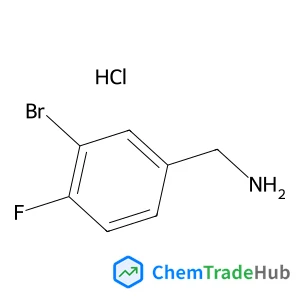
1-(3-Bromo-4-fluorophenyl)methanamine hydrochloride (1:1)
CAS Number:
202865-68-7
Molecular Formula:
C7H8BrClFN
![[4-(Isobutyrylamino)phenyl]boronic acid structure](https://static.chemtradehub.com/structs/874/874219-50-8-6ab5.webp "[4-(Isobutyrylamino)phenyl]boronic acid structure")
Recommended Suppliers




Disclaimer
This page provides academic journal information for reference and research purposes only. We are not affiliated with any journal publishers and do not handle publication submissions. For publication-related inquiries, please contact the respective journal publishers directly.
If you notice any inaccuracies in the information displayed, please contact us at support@chemtradehub.com. We will promptly review and address your concerns.