












Multidimensional local mode calculations for the vibrational spectra of OH−(H2O)2 and OH−(H2O)2·Ar
Literature Information
Publication Date
2013-07-01
DOI
10.1039/C3CP51903A
Impact Factor
3.676
Authors
Masato Morita, Kaito Takahashi
View Original
Abstract
Multidimensional local mode calculations are performed for OH stretching vibrations of the gas phase OH−(H2O)2 and OH−(H2O)2·Ar clusters in the 1000–4000 cm−1 energy range. The potential energies and the associated dipole moment values are calculated with MP2/6-311++G(3df,3pd). To fully take into account the anharmonic effects for the stretching vibrations of the ionic hydrogen bonded OHs (IHB OHs), those donating H to the O atom in OH−, the vibrational Hamiltonian represented by the discrete variable representation (DVR) technique is diagonalized without using any truncation/contraction scheme for the basis. The necessary potential energies and dipole moment values at the DVR grid points are supplied by the polynomial inter- and extrapolations based on the values calculated at fine spatial grid points. We found that the peaks at 2700 cm−1 should be assigned to the first overtone (ν: 0 → 2) of the IHB OH stretching vibrations rather than the previous assignment of the fundamental of the IHB OH based on harmonic frequencies. The relevant fundamental peaks should be observed around 1600–2000 cm−1 where no experimental observation has been performed. This prediction of the fundamental peak positions leads to a simple correlation between the magnitude of the red-shift of the IHB OH stretching vibrational peak position and the cluster size of OH−(H2O)n for n = 1–3. Furthermore, to determine important contributions toward the assignment of the experimental spectrum, detailed analyses are performed from the following 3 viewpoints: (1) mode coupling between the inter water IHB OH stretching vibrations, (2) coupling between the IHB OH and the low-frequency O⋯O stretching vibrations and (3) argon attachment to OH−(H2O)2. We found that the overall shape of the vibrational spectrum can be essentially described by considering only factor (1). However, fairly large peak shifts are caused by factors (2) and (3).
Related Literature
A stannum–bismuth composite film electrode for simultaneous determination of zinc(ii) and cadmium(ii) using differential pulse anodic stripping voltammetry
Nian Bing Li, Wei Wei Zhu, Jun Hua Luo, Hong Qun Luo
2011-12-06
Paper
DOI: 10.1039/C1AN15753A
Differentiating intrinsic SERS spectra from a mixture by sampling induced composition gradient and independent component analysis
Justin L. Abell, Joonsang Lee, Qun Zhao, Harold Szu, Yiping Zhao
2011-11-02
Communication
DOI: 10.1039/C1AN15623C
Colorimetric and fluorometric dual-readout sensor for lysozyme
Hanye Zheng, Kefeng Xu, Linguang Luo, Yibiao Song, Zhenyu Lin, Longhua Guo, Bin Qiu, Guonan Chen
2013-08-05
Paper
DOI: 10.1039/C3AN01194A
Ultrasensitive immunochromatographic strip for the detection of cyhalothrin in foods
Lu Lin, Shanshan Song, Xiaoling Wu, Liqiang Liu, Hua Kuang, Chuanlai Xu
2021-05-17
Paper
DOI: 10.1039/D1AY00609F
Investigation of cavitation-induced damage on PDMS films
Alex H. Wrede, Faisal Al-Masri, Reza Montazami
2019-08-29
Paper
DOI: 10.1039/C9AY01576K
Ribonuclease H-cleavable and recombinase-quenching fluorescent probes for the real-time detection of strand invasion based amplification
Sonja Elf, Kevin E. Eboigbodin
2019-10-07
Paper
DOI: 10.1039/C9AY01350D
You might also like
Compound Q&A
Are there alternatives to 1-(4-Chlorophenyl)-N-hydroxymethanimine (CAS: 3848-36-0) in synthesis?
When considering alternatives to 1-(4-Chlorophenyl)-N-hydroxymethanimine (CAS: 3...
3848-36-01-(4-Chlorophenyl)-N...
Compound Q&A
How should (1R,9S,10S,12S,14E,16S,19R,20R,21S,22R)-3,9,21-Trihydroxy-5,10,12,14,16,20,22-heptamethyl-23,24-dioxatetracyclo[17.3.1.1~6,9~.0~2,7~]tetracosa-2,5,7,14-tetraen-4-one (CAS: 183202-73-5) be stored?
This compound should be stored in a cool, dry place away from direct sunlight. I...
183202-73-5(1R,9S,10S,12S,14E,1...
Compound Q&A
How is 3-(4-Bromophenyl)-5-(2-fluorophenyl)-1,2,4-oxadiazole (CAS: 419553-16-5) typically synthesized?
3-(4-Bromophenyl)-5-(2-fluorophenyl)-1,2,4-oxadiazole is synthesized through a m...
419553-16-53-(4-Bromophenyl)-5-...
Compound Q&A
How is 5-Chloro-2-(4-chlorophenyl)-4-methyl-6-[3-(1-piperidinyl)propoxy]pyrimidine (CAS: 1639220-19-1) typically synthesized?
5-Chloro-2-(4-chlorophenyl)-4-methyl-6-[3-(1-piperidinyl)propoxy]pyrimidine (CAS...
1639220-19-15-Chloro-2-(4-chloro...
Compound Q&A
What industries use 2-Chloro-4-(difluoromethoxy)pyridine (CAS: 1206978-15-5)?
2-Chloro-4-(difluoromethoxy)pyridine is used in the pharmaceutical industry for ...
1206978-15-52-Chloro-4-(difluoro...
Compound Q&A
What regulatory guidelines apply to 3-Chloro-6-methylpyridazine (CAS: 1121-79-5)?
3-Chloro-6-methylpyridazine (CAS: 1121-79-5) is classified under the Globally Ha...
1121-79-53-Chloro-6-methylpyr...
Compound Q&A
Are there alternatives to Methyl 4,5-dimethyl-2-nitrobenzoate in synthesis?
Several alternatives can be used in the synthesis of Methyl 4,5-dimethyl-2-nitro...
90922-74-0Methyl 4,5-dimethyl-...
Compound Q&A
Are there alternatives to (2E,2'E)-3,3'-(1,4-Phenylene)bisacrylaldehyde in synthesis?
Alternatives to (2E,2'E)-3,3'-(1,4-Phenylene)bisacrylaldehyde include other acry...
63405-68-5(2E,2'E)-3,3'-(1,4-P...
Compound Q&A
What is 3-Amino-5-chloropyridin-2-ol hydrochloride (CAS: 1261906-29-9)?
3-Amino-5-chloropyridin-2-ol hydrochloride is an organic compound with the CAS n...
1261906-29-93-Amino-5-chloropyri...
Compound Q&A
What precautions should be taken when handling 6,7-Difluoro-2,3-dihydro-4H-chromen-4-one (CAS: 1092349-93-3)?
When handling 6,7-Difluoro-2,3-dihydro-4H-chromen-4-one, it is essential to wear...
1092349-93-36,7-Difluoro-2,3-dih...
Source Journal
Physical Chemistry Chemical Physics

CiteScore:
5.5
Self-citation Rate:
10.3%
Articles per Year:
3036
Physical Chemistry Chemical Physics (PCCP) is an international journal co-owned by 19 physical chemistry and physics societies from around the world. This journal publishes original, cutting-edge research in physical chemistry, chemical physics and biophysical chemistry. To be suitable for publication in PCCP, articles must include significant innovation and/or insight into physical chemistry; this is the most important criterion that reviewers and Editors will judge against when evaluating submissions. The journal has a broad scope and welcomes contributions spanning experiment, theory, computation and data science. Topical coverage includes spectroscopy, dynamics, kinetics, statistical mechanics, thermodynamics, electrochemistry, catalysis, surface science, quantum mechanics, quantum computing and machine learning. Interdisciplinary research areas such as polymers and soft matter, materials, nanoscience, energy, surfaces/interfaces, and biophysical chemistry are welcomed if they demonstrate significant innovation and/or insight into physical chemistry. Joined experimental/theoretical studies are particularly appreciated when complementary and based on up-to-date approaches.
Recommended Compounds
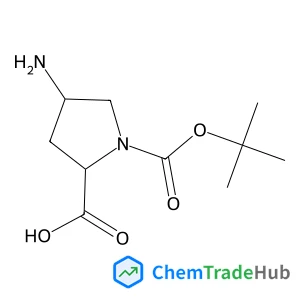
(2R,4R)-1-Boc-4-Aminopyrrolidine-2-carboxylic acid
CAS Number:
132622-98-1
Molecular Formula:
C10H18N2O4
![[4-(Isobutyrylamino)phenyl]boronic acid structure](https://static.chemtradehub.com/structs/874/874219-50-8-6ab5.webp "[4-(Isobutyrylamino)phenyl]boronic acid structure")
Recommended Suppliers






Disclaimer
This page provides academic journal information for reference and research purposes only. We are not affiliated with any journal publishers and do not handle publication submissions. For publication-related inquiries, please contact the respective journal publishers directly.
If you notice any inaccuracies in the information displayed, please contact us at support@chemtradehub.com. We will promptly review and address your concerns.